
Chef Freja
Andelår med Rødkål
Slow-roasted duck legs with crisp, deeply golden skin, served with braised red cabbage and caramelized potatoes. The weeknight Danish duck that proves the best part of the bird is the one that takes its time.
A cooking platform built around craft, culture, and the stories behind what we eat.
Created by Chef Freja
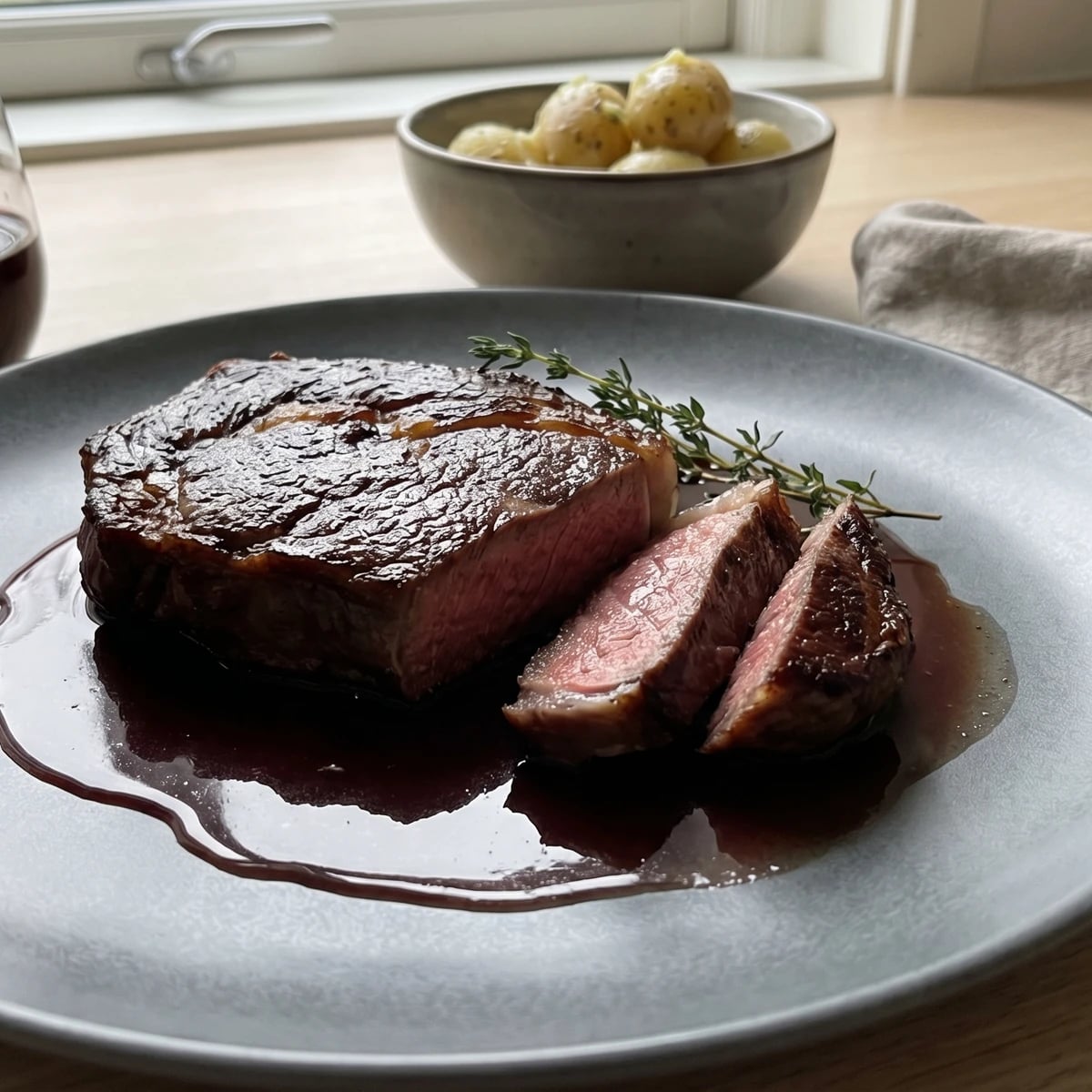
Pan-seared beef steaks rested and served in a glossy red wine sauce built from the fond of the same pan. The Danish dinner party dish that turns a Saturday evening into an occasion worth remembering.
November evenings in Denmark call for red wine and a hot pan. This is the season when dinner parties start earlier because the dark arrives at four, and the kitchen fills with the smell of searing beef and shallots softening in butter. Bofsteak med rodvinssovs is the dish you make when Saturday night means something.
The recipe is simpler than it sounds. You sear a good steak until the crust goes deep brown and crackling, rest it while the pan is still hot, then build a sauce from shallots, red wine, and stock in the same pan. The fond, those dark caramelized bits stuck to the metal, is where the real flavor lives. Everything the meat left behind goes back into the sauce, and the sauce goes back over the meat. Nothing is wasted. This is the generosity of a well-used pan.
Pay attention to two moments. The first: when you lay the steak in the pan and hear that hard, immediate sizzle. If the sound is gentle, the pan isn't hot enough and you'll steam the meat instead of searing it. The second: when you stir cold butter into the finished sauce and it turns glossy and thick, almost like silk. That's the finish that makes this sauce worth the name. You'll know when it's right.
The Danish bofsteak tradition owes its sauce-making to French culinary technique, which entered Danish kitchens through the royal court in the 18th century and gradually filtered into bourgeois and then everyday home cooking. By the mid-20th century, rodvinssovs had become the defining sauce of the Danish dinner party, a simple pan sauce that distinguished a Saturday evening from a weeknight. The technique of mounting cold butter into the reduction, what French chefs call monter au beurre, arrived in Denmark without its name but with all its purpose: to give a sauce body, gloss, and richness that cream alone cannot provide.
Quantity
4, about 250g each
3cm thick, brought to room temperature
Quantity
to taste
Quantity
freshly ground, to taste
Quantity
2 tablespoons
Quantity
40g
Quantity
3 sprigs
Quantity
2 cloves
lightly crushed with the flat of a knife
Quantity
2 large
finely diced
Quantity
300ml
Quantity
200ml
Quantity
1 tablespoon
Quantity
50g
cut into small cubes
| Ingredient | Quantity |
|---|---|
| beef entrecôte steaks3cm thick, brought to room temperature | 4, about 250g each |
| flaky sea salt | to taste |
| black pepper | freshly ground, to taste |
| neutral oil | 2 tablespoons |
| unsalted butter (for basting) | 40g |
| fresh thyme | 3 sprigs |
| garliclightly crushed with the flat of a knife | 2 cloves |
| shallotsfinely diced | 2 large |
| full-bodied red wine | 300ml |
| beef stock | 200ml |
| redcurrant jelly (optional) | 1 tablespoon |
| cold unsalted butter (for the sauce)cut into small cubes | 50g |
Take the steaks out of the fridge a full hour before you cook. Lay them on a board and season both sides generously with flaky salt and black pepper. Press the seasoning in with your fingers. Cold meat dropped into a hot pan seizes and cooks unevenly. A warm steak relaxes into the heat and sears. The salt draws moisture to the surface during that hour, and that surface moisture is exactly what gives you the crust. This is the quiet step that makes everything after it work.
Set a heavy pan over high heat for two full minutes before you add anything. Pour in the oil. When it shimmers and just begins to smoke, lay the steaks in, away from you so the fat doesn't spit toward your hand. Don't move them. Three to four minutes on the first side until the crust is deep brown, almost mahogany. Flip once. In the last minute, add the basting butter, two sprigs of thyme, and the crushed garlic to the pan. Tilt the pan slightly and spoon the foaming butter over the steaks repeatedly. The butter carries the thyme and garlic across the surface while the crust deepens on the underside.
Transfer the steaks to a warm plate and cover loosely with foil. Rest for eight to ten minutes. This is not optional. Meat that goes straight from pan to plate bleeds its juices across the board. Rested meat holds them inside, and every bite stays pink and tender. Save every drop of juice that collects on the plate. It goes into the sauce.
Keep the thyme and garlic in the pan if they haven't burned. If they have, discard them. Pour off most of the fat, leaving just a thin film and all the dark bits on the bottom. Lower the heat to medium. Add the diced shallots and a pinch of salt. Stir and cook for two to three minutes until they're soft and translucent. Don't let them color. You want their sweetness, not their caramel. Pour in the red wine. It will hiss and spit. Use a wooden spoon to scrape every dark bit off the bottom of the pan. Those bits are the fond, concentrated flavor from the sear, and they're the reason the sauce is built in the same pan. Let the wine bubble steadily until it reduces by about two-thirds and turns syrupy. This takes five to seven minutes. Add the stock and the redcurrant jelly, if using. Bring back to a simmer and reduce again until the sauce coats the back of a spoon.
Take the pan off the heat. This matters: if the pan is too hot, the butter will split instead of emulsifying. Add the cold butter cubes a few at a time, swirling the pan gently after each addition. The sauce will turn glossy, thick, and a deep garnet color. Pour in any juices that have collected under the resting steaks. Taste the sauce. It should be rich and slightly sharp from the wine, with a rounded, silky finish from the butter. Season with salt and pepper if it needs it.
Place the steaks on warmed plates. Spoon the sauce generously over and around the meat, letting it pool on the plate. Lay a sprig of fresh thyme on top and bring it to the table. This is a dish that speaks for itself. Serve with boiled new potatoes dressed in butter or a simple potato gratin, and a green salad with a sharp vinaigrette to cut the richness. Pour the rest of the wine you cooked with. Tak for mad.
1 serving (about 280g)
Culinary guides, cultural storytelling, and the editorial depth that makes cooking meaningful.
Discover Culinary Explorer
Chef Freja
Slow-roasted duck legs with crisp, deeply golden skin, served with braised red cabbage and caramelized potatoes. The weeknight Danish duck that proves the best part of the bird is the one that takes its time.

Chef Freja
Strips of seared beef in a paprika cream sauce, the weeknight dish that arrived from Russia in the 1950s and never left the Danish kitchen. Served over rice with the quiet confidence of something that has been Tuesday dinner for three generations.

Chef Freja
A good piece of beef seared hard, buried under golden onions fried in butter, served with boiled potatoes and the kind of brown gravy you make from what the pan remembers.

Chef Freja
A boneless pork loin butterflied, filled with prunes and tart apples, rolled tight and roasted until deep golden. Post-war Danish ingenuity at its most generous, sliced thick and served with a smooth cream gravy.