
Chef Freja
Andelår med Rødkål
Slow-roasted duck legs with crisp, deeply golden skin, served with braised red cabbage and caramelized potatoes. The weeknight Danish duck that proves the best part of the bird is the one that takes its time.
A cooking platform built around craft, culture, and the stories behind what we eat.

Created by Chef Freja
Crispy roasted chicken legs with brunede kartofler, the caramelized potatoes that stop every guest mid-sentence, and a pan gravy made from the drippings that ties the whole plate together.
November dark comes early in Denmark. By four o'clock the windows are black, the kitchen is the warmest room, and you need something on the table that feels like it means it. This is when you cook chicken legs.
Stegt kyllingelaar med brunede kartofler is the Danish weeknight dinner nobody writes about because everybody already knows it. Chicken legs, roasted until the skin pulls tight and crackles under your fork. Small potatoes rolled in caramelized sugar and butter until they gleam like amber. A plain gravy made from the pan drippings, a spoon of flour, and good stock. Three things on a plate, none of them complicated, all of them exactly right.
The part that matters most is the brunede kartofler, the browned potatoes. This is the technique that makes visitors to a Danish table stop and ask what happened. Sugar goes into a dry pan. It melts, turns golden. Butter follows. Then the potatoes go in and roll through the caramel until every surface is coated in a thin, glossy shell that is sweet and savory at once. It sounds strange if you haven't tried it. It makes perfect sense the moment you taste it. I'll walk you through the timing so you know exactly when the caramel is ready and when it's gone too far. You'll know when it's right.
Brunede kartofler appear in Danish cookbooks from the mid-1800s, though the technique of caramelizing sugar with butter to coat boiled potatoes likely predates the written record. The dish became inseparable from the Danish Christmas table, where it sits alongside flæskesteg and rødkål, but in homes across Denmark it has always been cooked year-round as an everyday companion to roasted meats and frikadeller. The technique requires confidence with caramel: a few seconds separate golden and bitter, and most Danish cooks learn the timing not from a recipe but by standing next to someone who already knows it.
Quantity
4, about 300g each
thigh and drumstick attached
Quantity
to taste
Quantity
freshly ground, to taste
Quantity
1 tablespoon
Quantity
20g
Quantity
a few sprigs
Quantity
800g
Quantity
75g
Quantity
40g
Quantity
2 tablespoons
Quantity
400ml
Quantity
100ml
Quantity
to taste
| Ingredient | Quantity |
|---|---|
| whole chicken legsthigh and drumstick attached | 4, about 300g each |
| fine sea salt | to taste |
| black pepper | freshly ground, to taste |
| neutral oil | 1 tablespoon |
| unsalted butter (for the chicken) | 20g |
| fresh thyme | a few sprigs |
| small waxy potatoes | 800g |
| caster sugar | 75g |
| unsalted butter (for the potatoes) | 40g |
| plain flour | 2 tablespoons |
| chicken stock | 400ml |
| whole milk | 100ml |
| white pepper | to taste |
Put the potatoes in a pot of cold salted water and bring to a boil. Cook until a knife slides through the center without resistance, about fifteen to twenty minutes depending on size. Drain and let them cool just enough to handle. If you're using new potatoes with thin skins, leave the skins on. If the skins are thick, peel them while still warm. Cold potatoes are harder to peel and harder to coat in caramel later.
While the potatoes boil, take the chicken legs out of the fridge. Pat them very dry with kitchen paper, both sides, pressing firmly. This is the single most important step for crisp skin. Water is the enemy of browning. Season generously with salt and pepper on all sides, pressing the salt into the skin so it sticks.
Heat the oven to 200C. Set a heavy ovenproof pan over medium-high heat and add the oil. When it shimmers, lay the chicken legs in skin-side down. Don't move them. Let the skin make full contact with the hot surface and stay there for five to six minutes until it turns deep golden and releases on its own. If it sticks, it isn't ready. When the skin lifts cleanly and you see a rich golden crust underneath, flip them over. Add the butter and thyme sprigs to the pan and let the butter foam around the legs for thirty seconds.
Transfer the pan to the oven and roast for thirty to thirty-five minutes. The chicken is done when the juices from the thickest part of the thigh run clear, not pink, and the skin has tightened and deepened in color across the surface. If you have a meat thermometer, you're looking for 74C at the bone. Take the pan out, lift the chicken legs onto a warm plate, and cover loosely. They need ten minutes of rest. The juices redistribute during this time, and the meat goes from good to right.
While the chicken rests, make the brunede kartofler. Set a wide, heavy pan over medium heat and add the sugar in an even layer. Don't stir. Watch. The sugar will start to melt at the edges and turn pale gold. Swirl the pan gently to distribute the heat, but don't touch the sugar with a spoon. Stirring causes crystallization, and crystals turn to lumps. You want a smooth, amber liquid. This takes about four to five minutes. The moment it reaches a deep golden color and smells like toffee, you move to the next step.
Add the butter to the caramel. It will bubble and spit, so stand back for a moment. Swirl until the butter melts into the caramel and the mixture turns smooth and glossy. Add the boiled potatoes and toss them gently, rolling each one through the caramel until every surface is coated in a thin, gleaming shell. Keep the heat low and turn them for three to four minutes. The caramel will set into a firm glaze as the potatoes cool slightly. The finished brunede kartofler should look like polished amber: sweet on the outside, soft and earthy within.
Set the roasting pan with the chicken drippings over medium heat on the stovetop. Sprinkle in the flour and stir it into the fat with a wooden spoon, scraping up every dark bit stuck to the bottom of the pan. Those bits are fond, and they carry most of the flavor. Cook the flour for one minute to take away its raw, pasty taste. Pour in the stock gradually, stirring as you go. Add the milk. Let the gravy simmer for four to five minutes until it thickens enough to coat the back of the spoon. Season with salt and white pepper. Strain it through a fine sieve if you want it perfectly smooth, or leave it as it is for an honest, homemade texture.
Arrange the chicken legs on a warm serving dish with the brunede kartofler alongside. Pour the gravy into a warm jug and bring it to the table so everyone takes what they want. This is not a dish you plate like a restaurant. You set it down in the middle of the table and let people help themselves. That's how it's done. That's how it's always been done. Tak for mad.
1 serving (about 470g)
Culinary guides, cultural storytelling, and the editorial depth that makes cooking meaningful.
Discover Culinary ExplorerChef Freja
Slow-roasted duck legs with crisp, deeply golden skin, served with braised red cabbage and caramelized potatoes. The weeknight Danish duck that proves the best part of the bird is the one that takes its time.

Chef Freja
The whole roasted duck of juleaften, stuffed with tart apples and dark prunes, slow-roasted for four patient hours until the skin crackles like something earned and the meat underneath gives way without resistance.
Chef Freja
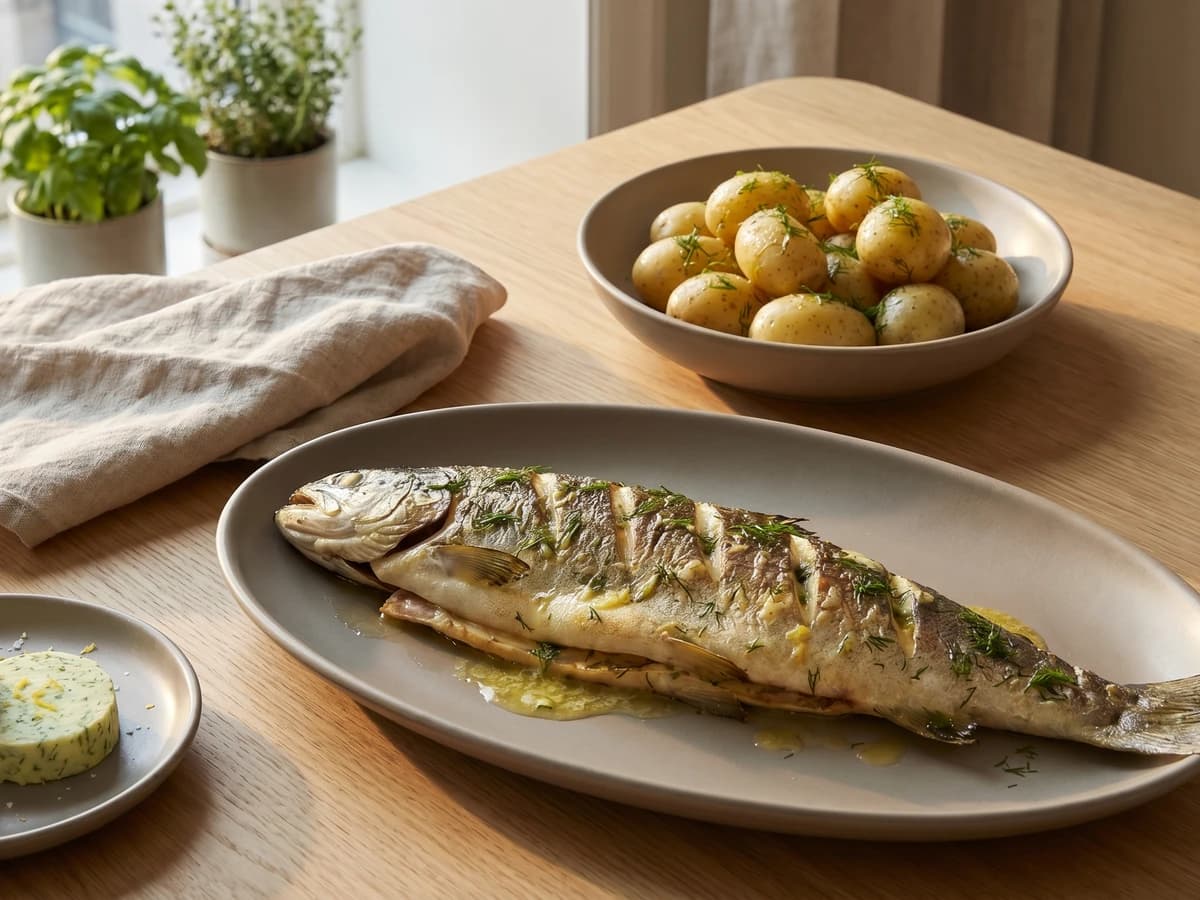
Whole sea trout baked with butter, lemon, and armfuls of dill, served beside the first nye kartofler of the season and a melting slab of dildsmor. The Danish summer table at its most generous.
Chef Freja
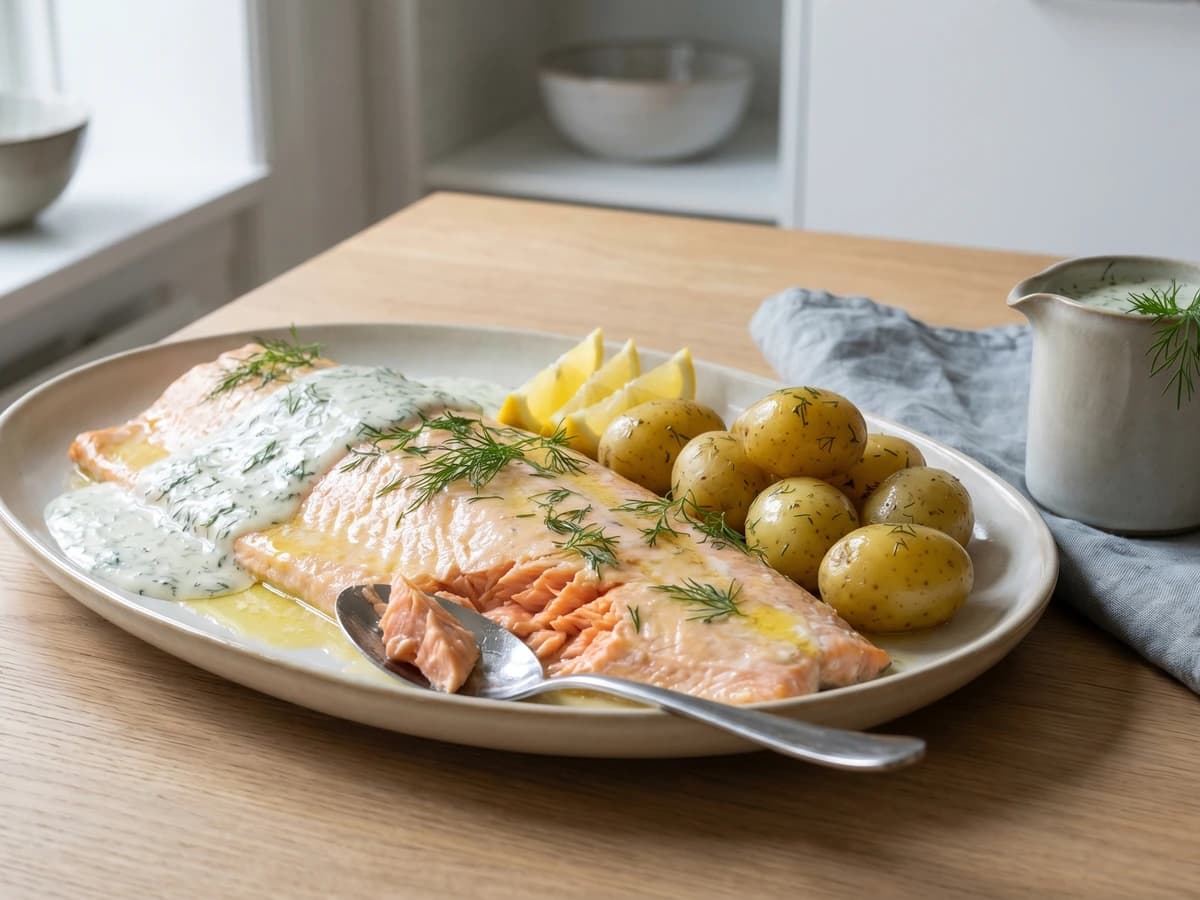
A side of salmon baked gently in butter and white wine, served warm with a bright dill cream sauce and the season's first nye kartofler. Late spring on a Danish table, cooked with love.