
Chef Takumi
Autumn Mushroom Rice (きのこの炊き込みご飯, Kinoko Takikomi Gohan)
Autumn mushrooms do most of the work here. Rinse the rice well, season the liquid before cooking, and let the pot rest so every grain comes out separate and fragrant.
A cooking platform built around craft, culture, and the stories behind what we eat.
Created by
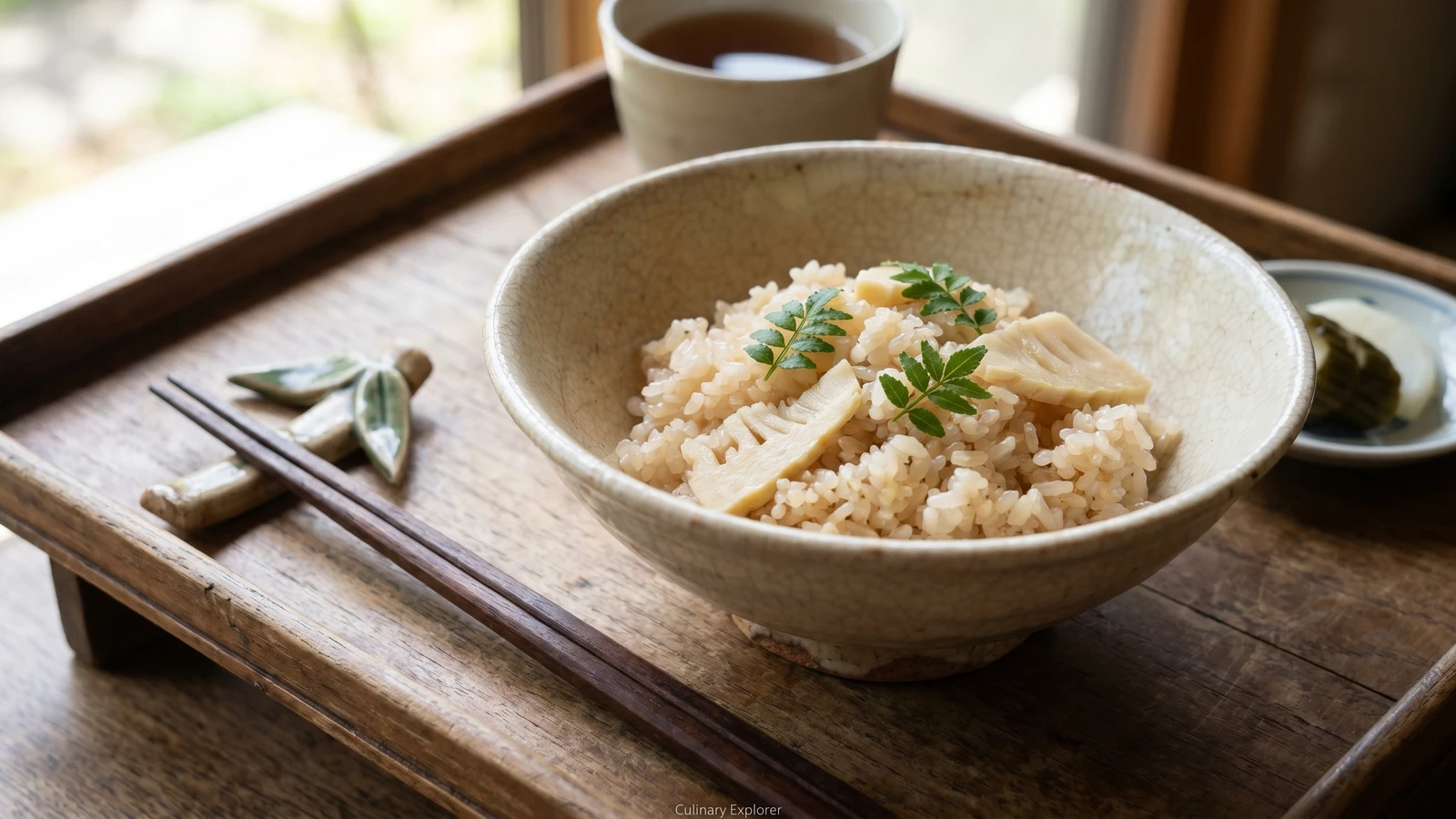
Spring bamboo shoot rice is decided before the pot is lit: fresh takenoko, clear dashi, and rice allowed to drink the season without being pushed around.
The first bamboo shoot is not shy. It pushes through the soil in spring with a sweetness that fades almost as soon as it is dug, which is why takenoko gohan begins at the market, not at the stove. If the shoot is fresh and at its prime, shun has already done half your cooking.
This dish looks ceremonial because it belongs to spring, but the method is plain. Rice, dashi, a little light soy, sake, and mirin. The bamboo shoot sits on top while the rice cooks, so its fragrance moves through the pot without breaking the grains. Stir too early and you make a muddle. Fold at the end and the rice stays clean.
The one detail that decides it is the takenoko itself. Freshly boiled bamboo shoot has a green, nutty fragrance and a faint sweetness. Old bamboo shoot tastes flat, and no extra soy will save it. Nothing hidden. If you can find a good cooked shoot, or boil a fresh one properly, the rest is only careful measuring.
We serve this as takikomi gohan, rice cooked with seasoning and seasonal ingredients, often beside a clear soup and one grilled or simmered dish. It isn't difficult, only unfamiliar. Let the rice drink, leave the lid alone, and give the finished bowl room to breathe.
Takenoko gohan belongs to Japan's spring repertoire, when bamboo shoots are dug young before they harden and turn fibrous. Fresh shoots are traditionally boiled with rice bran, or nuka, to draw out harshness and keep the flesh pale, a practice recorded in household cookery from the Edo period onward. The dish is a form of takikomi gohan, seasoned rice cooked together with vegetables or other ingredients, and it marks the season more than the menu.
Quantity
2 cups
Quantity
250g
thinly sliced
Quantity
2 1/4 cups
Quantity
1 tablespoon
Quantity
1 tablespoon
Quantity
1 tablespoon
Quantity
1/2 teaspoon
Quantity
1 small piece
briefly blanched and thinly sliced
Quantity
5g
Quantity
1 piece (about 5g)
Quantity
a few leaves
| Ingredient | Quantity |
|---|---|
| Japanese short-grain rice | 2 cups |
| cooked bamboo shootthinly sliced | 250g |
| dashi | 2 1/4 cups |
| usukuchi shoyu (light soy sauce) | 1 tablespoon |
| sake | 1 tablespoon |
| mirin | 1 tablespoon |
| sea salt | 1/2 teaspoon |
| aburaage (fried tofu pouch)briefly blanched and thinly sliced | 1 small piece |
| katsuobushi (bonito flakes) (optional) | 5g |
| konbu (dried kelp) (optional) | 1 piece (about 5g) |
| kinome leaves or mitsuba (optional) | a few leaves |
Rinse the rice in several changes of cold water, stirring gently with your fingers, until the water runs almost clear. This washes away loose surface starch so the grains cook distinct and tender, not gummy. Drain the rice in a sieve for 20 minutes so it can absorb the dashi evenly later.
If making fresh dashi, wipe the konbu with a damp cloth, put it in 2 1/2 cups cold water, and warm it slowly. Lift the konbu out just before the water boils, when small bubbles climb the pot. Add the katsuobushi, turn off the heat, and leave it alone for 2 minutes before straining without pressing.
Slice the cooked bamboo shoot thinly, keeping the tender tip in small wedges and the firmer base in slender pieces. The different cuts matter because the tip is delicate and pretty, while the base needs a thinner cut to eat pleasantly. Let the knife do the seasoning here: clean slices make the bamboo shoot taste sweeter.
Combine the dashi, usukuchi shoyu, sake, mirin, and salt. Taste it before it meets the rice. It should be lightly savory and a little stronger than soup, because the rice will drink it and soften the seasoning.
Put the drained rice in a heavy pot or rice cooker. Add the seasoned dashi, then scatter the bamboo shoot and aburaage over the top without stirring them into the rice. Leaving them on top keeps the rice cooking evenly, while the dashi carries their flavor down through the grains.
Cook as you would plain rice. For a pot, bring it to a steady simmer, cover tightly, cook 12 minutes over low heat, then turn off the heat and rest 15 minutes without lifting the lid. That rest is not idleness. The grains finish swelling in their own heat, and the surface moisture settles back where it belongs.
Fluff the rice with a shamoji, lifting from the bottom and folding gently so the bamboo shoot stays in clean pieces. Serve in small bowls and finish with kinome leaves or a little mitsuba. Don't crowd the bowl. This is spring rice, not a heap.
1 serving (about 290g)
Culinary guides, cultural storytelling, and the editorial depth that makes cooking meaningful.
Discover Culinary ExplorerChef Takumi
Autumn mushrooms do most of the work here. Rinse the rice well, season the liquid before cooking, and let the pot rest so every grain comes out separate and fragrant.

Chef Takumi
A whole salmon fillet laid on seasoned rice does nearly all the work. Cook it gently, flake it back through, and autumn has found its bowl.

Chef Takumi
Daigakuimo is simple student comfort: sweet potato cut stout, fried until the corners take color, then turned in a soy-sugar syrup that sets shiny instead of sticky.

Chef Takumi
Chawanmushi looks delicate, but the secret is plain: good dashi, strained egg, and quiet heat. Keep the steam soft and the custard sets smooth, tender, and calm.