
Chef Takumi
Autumn Mushroom Rice (きのこの炊き込みご飯, Kinoko Takikomi Gohan)
Autumn mushrooms do most of the work here. Rinse the rice well, season the liquid before cooking, and let the pot rest so every grain comes out separate and fragrant.
A cooking platform built around craft, culture, and the stories behind what we eat.
Created by
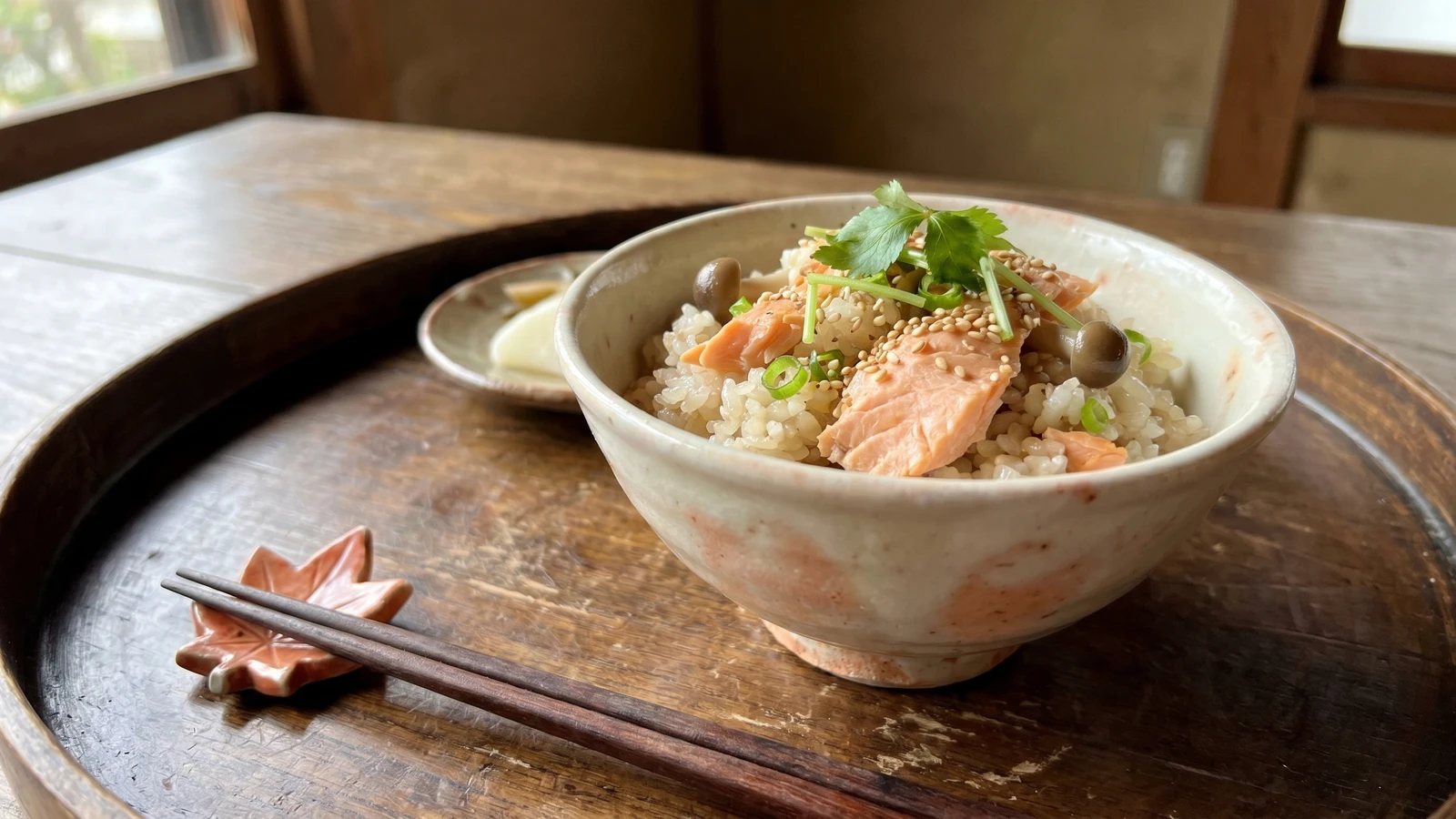
A whole salmon fillet laid on seasoned rice does nearly all the work. Cook it gently, flake it back through, and autumn has found its bowl.
Autumn salmon is a generous teacher. Lay one good fillet on rice, season the water properly, and the cooker does the quiet work while you pretend to be busier than you are. This is takikomi gohan, rice cooked together with its season, and it is much less severe than people make it sound.
The one detail that decides it is the water. Rice cooked with too much liquid turns heavy, especially when salmon releases its own moisture. So we rinse the rice well, let it drain, then measure the dashi and seasonings as the cooking liquid, not as something added on top. The grains should finish separate and glossy, each one carrying dashi, soy, ginger, and the clean richness of the fish.
Use salmon that looks glistening fresh, with firm flesh and no tired smell. Salt it first and let it stand, then wipe it dry. That small step draws out surface moisture and keeps the finished rice clean, nothing hidden under sauce. At the end, lift the fish out, remove the skin and bones, flake it gently, and fold it back through. Rice is not mortar. Treat it kindly.
This is the method, not the menu: rice, dashi, a seasonal ingredient, and restraint. In autumn, salmon makes sense. A few mushrooms may join it if they are at their prime, but the fish remains the center. Leave it room.
Takikomi gohan, rice cooked together with seasonal ingredients and seasoning, has long been part of the everyday Japanese table, especially in autumn when mushrooms, chestnuts, and salmon come into season. In the Edo period, regional rice dishes using local fish and vegetables became common as household cooking absorbed the flavors of expanding trade in soy sauce, dried kelp, and bonito. Salmon rice is especially natural in northern and eastern Japan, where autumn salmon runs shaped both preservation methods and seasonal meals.
Quantity
2 rice-cooker cups (about 300g)
Quantity
1 fillet (about 250g)
pin bones removed
Quantity
1/2 teaspoon
for the salmon
Quantity
1 piece (about 5g)
Quantity
2 1/4 cups
Quantity
15g
Quantity
2 tablespoons
Quantity
1 tablespoon
Quantity
1 tablespoon
Quantity
1 teaspoon
grated
Quantity
80g
trimmed and separated
Quantity
1 tablespoon
Quantity
2
thinly sliced
Quantity
a few
| Ingredient | Quantity |
|---|---|
| Japanese short-grain rice | 2 rice-cooker cups (about 300g) |
| salmon filletpin bones removed | 1 fillet (about 250g) |
| sea saltfor the salmon | 1/2 teaspoon |
| konbu (dried kelp) | 1 piece (about 5g) |
| cold water | 2 1/4 cups |
| katsuobushi (bonito flakes) | 15g |
| soy sauce | 2 tablespoons |
| sake | 1 tablespoon |
| mirin | 1 tablespoon |
| fresh gingergrated | 1 teaspoon |
| shimeji mushrooms (optional)trimmed and separated | 80g |
| toasted white sesame seeds | 1 tablespoon |
| scallionsthinly sliced | 2 |
| mitsuba leaves (optional) | a few |
Sprinkle the salmon on both sides with the salt and let it stand for 15 minutes. Moisture will bead on the surface. Wipe it dry with paper towel, because that moisture carries rough fishiness into the rice if you leave it there.
Wipe the konbu with a damp cloth, but don't wash it. Put it in the cold water and bring it up slowly over low heat. Pull the konbu just before the water boils, when small bubbles climb the sides. Add the katsuobushi all at once, take the pot off the heat, and let the flakes sink for 2 minutes. Strain through a cloth or fine sieve and let it drip without squeezing.
Put the rice in a bowl, cover with water, and stir quickly with your fingers. Pour off the cloudy water and repeat until the water is only lightly cloudy, then drain the rice in a sieve for 10 minutes. Washing removes loose surface starch, so the finished grains cook glossy instead of clinging together in a paste.
In the rice cooker pot, combine the drained rice with 1 3/4 cups of the dashi, the soy sauce, sake, mirin, and grated ginger. The liquid should come to the normal 2-cup rice line in the pot. If it falls short, add a little more dashi. If it rises above the line, remove some. The seasonings count as liquid here, and that is how the rice stays light.
Scatter the shimeji mushrooms over the rice if using, then lay the salmon fillet on top in one piece. Do not stir it into the grains. The fish seasons the rice as it cooks, and keeping it whole lets you remove the skin and any hidden bones cleanly at the end.
Cook on the standard white rice setting. When the cycle finishes, leave the lid closed for 10 minutes. That rest matters. The moisture settles back through the pot, the bottom loosens, and the grains finish firming without being handled.
Lift the salmon onto a plate. Remove and discard the skin, then check once more for bones. Flake the fish into large pieces and fold it back through the rice with a shamoji, cutting down and turning rather than mashing. Fold in the sesame seeds, scallions, and mitsuba if using. Serve in small bowls while the grains are glossy.
1 serving (about 275g)
Culinary guides, cultural storytelling, and the editorial depth that makes cooking meaningful.
Discover Culinary ExplorerChef Takumi
Autumn mushrooms do most of the work here. Rinse the rice well, season the liquid before cooking, and let the pot rest so every grain comes out separate and fragrant.

Chef Takumi
Daigakuimo is simple student comfort: sweet potato cut stout, fried until the corners take color, then turned in a soy-sugar syrup that sets shiny instead of sticky.

Chef Takumi
Chawanmushi looks delicate, but the secret is plain: good dashi, strained egg, and quiet heat. Keep the steam soft and the custard sets smooth, tender, and calm.

Chef Takumi
Kuri gohan is autumn rice at its plainest and best: new chestnuts, cleanly peeled, cooked with rice until their sweetness perfumes every grain.