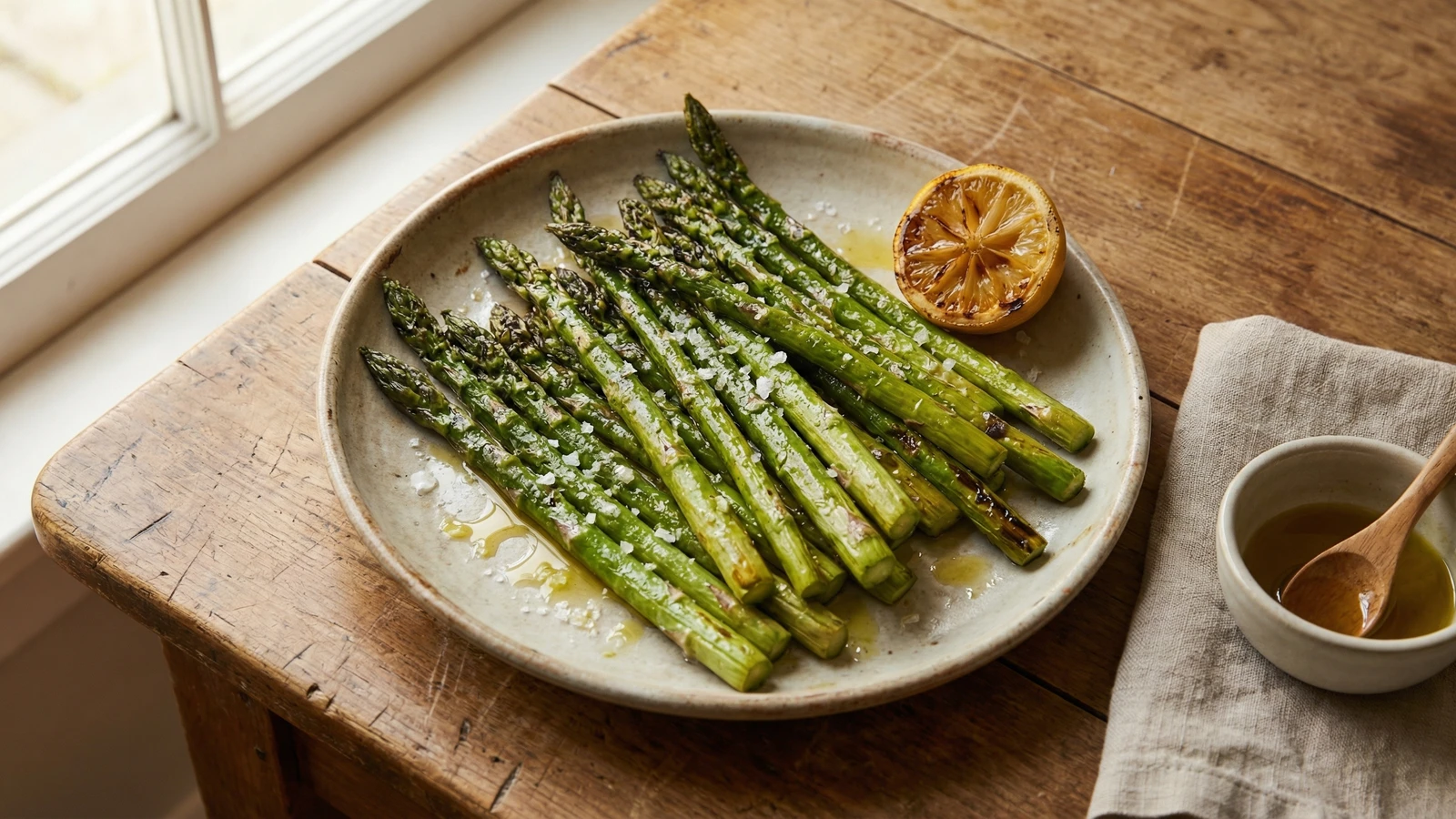
Asparagus at the peak of spring, roasted briefly at high heat until the tips crisp and the stalks stay bright, finished with nothing but your best olive oil and a squeeze of lemon because perfect ingredients need almost nothing done to them.
Side Dishes
California
Easter
Dinner Party
Quick Meal
5 min
Active Time
10 min cook•15 min total
Yield4 servings
The first asparagus of spring is a gift. After months of roots and storage crops, here is something green and alive, pushing up through the soil with urgency. When you find asparagus this fresh, your job is to get out of the way.
At the farmers market, look for bunches that were cut this morning. The tips should be tight and purple-tinged, the stalks firm enough to snap cleanly. Ask the farmer when they harvested. A good one will tell you. This relationship matters. Your choices shape the food system, and buying directly from someone who grows with care keeps that farm in business for another season.
High heat is essential here. You want the oven hot enough that the asparagus roasts rather than steams, developing a faint char on the tips while the interior stays tender and sweet. Eight to twelve minutes. That is all. Then olive oil, lemon, salt. Let things taste of what they are.
The technique, the tradition, and the story behind every dish.
Start at the market. Look for asparagus with tight, compact tips and stalks that snap cleanly when you bend them. The cut ends should look moist, not dried out or woody. If the spears bend instead of breaking, they are tired. Wait for a better bunch, or find a different farmer.
Thick spears are not tougher than thin ones. They are often sweeter and more forgiving in high heat. Do not believe the myth that pencil-thin is superior.
2
Prepare the spears
Hold each asparagus stalk at both ends and bend gently. It will snap naturally where the woody part ends and the tender part begins. Trust the vegetable to show you where to break. Save the ends for stock if you keep one going.
3
Heat the oven
Set your oven to 425 degrees. You want high heat so the asparagus roasts quickly, developing a little color while staying bright and snappy. A sheet pan in the oven while it heats will give you a head start on browning.
4
Dress with oil
Spread the asparagus on your hot pan in a single layer. Drizzle with two tablespoons of olive oil and roll the spears to coat them evenly. Sprinkle with sea salt. The spears should not touch each other if you can help it. Crowding creates steam, and steam prevents browning.
Use a good olive oil here, one you would happily dip bread into. This is not the moment for the bottle you keep for cooking eggs.
5
Roast until tender
Roast for eight to twelve minutes, depending on thickness. Shake the pan once halfway through. The asparagus is ready when the tips have crisped slightly and a knife slides easily into the thickest part of the stalk. They should still have backbone. Mushy asparagus has lost its aliveness.
6
Finish and serve
Transfer the asparagus to a warm platter. Drizzle with the remaining tablespoon of fresh olive oil. Squeeze the lemon half directly over the spears from a few inches up so the juice falls in droplets rather than puddles. Add a pinch more salt and pepper if you like. Serve immediately while the green is still vivid. This is a dish that does not wait.
Chef Tips
•Buy asparagus that was cut this morning. Look for tight tips and stalks that snap cleanly. If they bend, they are tired.
•Thick spears are sweeter and more forgiving than thin ones. They roast beautifully without turning to mush.
•Use your best olive oil, one with personality and a little pepperiness. The asparagus deserves it, and you will taste the difference.
•Save the woody ends for vegetable stock. Waste is a sign of disconnection from the food. Use what the plant gives you.
Advance Preparation
•Asparagus is best roasted and served immediately. If you must prepare ahead, snap the ends and store the spears wrapped in a damp towel in the refrigerator for up to four hours.
•This dish does not reheat well. The aliveness fades. Make it when you are ready to eat.
Frequently Asked Questions
Nutrition Information
1 serving (about 155g)
Calories
125 calories
Total Fat
10 g
Saturated Fat
1 g
Trans Fat
0 g
Unsaturated Fat
9 g
Cholesterol
0 mg
Sodium
200 mg
Total Carbohydrates
7 g
Dietary Fiber
4 g
Sugars
3 g
Protein
4 g
Where cooking meets culture.
Culinary guides, cultural storytelling, and the editorial depth that makes cooking meaningful.