Chef Graziella
Arrosto di Maiale alle Erbe Aromatiche
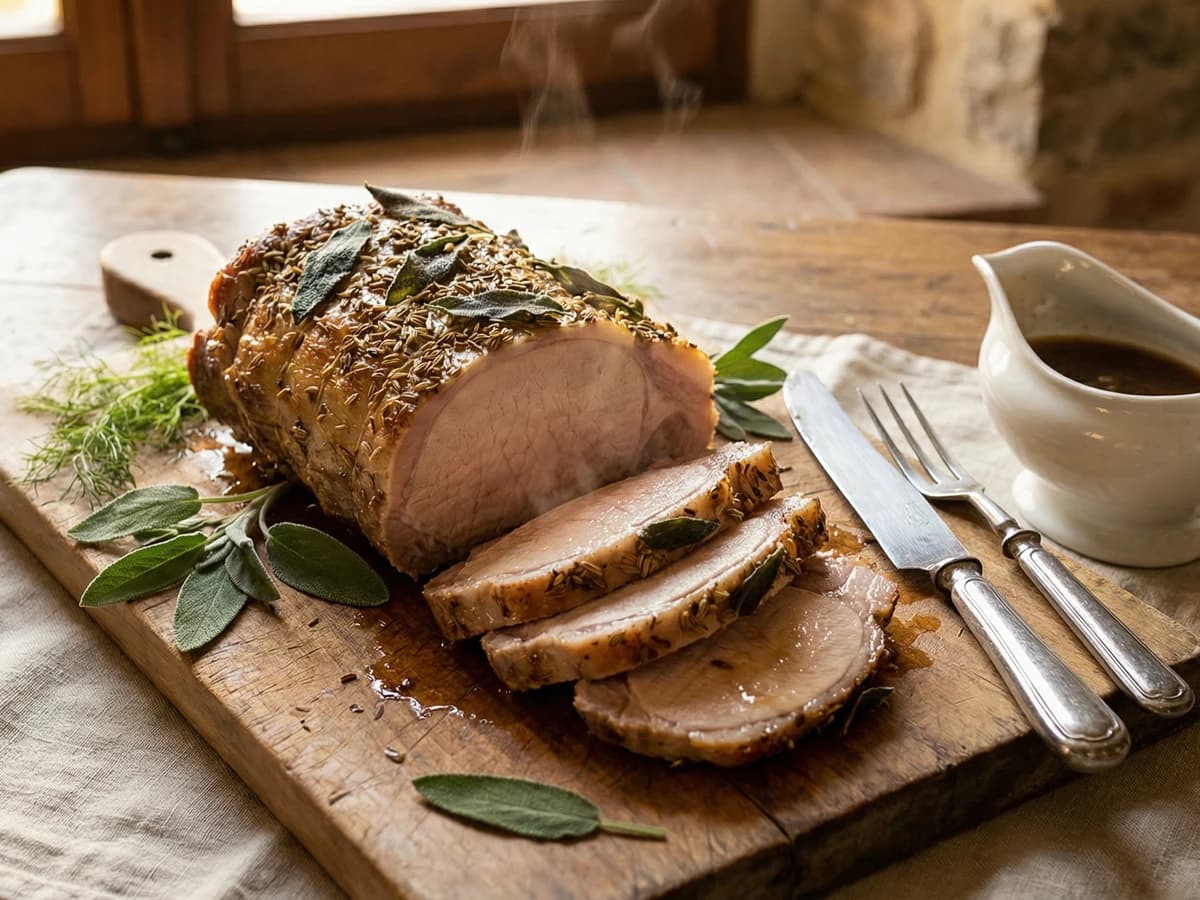
Bone-in pork loin rubbed with fennel, rosemary, and sage, roasted until the herbs form a crackling crust and the meat stays pink and succulent. This is the roast that brings Sunday to life.
A cooking platform built around craft, culture, and the stories behind what we eat.

Created by
Whole sea bass roasted on a bed of potatoes, the simplest preparation and therefore the most honest. The fish seasons the potatoes. The potatoes support the fish. Nothing more is required.
This is the cooking of the Italian coast, from Liguria to Puglia and everywhere between. A fisherman brings home his catch. His wife slices potatoes, drizzles oil, roasts everything together in one pan. The fish juices drip into the potatoes. The potatoes become extraordinary. There is no sauce because the fish makes its own.
Americans want to complicate fish. They want crusts and compound butters and reductions. Italian home cooks know better. When your fish is fresh, you get out of its way. Oil, salt, a whisper of garlic, something green and aromatic. The oven does the rest.
The potatoes here are not a side dish. They are the point. They roast beneath the fish, absorbing every drop of rendered fat and juice. By the time the fish is done, those potatoes have become something remarkable. This is why you must use good potatoes, sliced thin enough to cook through but thick enough to hold their shape. Waxy varieties work best. Starchy potatoes will fall apart.
Roasting whole fish with potatoes became standard along Italian coastlines in the 19th century, after potatoes finally won acceptance in Italian kitchens. Before that, coastal cooks roasted fish on beds of onions, fennel, or bread. The method remains unchanged in fishing villages from the Ligurian Riviera to the Adriatic: fresh catch, local oil, whatever grows nearby, and a hot oven.
Quantity
1 (about 2 1/2 pounds)
scaled and gutted
Quantity
1 1/2 pounds
sliced 1/4 inch thick
Quantity
1/3 cup, divided
Quantity
3
peeled and lightly crushed
Quantity
3 sprigs
Quantity
1
half sliced thin, half reserved
Quantity
1/2 cup
Quantity
to taste
Quantity
to taste
freshly ground
Quantity
2 tablespoons
chopped
| Ingredient | Quantity |
|---|---|
| whole sea bassscaled and gutted | 1 (about 2 1/2 pounds) |
| Yukon Gold potatoessliced 1/4 inch thick | 1 1/2 pounds |
| extra virgin olive oil | 1/3 cup, divided |
| garlic clovespeeled and lightly crushed | 3 |
| fresh rosemary | 3 sprigs |
| lemonhalf sliced thin, half reserved | 1 |
| dry white wine | 1/2 cup |
| kosher salt | to taste |
| black pepperfreshly ground | to taste |
| fresh Italian parsleychopped | 2 tablespoons |
Rinse the sea bass inside and out under cold running water. Pat it completely dry with paper towels. Make three diagonal slashes on each side of the fish, cutting down to the bone. These allow heat to penetrate evenly and seasonings to enter the flesh. Season the cavity and the exterior generously with salt and pepper. Tuck one sprig of rosemary and several lemon slices inside the cavity.
Heat the oven to 400 degrees. In a large bowl, toss the potato slices with half the olive oil, the crushed garlic cloves, and one sprig of rosemary. Season with salt and pepper. The potatoes should be evenly coated but not swimming in oil.
Spread the potatoes in an even layer in a roasting pan or large baking dish, overlapping them slightly like fallen leaves. The layer should be no more than two slices thick. Nestle the remaining rosemary sprig among the potatoes. The garlic cloves should be scattered throughout.
Place the pan in the oven and roast the potatoes alone for 20 minutes. They should begin to turn golden at the edges and soften through. This head start is essential. Potatoes take longer to cook than fish, and the fish waits for nothing.
Remove the pan from the oven. Lay the prepared sea bass directly on top of the potatoes. Drizzle the remaining olive oil over the fish. Pour the white wine around the edges of the pan, not over the fish. The wine will help the potatoes finish cooking and create a small amount of sauce.
Return the pan to the oven and roast for 20 to 25 minutes. The fish is done when the flesh is opaque and flakes easily when tested with a fork at the thickest part. The skin should be golden and beginning to crisp. The potatoes beneath should be tender and have absorbed the fish juices. Do not rely solely on time. The fish tells you when it is done.
Remove from the oven and squeeze the juice of the remaining lemon half over the fish and potatoes. Scatter the chopped parsley over everything. Bring the pan directly to the table. Fish this fresh, this simply prepared, deserves to be served immediately, while the skin still crackles and the potatoes glisten. Fillet at the table if you wish, or let guests serve themselves.
1 serving (about 310g)
Culinary guides, cultural storytelling, and the editorial depth that makes cooking meaningful.
Discover Culinary ExplorerChef Graziella
Bone-in pork loin rubbed with fennel, rosemary, and sage, roasted until the herbs form a crackling crust and the meat stays pink and succulent. This is the roast that brings Sunday to life.

Chef Graziella
The ancient technique of salt-baking creates a sealed chamber where the fish steams in its own moisture. What emerges is flesh of remarkable purity, seasoned perfectly, ready for nothing but your best olive oil.

Chef Graziella
The ugly fish that cooks like veal, braised in tomatoes until the firm white flesh absorbs the briny sweetness of olives and capers. Fishermen's wives along the Adriatic knew its worth before restaurants discovered it.

Chef Graziella
A fifteen-minute lesson in restraint: pork chops, butter, sage, and the understanding that what you leave out matters as much as what you put in.