Chef Joost
Aardappelgratin
A French name, a Dutch potato, and a Sunday table: aardappelgratin is what happens when a frugal kitchen borrows richness and behaves as if it had always belonged.
A cooking platform built around craft, culture, and the stories behind what we eat.

Created by
Sperziebonen carries asparagus in its name, yet lands on the weeknight table as green beans snapped by hand, bacon rendered slowly, and mustard sharp enough to wake the whole pan.
The sound of this dish is not the pan. It is the snap. In my grandmother's kitchen the beans came from a paper bag or from someone's garden, and the children were given the serious work: sit at the table, pinch off the tips, break each pod in two. A knife made them tidy. Fingers made them ours.
But let me tell you a secret. The name sperzieboon is a little fossil: a shortening of aspergieboon, asparagus bean, a reminder that young green pods were once treated like asparagus, eaten whole rather than shelled from their pods. That is why I don't cut them. You hear the freshness when the bean breaks, and you see the line where it gives. If it bends like string, cook something else. The calendar is speaking.
Sperziebonen met spek belongs to the Dutch summer table, not because it is grand, but because it knows exactly what it is: beans cooked just past crisp, spek, cured pork belly or bacon, rendered until its fat can carry onion, and a spoon of mustard to keep the sweetness honest. Hou het altijd simpel, always keep it simple. Boil the beans in salted water, finish them in the bacon pan, and stop before the beans go army-green and apologetic. A dish without its story is half a meal; this one tells you how a frugal kitchen made the garden taste like supper.
The common bean, Phaseolus vulgaris, reached the Low Countries after the Columbian exchange and was established in Dutch kitchen gardens by the seventeenth and eighteenth centuries, where household cookbooks list groene boonen, green beans, among summer vegetables. The modern name sperzieboon is generally traced to aspergieboon, asparagus bean, because the young pods were eaten whole and dressed much like asparagus instead of being shelled. Adding spek, cured pork belly, reflects a Dutch household habit: a small piece of pork fat made a pan of garden vegetables filling enough for the ordinary meal.
Quantity
600g
tips pinched off and snapped in two by hand
Quantity
150g
diced into small lardons
Quantity
1 medium
finely chopped
Quantity
1 tablespoon
Quantity
1 tablespoon
preferably Zaanse mustard
Quantity
1 teaspoon
Quantity
2 tablespoons
Quantity
to taste
Quantity
to taste
freshly ground
Quantity
small grating
| Ingredient | Quantity |
|---|---|
| fresh green beans (sperziebonen)tips pinched off and snapped in two by hand | 600g |
| smoked bacon or spekdiced into small lardons | 150g |
| onionfinely chopped | 1 medium |
| butter (optional) | 1 tablespoon |
| coarse Dutch mustardpreferably Zaanse mustard | 1 tablespoon |
| apple cider vinegar or white wine vinegar | 1 teaspoon |
| reserved bean cooking water | 2 tablespoons |
| salt | to taste |
| black pepperfreshly ground | to taste |
| nutmeg (optional) | small grating |
Rinse the beans, then pinch off the stem ends by hand and snap each pod in two. Leave very small beans whole. If a bean folds rather than snaps, it is tired; save it for soup or let it go. The snap tells you water is still inside the pod, which is why the bean will taste green rather than papery.
Put the diced bacon or spek into a cold heavy skillet and set it over medium-low heat. Cook for 8 to 10 minutes, stirring now and then, until the fat has run clear and the bacon is crisp at the edges. Scoop the bacon onto a plate and leave the fat in the pan. If your bacon is lean and the pan looks dry, add the butter.
Bring a large saucepan of salted water to a lively boil. Add the snapped beans and cook for 6 to 8 minutes, until they are just past crisp: still green, bending slightly, with no raw squeak under the tooth. Reserve 2 tablespoons of the cooking water, then drain the beans. Do not rinse them; that salty film helps the pan finish do its work.
Return the skillet with the bacon fat to medium heat and add the onion. Cook for 4 to 5 minutes, until soft and translucent, not brown. Stir in the mustard, vinegar, and reserved bean water. It should look glossy and loose enough to coat the beans, not like a sauce trying to become soup.
Add the drained beans and the crisp bacon back to the skillet. Toss for 2 to 3 minutes, until the beans are coated with onion, mustard, and bacon fat. Grind over black pepper, add a small grating of nutmeg if you like, and taste before salting; spek has already been speaking. Serve at once in a shallow bowl or straight from the pan at the table.
1 serving (about 210g)
Culinary guides, cultural storytelling, and the editorial depth that makes cooking meaningful.
Discover Culinary ExplorerChef Joost
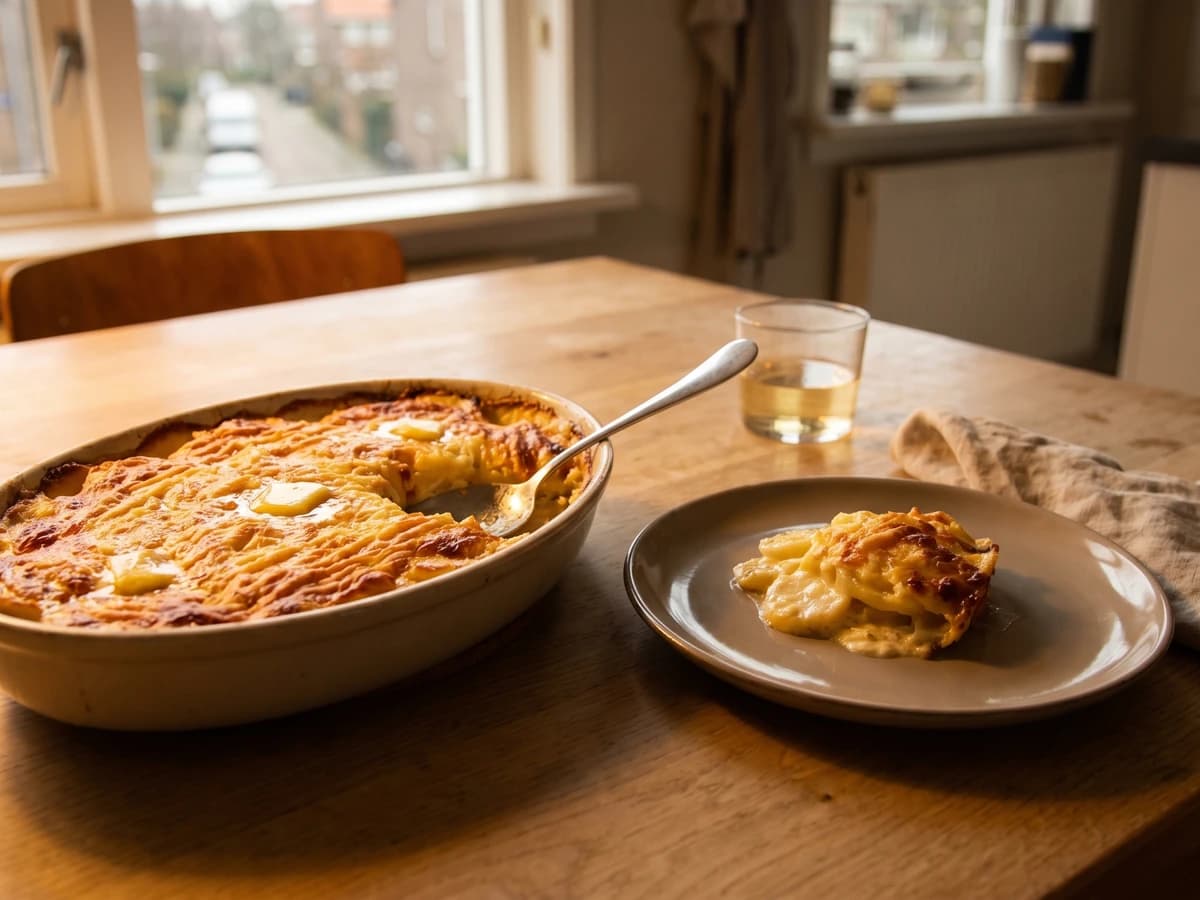
A French name, a Dutch potato, and a Sunday table: aardappelgratin is what happens when a frugal kitchen borrows richness and behaves as if it had always belonged.
Chef Joost
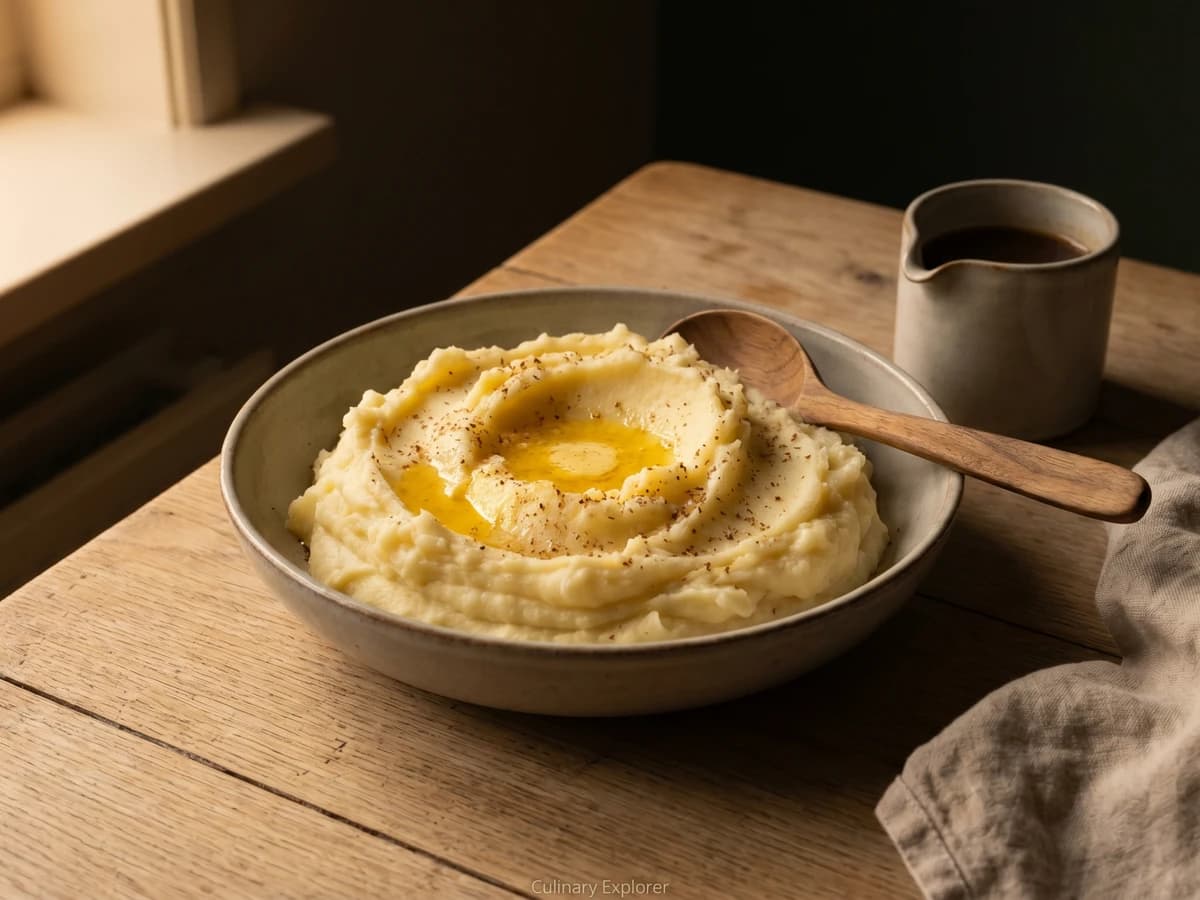
Aardappelpuree is the quiet heart of the Dutch AVG'tje: floury potatoes, warm milk, butter, nutmeg, and a small kuiltje, little well, built for the jus.

Chef Joost
Flower cabbage under old Gouda sauce: the quiet Dutch side dish that turns one boiled vegetable into the reason everyone reaches for the spoon twice.

Chef Joost
White beans peeking through green snijbonen give this old Dutch side its nursery-table joke: bare little children in the grass, sweet garden thrift with butter, nutmeg, and no apology.