
Chef Dimitra
Chios Nerantzi Glyko Koutaliou (Νεράντζι Γλυκό Κουταλιού)
Chios bitter orange peel rolled into tight coils, blanched through clean waters, then preserved in a clear fragrant syrup for the spoon-sweet tray.
A cooking platform built around craft, culture, and the stories behind what we eat.

Created by
Soutzoukos Kyprou is Cyprus preserved in grape must: walnuts on string, dipped patiently in palouzes until the coating sets chewy, glossy, and firm enough to slice.
Soutzoukos Kyprou is Cyprus in its grape harvest form: walnuts threaded on cotton string and dipped again and again into thickened moustos, grape must, until they look like narrow brown candles. Slice one and you see the whole idea at once, a ring of chewy grape around a clean walnut heart.
The dish belongs to the Cypriot autumn, when grapes are pressed and nothing from the must is wasted. First comes palouzes, the warm grape pudding thickened with flour. Then the same pot becomes soutzoukos, built in layers, dried, and kept for the winter table. The region is the dish's surname.
The one rule is not to be greedy with the dipping. Thin coats dry into a smooth, tender chew; a thick coat cracks or slips away from the nuts. Build the must in patient layers and the sweet will hold. A recipe written down is a recipe saved, and this one deserves the care.
Soutzoukos is part of Cyprus's old grape-must cookery, made after the vendema, the island grape harvest, alongside palouzes, kiofterka, and epsima. The method is shared across the eastern wine-making world, but in Cyprus it is tied especially to village presses and to preserving the autumn must for winter hospitality. Walnuts or almonds were threaded on cotton string, dipped in thickened must, and hung to dry where air could pass around them.
Quantity
400g
Quantity
2 litres
Quantity
170g
Quantity
40g
Quantity
1 tablespoon
Quantity
1/2 teaspoon
Quantity
1 small pinch
| Ingredient | Quantity |
|---|---|
| walnut halves | 400g |
| fresh grape must (moustos) or unsweetened red grape juice | 2 litres |
| plain flour | 170g |
| fine semolina | 40g |
| rosewater (optional) | 1 tablespoon |
| ground cinnamon (optional) | 1/2 teaspoon |
| fine sea salt | 1 small pinch |
Cut 8 lengths of clean cotton kitchen string, each about 45cm long. Thread a needle and push it through the thick middle of each walnut half, making strings about 22cm long and tying a loop at the top. Leave a little space between the nuts so the grape coating can grip them.
Take 500ml of the grape must and whisk it with the flour, semolina, salt, and cinnamon if using, until smooth. Let it stand for 10 minutes, then whisk again. This pause softens the flour and helps keep the palouzes smooth instead of grainy.
Bring the remaining 1.5 litres grape must to a gentle simmer in a heavy pot. Whisk in the slurry slowly, then cook over medium-low heat, stirring often, for 35 to 45 minutes, until it thickens into a glossy pudding that falls from the spoon in heavy ribbons. Stir in the rosewater at the end if you use it.
Lower one walnut string into the hot palouzes, coat it fully, then lift it and let the excess fall back into the pot. Hang it over a tray and repeat with the rest. The method that decides soutzoukos is patience: many thin dips dry firm and even, while one heavy coat slides off and dries leathery.
Let the first coat set for 20 to 30 minutes, then dip each string again. Repeat 4 to 6 times, warming the palouzes gently if it stiffens too much. Stop when each string is thick, smooth, and candle-like, with the walnuts hidden under a deep grape-colored shell.
Hang the soutzoukos in a cool, airy place for 2 to 4 days, away from direct sun, until the outside is dry to the touch but the inside still bends. Slice across the string into coins, then pull out any thread as you eat. Store wrapped in parchment in an airtight tin.
1 serving (about 50g)
Culinary guides, cultural storytelling, and the editorial depth that makes cooking meaningful.
Discover Culinary ExplorerChef Dimitra
Chios bitter orange peel rolled into tight coils, blanched through clean waters, then preserved in a clear fragrant syrup for the spoon-sweet tray.

Chef Dimitra
Chios gives vanilla submarine its mastic breath: a pearly spoon sweet stirred stiff, served cold in water, and offered as the simplest kerasma.
Chef Dimitra
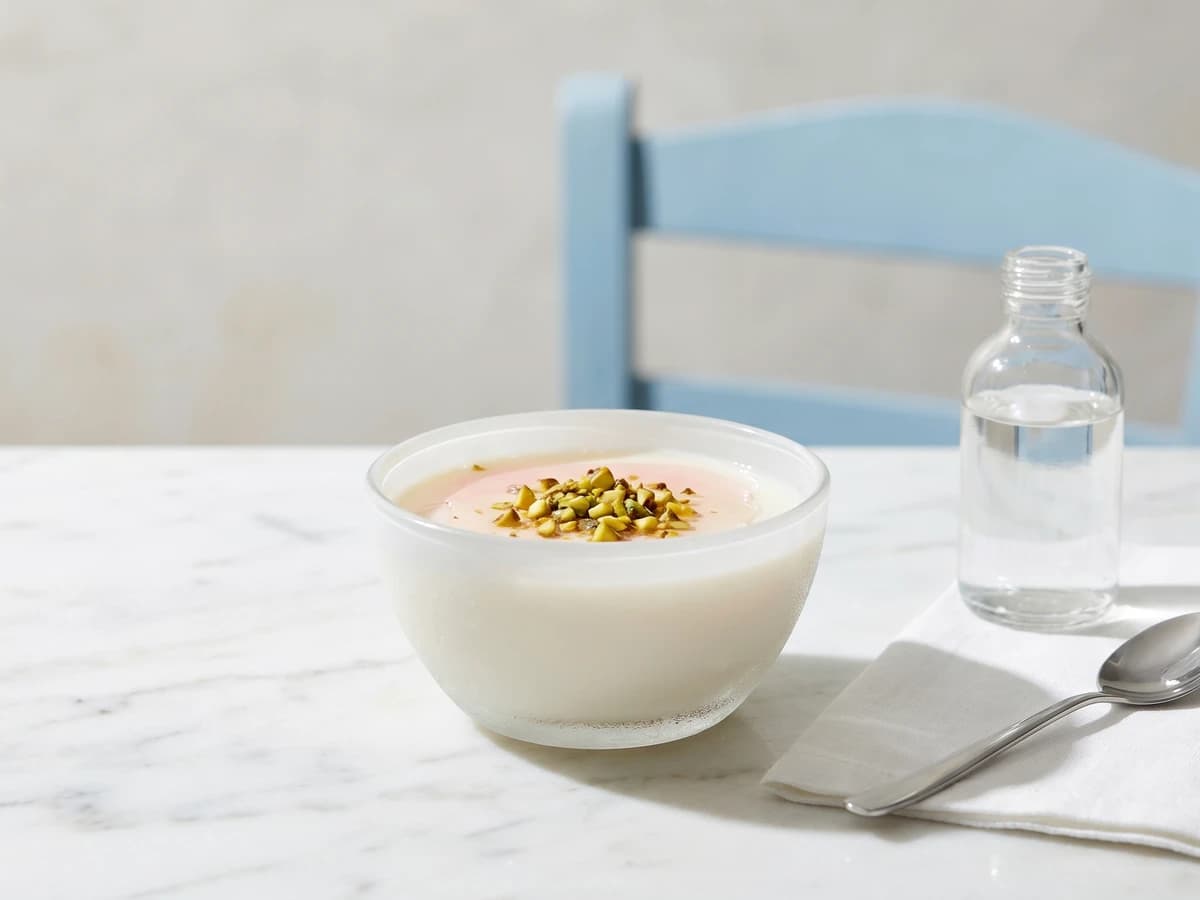
Mahalepi is the cooling milk pudding of Cyprus and the Politiki table: pale, trembling, and loosened at the spoon with cold rosewater syrup.
Chef Dimitra
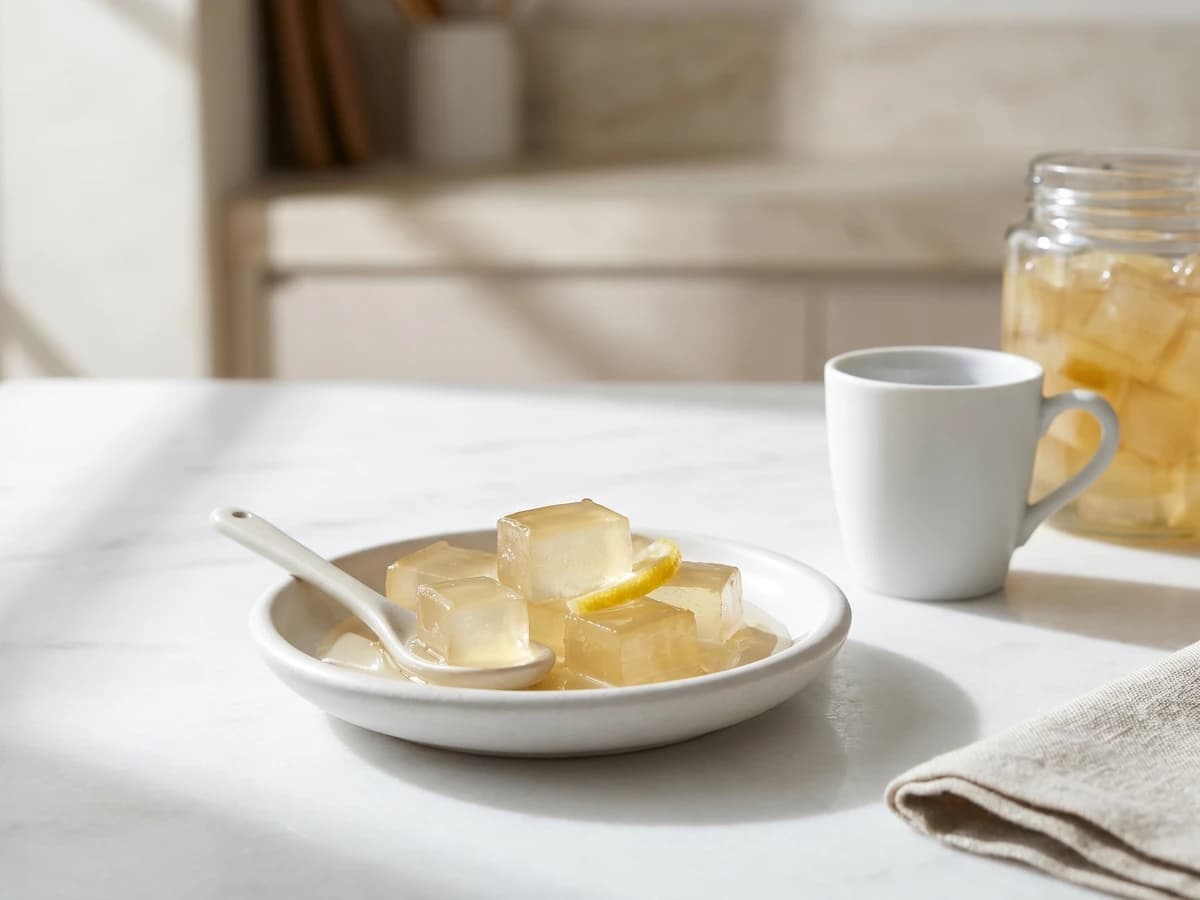
Cyprus keeps the watermelon after the red flesh is gone: firm white rind, lime-soaked for snap, simmered slowly in lemon syrup until each piece shines on the spoon.