
Chef Ally
Black-Eyed Peas with Greens
Field peas simmered slowly with a smoky ham hock, joined by ribbons of collard greens that melt into the pot liquor, a bowl of Southern tradition that nourishes body and spirit alike.
A cooking platform built around craft, culture, and the stories behind what we eat.
Created by
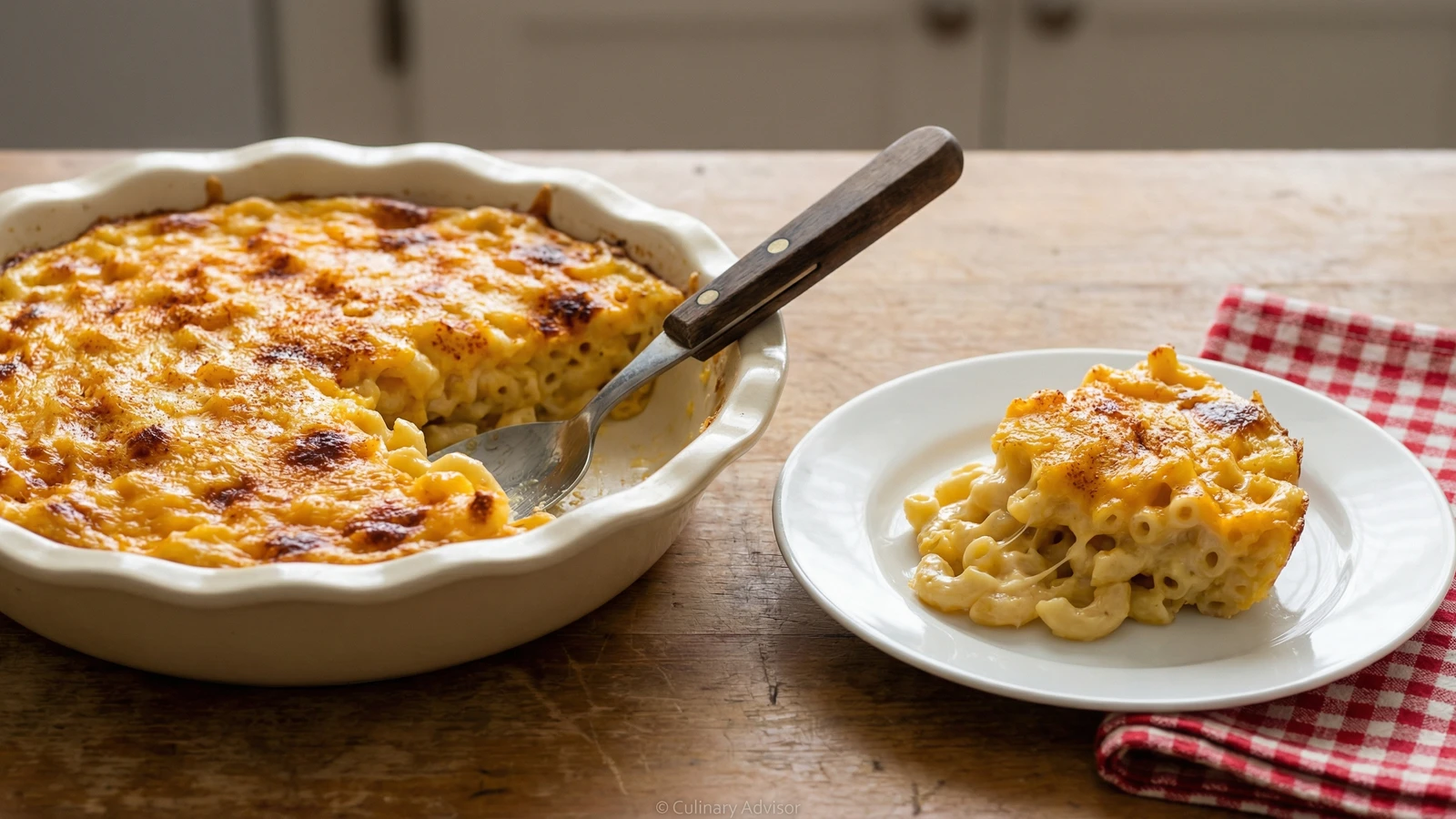
The real thing: a custard-bound casserole of tender elbow macaroni and sharp cheddar, baked until the top shatters into golden shards while the center stays impossibly creamy. This is the mac and cheese that built church suppers and family reunions.
Let me be clear about something. Southern baked macaroni and cheese bears no resemblance to the orange powder in a blue box. This is a custard, bound with eggs and enriched with good cheese, baked until the top forms a golden crust that cracks when you break through to the creamy layers beneath. It is serious food masquerading as a side dish.
The technique came from English settlers who brought their cheese custards to the colonies, but Black cooks in the South transformed it into something transcendent. They understood that eggs create structure and richness that no amount of flour-thickened sauce can replicate. This is their legacy, served at every gathering worth attending from Virginia to Louisiana.
I've eaten this dish at church basements, funeral receptions, and Thanksgiving tables where it occupied a place of honor beside the turkey. The person who brings good mac and cheese to a potluck earns a reputation. People remember. They request your dish by name for years afterward.
The method is forgiving but demands respect for a few principles: good sharp cheddar (not pre-shredded, which contains anti-caking agents that prevent proper melting), whole milk and eggs for the custard, and patience while baking. Rush this and you'll have curdled eggs instead of silken richness.
Quantity
1 pound
Quantity
4 tablespoons
divided
Quantity
1 pound (about 5 cups)
freshly grated
Quantity
4 ounces (about 1 cup)
freshly grated
Quantity
3
Quantity
2 cups
Quantity
1 cup
Quantity
1 teaspoon
Quantity
1/2 teaspoon
Quantity
1/2 teaspoon
freshly grated
Quantity
1 1/2 teaspoons
Quantity
1/2 teaspoon
freshly ground
Quantity
1/4 teaspoon
for topping
| Ingredient | Quantity |
|---|---|
| elbow macaroni | 1 pound |
| unsalted butterdivided | 4 tablespoons |
| sharp cheddar cheesefreshly grated | 1 pound (about 5 cups) |
| mild cheddar cheesefreshly grated | 4 ounces (about 1 cup) |
| large eggs | 3 |
| whole milk | 2 cups |
| evaporated milk | 1 cup |
| dry mustard powder | 1 teaspoon |
| cayenne pepper | 1/2 teaspoon |
| nutmegfreshly grated | 1/2 teaspoon |
| kosher salt | 1 1/2 teaspoons |
| black pepperfreshly ground | 1/2 teaspoon |
| paprikafor topping | 1/4 teaspoon |
Position a rack in the center of your oven and preheat to 350°F. Use one tablespoon of butter to generously grease a 9x13-inch baking dish, making sure to coat the corners where the crust tends to stick. A well-greased dish means those coveted corner pieces release cleanly.
Bring a large pot of generously salted water to a rolling boil. The water should taste like the sea. Add the macaroni and cook for exactly two minutes less than the package directions suggest. You want pasta that still has a firm bite, almost chalky at the center. It will continue cooking in the oven and absorb moisture from the custard. Drain thoroughly but do not rinse.
Transfer the hot, drained pasta to a large bowl. Add the remaining three tablespoons of butter and toss until every piece is coated and glistening. The butter serves two purposes: it prevents sticking and adds richness that integrates throughout the dish.
In a separate bowl, whisk the eggs until smooth. Add the whole milk and evaporated milk, whisking to combine completely. Add the dry mustard, cayenne, nutmeg, salt, and black pepper. Whisk again until the spices are evenly distributed. The custard should be pale yellow and slightly frothy.
Reserve one cup of the sharp cheddar for the topping. Add all the mild cheddar and the remaining sharp cheddar to the buttered pasta. Toss thoroughly. The residual heat from the pasta will begin softening the cheese, creating strings and pockets throughout.
Spread half of the cheese-laden pasta into your prepared baking dish, pressing gently to eliminate air pockets. Pour half of the custard mixture evenly over the pasta. Watch it seep down between the noodles. Add the remaining pasta, spread level, then pour the rest of the custard slowly over the top. The liquid should come just to the surface of the pasta without submerging it.
Scatter the reserved cup of sharp cheddar evenly across the surface. Dust with paprika for color. Bake uncovered for 45 to 50 minutes, until the top is deeply golden with spots of toasty brown and the custard is set. It should jiggle slightly in the very center when you shake the pan, like a custard pie.
Remove from the oven and let the macaroni rest for fifteen minutes. I know this requires patience. The resting period allows the custard to finish setting from residual heat and makes serving infinitely easier. Cut through that golden crust and scoop generous portions. The interior should be creamy, almost saucy, holding its shape on the plate but yielding immediately to a fork.
1 serving (about 245g)
Culinary guides, cultural storytelling, and the editorial depth that makes cooking meaningful.
Discover Culinary ExplorerChef Ally
Field peas simmered slowly with a smoky ham hock, joined by ribbons of collard greens that melt into the pot liquor, a bowl of Southern tradition that nourishes body and spirit alike.

Chef Dean
Tender rice and bright broccoli florets bound in a silky from-scratch cheese sauce, crowned with buttery cracker crumbs and baked until golden and bubbling. This is the casserole that disappears first at every church supper.

Chef Dean
Tender sweet potatoes bathed in a butter and brown sugar glaze until deeply caramelized, crowned with pillowy marshmallows toasted to golden perfection. This is the dish that makes Thanksgiving worth the effort.

Chef Dean
Golden, craggy cornmeal fritters with tender onion-flecked centers, fried until they shatter at first bite. The only proper sidekick for a fish fry, a barbecue spread, or a basket of fried catfish.