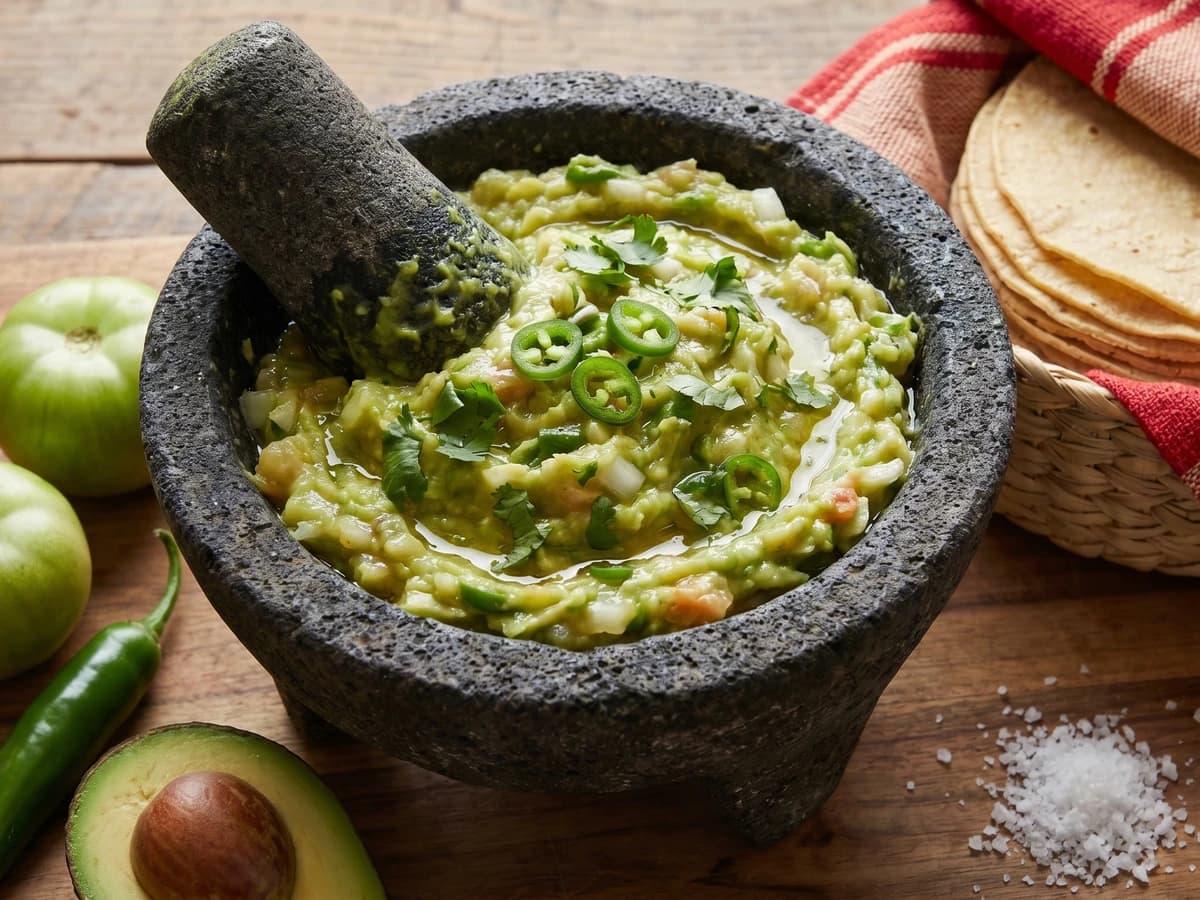
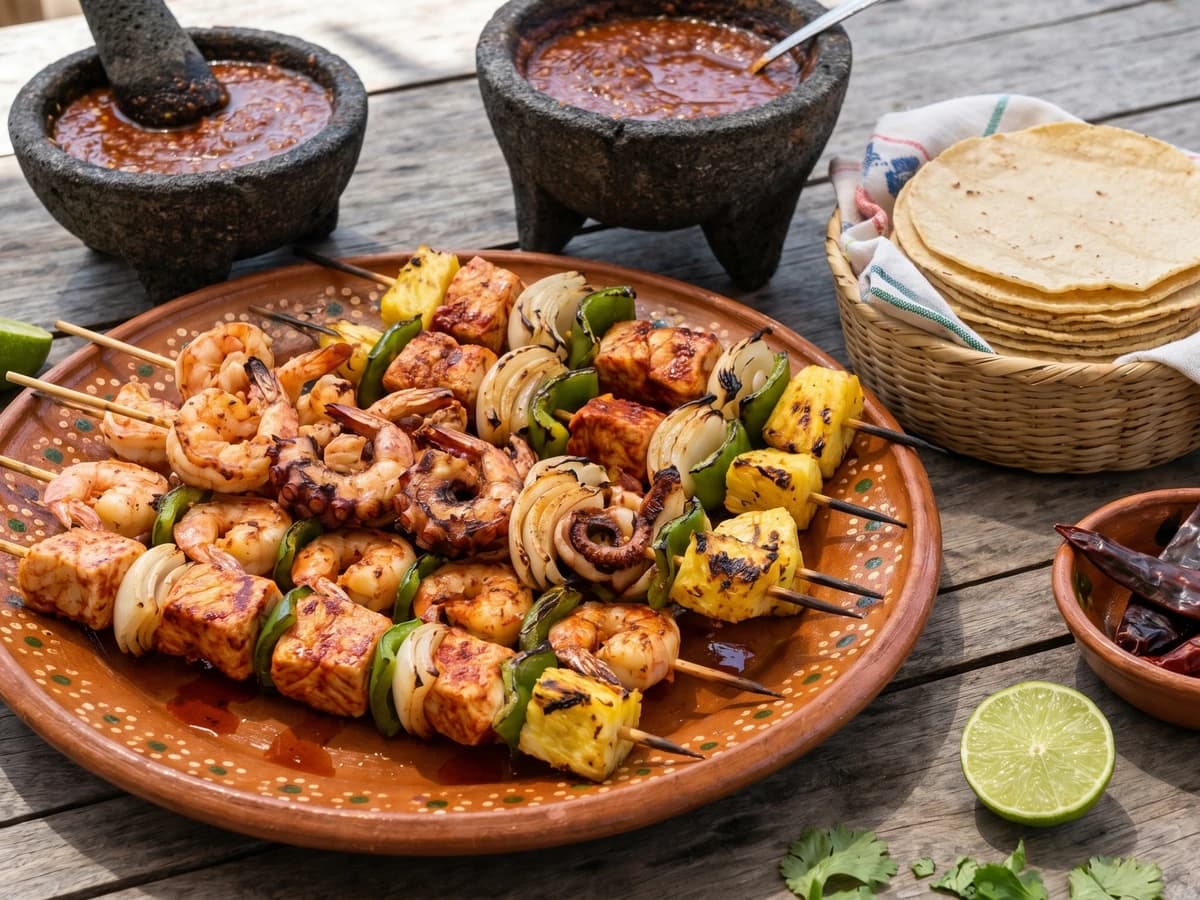
Guanajuato's Bajío sope is a thick masa round fried in manteca de cerdo, pinched high, and loaded with beans, chorizo, potato, salsa roja, and queso fresco. Mercado food with backbone.
Appetizers & Snacks
Mexican
Weeknight
Comfort Food
Budget Friendly
40 min
Active Time
50 min cook•1 hr 30 min total
Yield12 sopes, 4 to 6 servings
Guanajuato, in the central Bajio, is where this sope lives: thick corn masa pressed by hand, set on a comal, pinched while hot, then fried in manteca de cerdo until the bottom is crisp and the rim can hold beans without collapsing. In Mercado Hidalgo in the capital, and in the smaller markets between Leon, Irapuato, and Dolores Hidalgo, this is food for a day when you need to stretch chorizo with potato and still feed everyone well.
The technique belongs to women who work fast. They press the masa, cook it just enough to set, then pinch the border while it still burns the fingers a little. That rim is not decoration. It is engineering. It holds the refried bayo beans, the brick-red chorizo, the soft potato, the salsa roja of chile guajillo and chile ancho, and the crumbled queso fresco without turning the whole thing into a pile.
Do not confuse this with a tostada. A tostada is thin and brittle. A sope has a tender center and a fried edge. Do not use Spanish cured chorizo. You need fresh Mexican pork chorizo, the kind that stains the potato red as it cooks. And do not come to me with flour tortillas here. Flour has its places in the north. This is Guanajuato masa work, Bajio market work, and this is a 32-state cuisine.
Serve them on hand-painted ceramic from Dolores Hidalgo if you have it, with the salsa in a small cazuelita and limes cut rough on the table. My mother used to say that food tells on the cook. These sopes tell whether you respected the masa, the fat, and the market. Saber cocinar es saber vivir.
Central Mexican sopes belong to the same pre-Columbian masa-and-comal family as tlacoyos, memelas, and gorditas, all built from nixtamalized corn before wheat became a daily staple in parts of northern Mexico. In Guanajuato, the colonial Bajio's mining economy and ranching corridors added pork chorizo, manteca de cerdo, cow's milk queso fresco, and potatoes, turning a corn base into portable mercado food for workers and families. The more famous enchiladas mineras carry the mining name, but these sopes show the same Guanajuatense logic: masa, chile guajillo, beans, potatoes, and enough pork fat to hold you through the day.
The technique, the tradition, and the story behind every dish.
or 2 cups masa harina for tortillas mixed with warm water
warm water
Quantity
1/2 to 1 cup
as needed for the masa
fine sea salt
Quantity
1 teaspoon
manteca de cerdo
Quantity
2 tablespoons
softened, for the masa
manteca de cerdo
Quantity
3/4 cup
for frying and refrying, plus more as needed
dried chile guajillo
Quantity
5
stemmed and seeded
dried chile ancho
Quantity
1
stemmed and seeded
dried chile de arbol (optional)
Quantity
1
stemmed
Roma tomatoes
Quantity
2
white onion
Quantity
1/4 medium
for the salsa
garlic clove
Quantity
1
unpeeled
kosher salt
Quantity
1/2 teaspoon, plus more to taste
cooked bayo beans or flor de mayo beans
Quantity
2 cups
with 1/2 cup bean broth
white onion
Quantity
1/4 medium
finely chopped, for the beans
fresh epazote
Quantity
1 sprig
white potatoes
Quantity
2 medium
peeled and cut into 1/2-inch dice
fresh Mexican pork chorizo
Quantity
12 ounces
casings removed
queso fresco
Quantity
3/4 cup
crumbled
Mexican crema (optional)
Quantity
1/3 cup
white onion (optional)
Quantity
1/4 cup
finely diced, for serving
cilantro (optional)
Quantity
1/4 cup
chopped, for serving
lime wedges (optional)
Quantity
for serving
Ingredient
Quantity
fresh nixtamalized corn masaor 2 cups masa harina for tortillas mixed with warm water
1 1/2 pounds
warm wateras needed for the masa
1/2 to 1 cup
fine sea salt
1 teaspoon
manteca de cerdosoftened, for the masa
2 tablespoons
manteca de cerdofor frying and refrying, plus more as needed
3/4 cup
dried chile guajillostemmed and seeded
5
dried chile anchostemmed and seeded
1
dried chile de arbol (optional)stemmed
1
Roma tomatoes
2
white onionfor the salsa
1/4 medium
garlic cloveunpeeled
1
kosher salt
1/2 teaspoon, plus more to taste
cooked bayo beans or flor de mayo beanswith 1/2 cup bean broth
2 cups
white onionfinely chopped, for the beans
1/4 medium
fresh epazote
1 sprig
white potatoespeeled and cut into 1/2-inch dice
2 medium
fresh Mexican pork chorizocasings removed
12 ounces
queso frescocrumbled
3/4 cup
Mexican crema (optional)
1/3 cup
white onion (optional)finely diced, for serving
1/4 cup
cilantro (optional)chopped, for serving
1/4 cup
lime wedges (optional)
for serving
Equipment Needed
•Cast iron comal or heavy griddle
•Tortilla press lined with plastic
•Wide heavy skillet or shallow clay cazuela for frying
•Wooden spoon or machacador for refrying beans
•Blender or volcanic stone molcajete for the salsa
Instructions
1
Toast the chiles
Heat a dry comal over medium. Toast the guajillo and ancho chiles separately, about 20 to 30 seconds per side, just until the skins darken a shade and smell deep. If using chile de arbol, toast it for only a few seconds. It burns fast. Put the toasted chiles in a bowl and cover with hot water for 15 minutes. Hot, not boiling. Boiling water pulls bitterness from the skins.
If a chile goes black, throw it out. Burned chile makes bitter salsa and no amount of tomato fixes it.
2
Make the salsa
On the same comal, roast the tomatoes, onion, and unpeeled garlic until the tomato skins blister and the onion has browned edges. Peel the garlic. Drain the softened chiles and blend them with the roasted tomato, onion, garlic, salt, and 1/2 cup fresh water until smooth. Fry the salsa in 1 tablespoon manteca de cerdo for 5 minutes, stirring until the color turns brick red and the fat shines at the edges. That frying is where the salsa becomes food, not raw puree.
3
Refry the beans
Melt 2 tablespoons manteca de cerdo in a skillet over medium heat. Add the finely chopped onion and cook until translucent, not browned. Add the bayo beans, bean broth, epazote, and a good pinch of salt. Mash with a wooden spoon or machacador until thick and spreadable. The beans must sit on the sope without running over the rim. Remove the epazote stem when the flavor is there.
Use bayo or flor de mayo beans if you can. Black beans belong to other regions more strongly. Cada estado, su propia cocina.
4
Cook chorizo and potato
Simmer the diced potatoes in salted water for 7 to 9 minutes, until just tender. Drain them well and let the surface dry for a few minutes. In a wide skillet, cook the chorizo over medium heat, breaking it apart, until the red fat renders and the meat smells of chile and vinegar. Add the potatoes and cook 8 to 10 minutes more, pressing a few pieces so they catch the chorizo fat. If the chorizo is lean, add 1 tablespoon manteca de cerdo. Do not make dry chorizo. That is punishment, not dinner.
5
Prepare the masa
Knead the fresh masa with the fine sea salt and 2 tablespoons softened manteca de cerdo. Add warm water by the tablespoon only if the masa feels dry. It should be soft and pliable, like the lobe of your ear, not sticky and not cracking. If using masa harina, mix it first with 1 1/2 cups warm water, rest it for 10 minutes, then knead in the salt and manteca. Masa harina is useful, but fresh masa from the tortilleria tastes more alive. Preguntale a las senoras del mercado.
6
Shape and comal
Divide the masa into 12 balls. Press each one between plastic in a tortilla press until about 3 1/2 inches wide and 1/4 inch thick. Cook on a dry hot comal for about 45 seconds per side, just until the surface looks dry and small brown freckles appear. You are setting the masa, not fully cooking it yet.
Do not press them thin like tortillas. A sope needs thickness so you can pinch a rim and fry it without it turning brittle.
7
Pinch the rims
While each masa round is still hot, use a folded towel to protect your fingers and pinch up the edge all the way around, making a low wall. Pinch a little of the center too so the beans grip the surface. Work fast. If the round cools, it cracks. This is the movement the market cooks have in their hands, quick, practical, learned by burning their fingertips a little until the body remembers.
8
Fry the sopes
Heat 1/2 cup manteca de cerdo in a heavy skillet over medium-high until a small crumb of masa sizzles immediately. Fry the sopes in batches, rim side up, spooning a little hot fat over the rim. Cook 2 to 3 minutes, until the bottom is golden and crisp but the inside still has chew. Drain briefly on paper or a rack. La manteca es el sabor. Oil gives you a harder, flatter taste.
9
Assemble and serve
Spread each hot sope with a spoonful of refried beans. Add the chorizo and potato, then a spoonful of salsa roja. Finish with crumbled queso fresco, Mexican crema if using, diced white onion, cilantro, and lime at the table. Serve immediately, preferably on a hand-painted ceramic platter from Dolores Hidalgo. A sope that waits too long becomes heavy. A sope eaten at once reminds you why mercado food is serious work.
Chef Tips
•Buy fresh masa at a tortilleria if you can. It should smell like corn and cal, clean and mineral. If it smells sour, walk away. Masa harina is a compromise, not an upgrade, but it will work if you hydrate it properly and let it rest.
•Use fresh Mexican pork chorizo, not Spanish cured chorizo. The cured kind slices neatly and belongs to another cooking tradition. For these sopes, the chorizo must crumble, render red fat, and coat the potatoes.
•The salsa roja should taste of chile guajillo first, tomato second. If your tomatoes are pale and out of season, roast them hard and let the chile carry the sauce. Mexican grandmothers cook with what the mercado gives them.
•Epazote belongs in the beans. If you cannot find it, leave it out. Do not replace it with parsley. Parsley has no business pretending to be epazote.
•Fry in manteca de cerdo. You are not using a lot per serving, but you need the flavor and the texture. The rim should crisp while the center stays tender. Así se hace y punto.
Advance Preparation
•The salsa roja can be made up to 3 days ahead and refrigerated. Reheat it in a small spoonful of manteca de cerdo before serving so the chile flavor wakes up again.
•The beans can be cooked and refried 2 days ahead. Add a splash of bean broth or water when reheating so they return to a spreadable texture.
•The potatoes can be boiled 1 day ahead, drained, and refrigerated. Brown them with the chorizo just before assembling.
•The masa rounds can be comal-cooked and pinched up to 4 hours ahead. Fry them close to serving. A sope should reach the table with a crisp edge and a tender center.
Frequently Asked Questions
Nutrition Information
1 serving (about 345g)
Calories
755 calories
Total Fat
41 g
Saturated Fat
18 g
Trans Fat
0 g
Unsaturated Fat
20 g
Cholesterol
75 mg
Sodium
1080 mg
Total Carbohydrates
72 g
Dietary Fiber
13 g
Sugars
6 g
Protein
25 g
Where cooking meets culture.
Culinary guides, cultural storytelling, and the editorial depth that makes cooking meaningful.