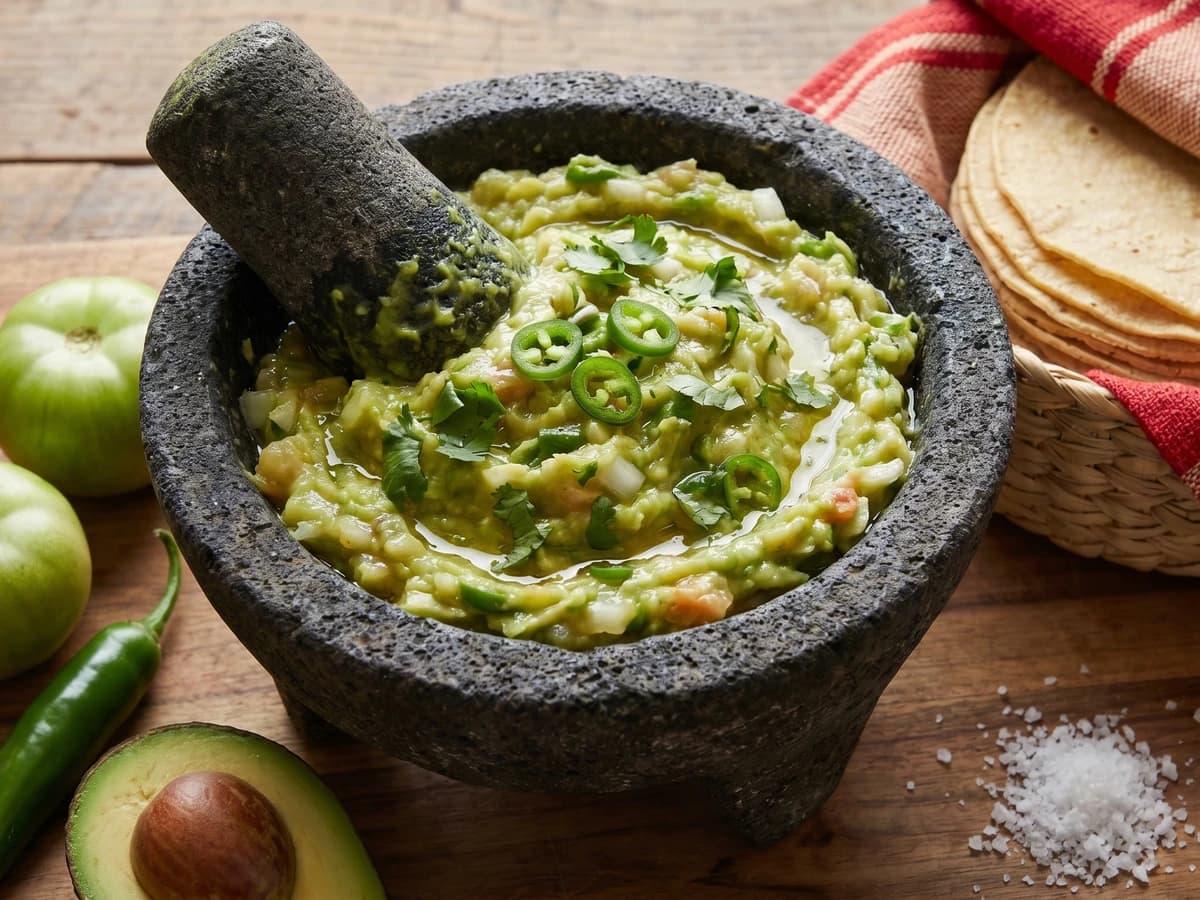
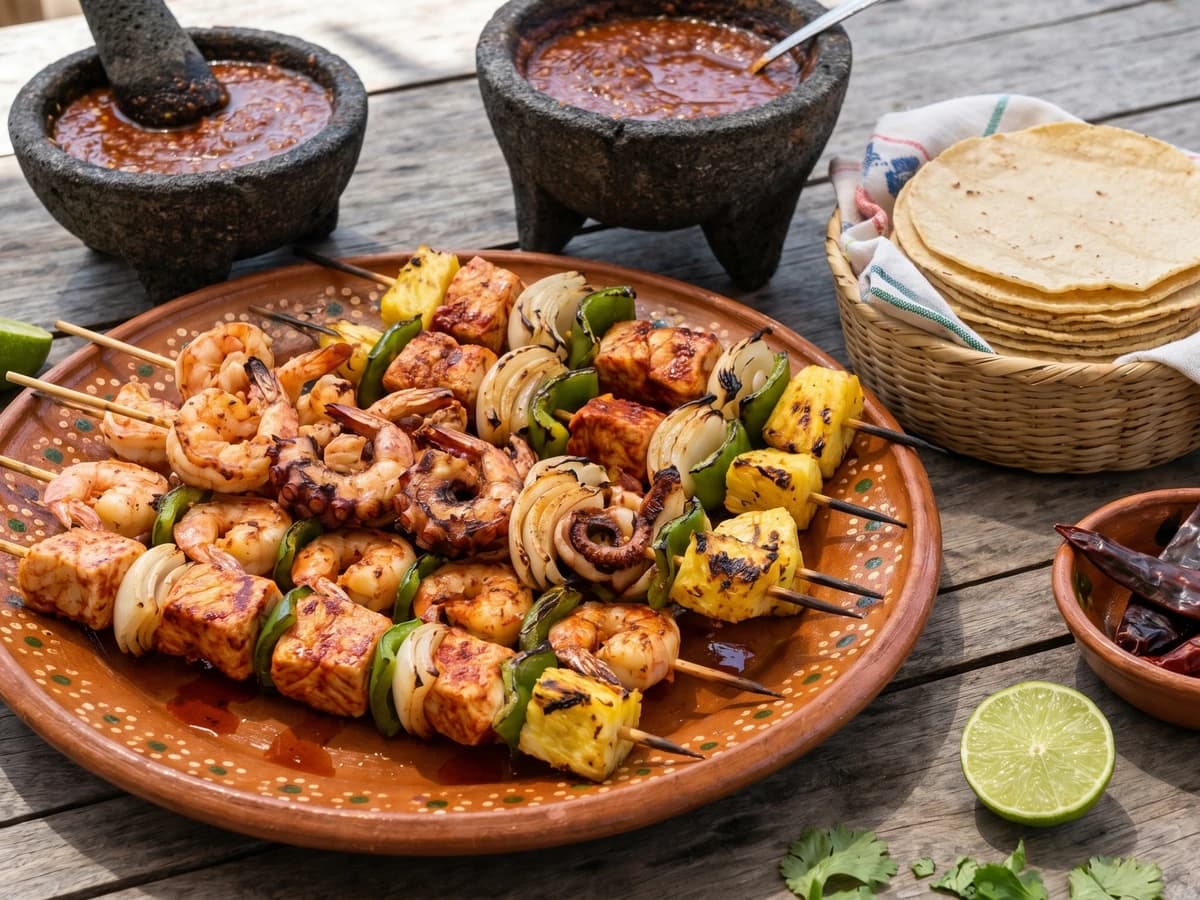
Hidalgo's Sierra Gorda chinicuiles, red maguey worms cleaned, toasted on the comal, then fried in manteca de cerdo with epazote and served with salsa de chile de árbol.
Appetizers & Snacks
Mexican
Special Occasion
Dinner Party
30 min
Active Time
20 min cook•50 min total
Yield4 appetizer servings
Hidalgo, from the Sierra Gorda Hidalguense down into the maguey country of the Valle del Mezquital, is where these chinicuiles make sense. They are not the fat white gusanos from the penca. Chinicuiles are red, small, earthy larvae from the root of the maguey, gathered when the rains soften the ground. The Hñähñu women who sell them know the season before any calendar tells them.
The technique is plain because the ingredient is not. Sort them, rinse them fast, dry them well, toast them on the comal, then fry them in manteca de cerdo with epazote. That first toast matters. It drives off water so the lard can crisp the skin instead of boiling it. No me vengas con atajos. Wet chinicuiles in a pan are a waste of expensive food.
I learned this from a señora near Zimapán who kept a clay bowl of salsa de chile de árbol beside her comal and corrected my hand every time I tried to stir too much. Let them touch the heat, she said. She was right. Serve them in a small cazuelita with warm corn tortillas and a sharp salsa, not as a dare, not as a novelty, but as rainy-season food from Hidalgo. Cada estado, su propia cocina.
The chinicuil is the larva of Comadia redtenbacheri, a moth tied to maguey roots in the central Mexican altiplano, and its harvest is concentrated in the rainy months when the soil loosens around the plant. Edible insects appear throughout pre-Hispanic central Mexican foodways, and 16th-century chroniclers including Bernardino de Sahagún documented the place of insects in Nahua diets. In Hidalgo, especially in Hñähñu communities of the Mezquital and Sierra Gorda, chinicuiles remained part of the maguey economy that also gave pulque, pencas for barbacoa, fiber, medicine, and fuel.
The technique, the tradition, and the story behind every dish.
fresh chinicuiles (red maguey worms)picked over and rinsed briefly
8 ounces
fine sea salt
1 teaspoon, plus more to taste
dried chile de árbolstemmed
12
tomatilloshusked and rinsed
3 medium
xoconostlepeeled, seeds removed, and chopped
1
garlic clovesunpeeled
2
white onion
1/4 small
hot wateras needed for the salsa
2 tablespoons
manteca de cerdo
3 tablespoons
small garlic clovelightly crushed
1
fresh epazote sprigs
3
small corn tortillas (optional)warmed on the comal
12
limes (optional)halved
2
Equipment Needed
•Cast iron comal or well-seasoned steel comal
•Volcanic stone molcajete
•Small clay cazuela or 10-inch heavy skillet
•Wooden spoon
•Clean cotton towel for drying the chinicuiles
Instructions
1
Clean the chinicuiles
Place the chinicuiles in a shallow bowl of cold water with 1/2 teaspoon salt. Swirl once with your fingers, then lift them out so any grit stays behind. Do not soak them. Repeat only if they are sandy. Spread them on a clean cotton towel and pat them dry until no surface moisture remains. Pick out any maguey fibers. If they were frozen, thaw them overnight in the refrigerator first.
Fresh chinicuiles should smell earthy and clean, like damp maguey and nuts. If they smell sour, fishy, or fermented, do not cook them.
2
Roast the salsa
Heat a dry comal over medium. Roast the tomatillos, xoconostle, onion, and unpeeled garlic, turning until the tomatillos slump and the garlic softens, about 8 to 10 minutes. Move them to a bowl. Toast the chile de árbol separately, 5 to 10 seconds per side, just until fragrant and a shade darker. Watch them. Chile de árbol burns fast and turns bitter faster.
3
Grind the salsa
Peel the roasted garlic. In a molcajete, grind the garlic with 1/2 teaspoon salt until smooth. Add the toasted chile de árbol and grind to a rough red paste. Work in the onion, xoconostle, and tomatillos until the salsa is coarse and spoonable. Add hot water a tablespoon at a time only if the salsa is too thick. Taste for salt. It should be sharp from the xoconostle and direct from the chile, not thin and timid.
A blender works if you do not own a molcajete, but pulse it. Do not turn this into a smooth red smoothie. The texture belongs to the comal and the stone.
4
Toast the chinicuiles
Wipe the comal clean and raise the heat to medium-high. Spread the dried chinicuiles in one layer and let them touch the hot surface before you start moving them. Toast for 2 to 3 minutes, stirring with a wooden spoon, until they curl, darken to brick red, and smell nutty. This step dries them so the manteca can crisp them properly. Do not salt them yet. Salt pulls moisture.
5
Fry in manteca
Melt the manteca de cerdo in a small clay cazuela or heavy skillet over medium-high heat. Add the crushed garlic clove and epazote sprigs. Let them sizzle for 30 seconds, just until the epazote darkens and perfumes the fat. Add the toasted chinicuiles and fry for 3 to 4 minutes, stirring enough to coat them but not so much that they never brown. They are ready when the bodies look lightly blistered and firm at the edges. Season with a pinch of salt.
La manteca es el sabor. Oil will fry them, yes, but it will not give the same round flavor. This is Hidalgo food, not a compromise dressed up as improvement.
6
Serve as tacos
Transfer the chinicuiles and fried epazote to a warm small cazuelita, leaving just enough manteca clinging to make them shine. Set the salsa de chile de árbol, warm corn tortillas, and lime halves on the table. Each person makes small tacos. Eat them immediately, while the edges are still crisp. Así se hace y punto.
Chef Tips
•Ask for chinicuiles, not gusano de maguey blanco. The white maguey worm is larger, paler, and lives differently in the plant. Chinicuiles are red, smaller, and tied to the maguey root. They do not cook the same.
•Buy from a trusted mercado vendor who sells them fresh or properly frozen. Do not harvest them yourself unless you know the maguey was not sprayed. The mercado knows things the supermarket never learned.
•Xoconostle belongs in this salsa when the market has it. It gives a cactus-sharp acidity that tomatillo alone cannot give. If you cannot find xoconostle, use one extra tomatillo and understand what is missing.
•Do not bury chinicuiles under crema, cheddar, lettuce, or any of that nonsense. Warm corn tortillas, salsa de chile de árbol, lime if you want it. This is a 32-state cuisine. Treat Hidalgo like Hidalgo.
•Fry them just before serving. Reheated chinicuiles lose their snap and become chewy. If you have leftovers, grind them into salsa or sal de gusano the next day.
Advance Preparation
•The salsa de chile de árbol can be made one day ahead and refrigerated. Bring it to room temperature before serving so the chile flavor opens back up.
•The chinicuiles can be sorted, rinsed, dried, and held uncovered on a towel-lined plate in the refrigerator for up to 4 hours before cooking.
•Do not fry the chinicuiles ahead. They are a last-minute appetizer, the kind you cook while guests are already at the table.
Frequently Asked Questions
Nutrition Information
1 serving (about 200g)
Calories
405 calories
Total Fat
21 g
Saturated Fat
7 g
Trans Fat
0 g
Unsaturated Fat
14 g
Cholesterol
80 mg
Sodium
700 mg
Total Carbohydrates
42 g
Dietary Fiber
7 g
Sugars
3 g
Protein
15 g
Where cooking meets culture.
Culinary guides, cultural storytelling, and the editorial depth that makes cooking meaningful.