Culinary Explorer

A cooking platform built around craft, culture, and the stories behind what we eat.
Discover Culinary Explorer
Sopa de Almendras de Santa Rosa

Sopa de Almendras de Santa Rosa

Created by

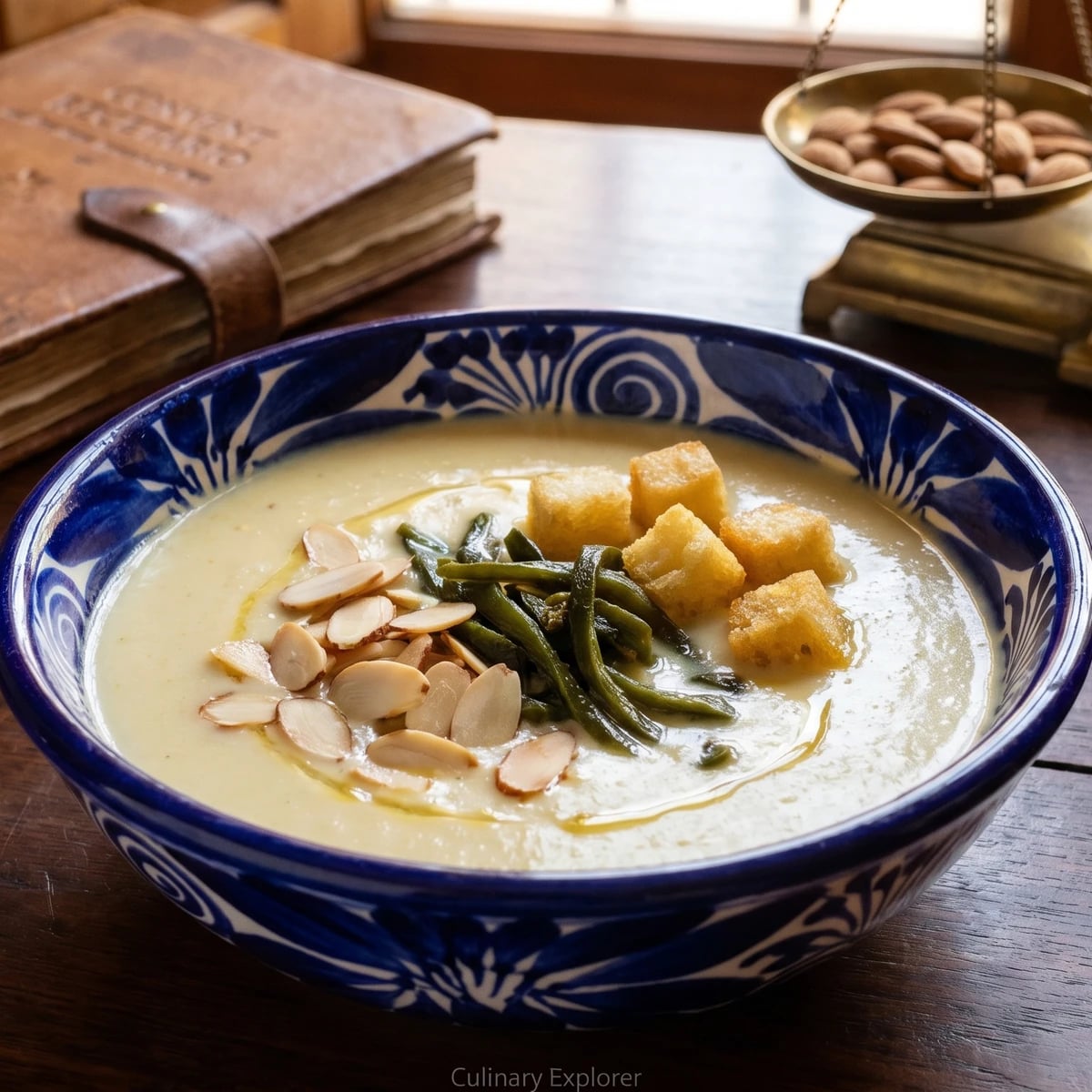
Puebla's Santa Rosa almond soup, built from blanched almonds, fried bolillo, saffron, jitomate, chile poblano, and clear chicken broth, a convent dish made for feast days, not a hurried Tuesday pot.

Soups & Stews
Mexican
Special Occasion
Christmas
Holiday
35 min
Active Time
1 hr 10 min cook1 hr 45 min total
Yield6 servings

Puebla, inside the convent kitchen of Santa Rosa, is where this soup belongs. Not the street market Puebla of cemitas and chalupas, the enclosed Puebla of Dominicas, recetarios, high windows, and a refectorio where food had to feed the body and obey the calendar.

The almond is the authority here. Almendras de Castilla came from the Old World, but the nuns did not leave them Spanish. They thickened chicken broth with fried bolillo, stained it lightly with jitomate, perfumed it with saffron, and let a few rajas of chile poblano remind you where the pot was sitting. This is criollo cooking: not copied, not improvised, made Mexican by repetition in a Pueblan kitchen.

I learned a version of this from a señora in Puebla who kept her aunt's convent notes folded inside a prayer book. She told me to strain the almond base twice because the portera would have sent it back if it scratched the throat. She was right. A soup this quiet exposes lazy hands. Saber cocinar es saber vivir.

Do not call this a spicy soup. Not all Mexican food is built on heat. This one is built on patience, almonds, saffron, bread, and broth. Cada estado, su propia cocina, and Puebla's convent table knew exactly what it was doing.

Sopa de almendras belongs to the criollo-conventual tradition of Puebla, especially the Dominican kitchens associated with the Convento de Santa Rosa, where Old World almonds, saffron, wheat bread, cinnamon, cloves, and sherry were worked into New Spain's local pantry of jitomate and chile poblano. Manuscript traditions such as the 1773 Regina Coeli recetario, the Quaderno de cosas curiosas de cocina, the Libro de cocina del hermano fray Geronimo de San Pelayo, and records preserved in Cocina y Vida Conventual at the Biblioteca Angelopolitana de Puebla show how convent kitchens standardized dishes through measurement, fasting rules, and daily refectorio service. This soup carries Arab-Andalusian almond thickening into a Pueblan Catholic feast table, which is why it appears naturally at Christmas and other special meals.

The technique, the tradition, and the story behind every dish.

Discover Culinary Explorer

Ingredients

almendras de Castilla

Quantity

1 1/2 cups

blanched and peeled

manteca de cerdo

Quantity

3 tablespoons

day-old bolillo or telera

Quantity

1

torn into pieces

white onion

Quantity

1/2 medium

chopped

garlic cloves

Quantity

2

peeled

jitomates

Quantity

2 medium

roasted and peeled

fresh chile poblano

Quantity

1 small

roasted, peeled, seeded, and cut into thin rajas

clear chicken broth

Quantity

5 cups

preferably from a whole chicken simmered with onion and salt

saffron threads

Quantity

1/4 teaspoon

lightly toasted and crushed

Mexican cinnamon

Quantity

1 small piece, about 2 inches

whole cloves

Quantity

2

dry sherry

Quantity

1/4 cup

kosher salt

Quantity

1 teaspoon, plus more to taste

freshly ground white pepper

Quantity

1/4 teaspoon

sliced almonds (optional)

Quantity

1/4 cup

toasted, for serving

small cubes of fried bolillo (optional)

Quantity

for serving

Equipment Needed

  • Heavy 4-quart cazuela de barro or thick-bottomed pot
  • Comal for roasting jitomate and chile poblano
  • High-powered blender
  • Fine-mesh colador
  • Talavera poblana soup bowls

Instructions

  1. 1

    Peel the almonds

    Cover the almendras de Castilla with boiling water and let them sit for 2 minutes. Drain, rinse with cool water, and slip off the skins one by one. Yes, one by one. The skins make the soup gray and slightly bitter. The convent kitchen cared about that, and so should you.

  2. 2

    Fry the bread

    Melt the manteca de cerdo in a heavy cazuela over medium heat. Add the torn bolillo and fry until the edges turn golden and crisp. Remove a small handful for garnish if you want cubes on top. Leave the rest for the soup. The bread gives the broth body without making it heavy.

  3. 3

    Soften the aromatics

    Add the chopped onion and garlic to the same cazuela. Cook slowly until the onion turns translucent and smells sweet, about 5 minutes. Do not brown the garlic. This soup is pale and disciplined, not a chile stew trying to shout over the table.

  4. 4

    Blend the base

    Transfer the fried bread, onion, garlic, peeled almonds, roasted jitomates, and 2 cups of chicken broth to a blender. Blend longer than you think, at least 2 full minutes, until the mixture is completely smooth. If the blender complains, add another splash of broth. You want almond cream, not gritty paste.

    Pasar por colador is not decoration. Strain the blended base through a fine-mesh colador and press hard with a spoon. The soup should feel smooth on the tongue.
  5. 5

    Cook the almond puree

    Return the strained almond base to the cazuela. Cook over medium-low heat, stirring constantly, for 8 to 10 minutes. It will thicken and lose the raw almond smell. Keep the spoon moving across the bottom because almonds catch quickly. No me vengas con atajos.

  6. 6

    Add broth and spice

    Whisk in the remaining chicken broth little by little so the almond base loosens without clumping. Add the crushed saffron, cinnamon, cloves, salt, and white pepper. Simmer gently for 25 minutes, stirring often. The color should be ivory with a faint gold edge from the saffron and jitomate.

  7. 7

    Finish with sherry

    Remove the cinnamon and cloves. Stir in the dry sherry and simmer 5 minutes more. Taste for salt. The soup should be savory first, with almond sweetness underneath, not a dessert. If it tastes flat, it needs salt, not more saffron.

  8. 8

    Serve in Talavera

    Ladle the soup into warm Talavera poblana bowls. Lay a few rajas of roasted chile poblano on each serving and scatter toasted sliced almonds and fried bolillo cubes over the surface. Serve immediately in the refectorio spirit: generous, orderly, and without unnecessary garnish. Así se hace y punto.

Chef Tips

  • Buy whole almonds and peel them yourself. Pre-sliced almonds are dry and tired. A convent cook would notice, and so will the soup.
  • The broth must be clear and clean. Simmer a whole chicken with white onion and salt, skim it well, and strain it. A cloudy broth makes a muddy almond soup.
  • Use chile poblano only as rajas on top or folded in at the end. Do not blend it into the base. The soup belongs to the almond and saffron, not to green chile.
  • Dry sherry is correct here because this is a conventual criollo dish. If you cook without alcohol, leave it out. Do not replace it with sweet wine.
  • If you cannot find saffron, you may omit it, but say what it is: a compromise. Turmeric gives color, not the same fragrance. Don't pretend otherwise.

Advance Preparation

  • The chicken broth can be made 2 days ahead and refrigerated. Lift off the chilled fat before using so the soup stays clean.
  • The almonds can be blanched and peeled 1 day ahead. Keep them covered in the refrigerator so they do not dry out.
  • The finished soup is best the day it is made, but it can be refrigerated overnight. Reheat over low heat while stirring, adding a little broth if it thickens too much.

Frequently Asked Questions

Nutrition Information

1 serving (about 335g)

Calories
445 calories
Total Fat
31 g
Saturated Fat
6 g
Trans Fat
0 g
Unsaturated Fat
23 g
Cholesterol
14 mg
Sodium
790 mg
Total Carbohydrates
27 g
Dietary Fiber
6 g
Sugars
5 g
Protein
16 g

Note: Chef personas and recipes are created with AI assistance. Cook with care: follow safe food-handling practices, check doneness with a thermometer when needed, and adapt for allergies and your kitchen.

Where cooking meets culture.

Culinary guides, cultural storytelling, and the editorial depth that makes cooking meaningful.

Discover Culinary Explorer

More from Conventual Soups (Sopas Conventuales)

Browse the full collection