
Chef Lupita
Aguascalientes Beef Tongue Pozole (Pozole de Lengua)
Aguascalientes' Bajio pozole de lengua, built with cacahuazintle hominy, tender beef tongue, chile ancho and guajillo, with xoconostle brightness and table garnishes.
A cooking platform built around craft, culture, and the stories behind what we eat.
Created by
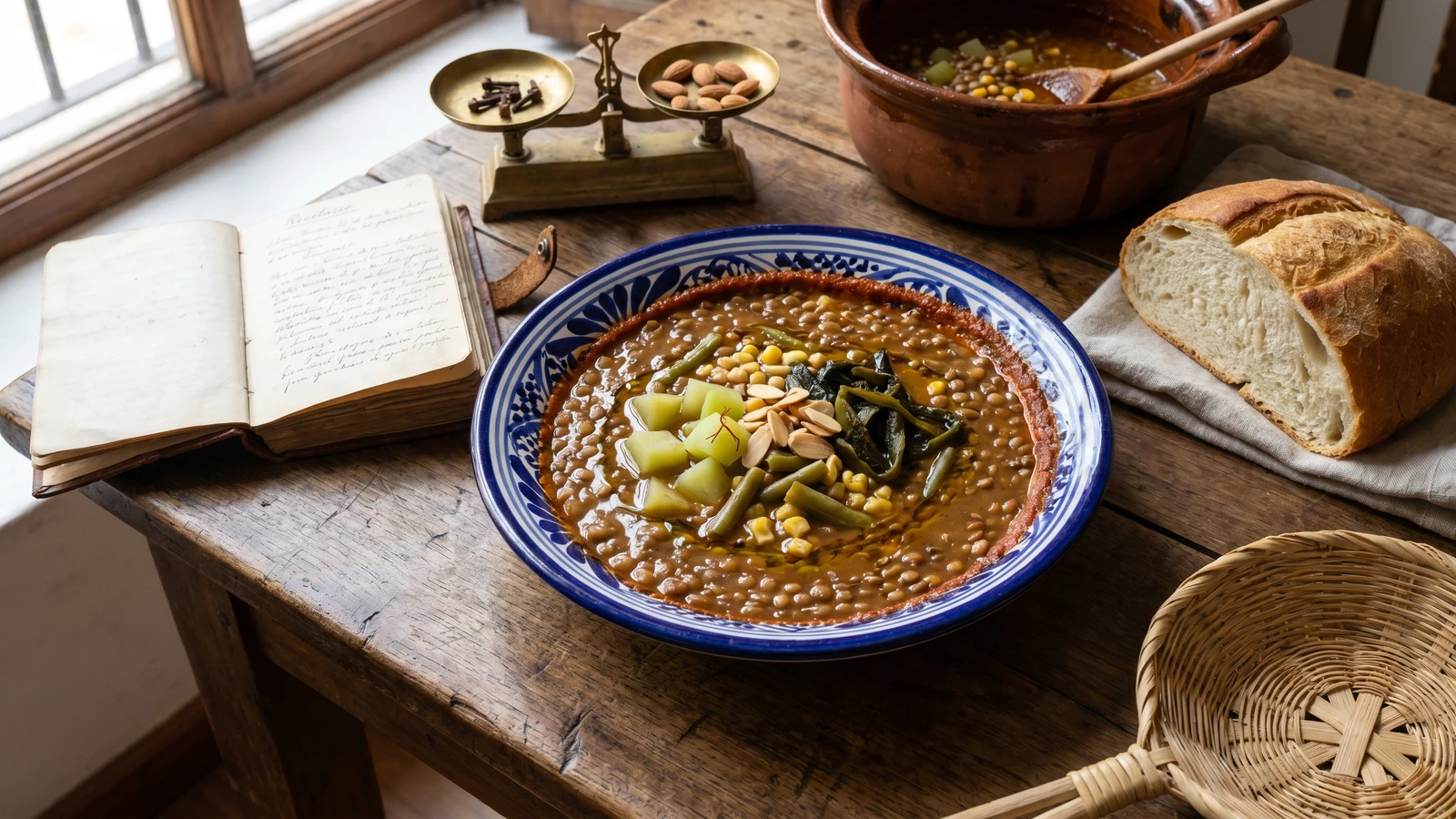
Puebla's Lenten convent lentils from the Santa Rosa refectorio, thickened with almendras de Castilla and wheat bread, scented with clavo, and finished with chayote, ejotes, elote, chile poblano, and epazote.
Puebla, in the Angelopolis convent belt of the Centro Historico, is where these lentils live: Santa Rosa, the Dominicas, the refectorio, the portera counting what came in from the market. This is not the lentil soup from any generic Mexican menu. It is a conventual pot from a city that made cloister kitchens into serious archives of technique.
The lineage is institutional before it is regional, but the ground under it is Puebla. The chile is ancho poblano, the dried form of the poblano chile, used for raisin-dark sweetness, not for bragging about heat. The thickening comes from almendras de Castilla and pan de agua fried in olive oil, then passed through a colador with roasted jitomate and clavo. That is the convent hand: Old World pantry, New World market, one disciplined cazuela.
Since this is vigilia, there is no carnero and no manteca de cerdo. Provision notes sometimes put mutton beside lentils for ordinary refectorio meals. Not here. The fat is aceite de oliva, the old manteca de aceite. If someone serves you Lenten lentils with mutton, ask what calendar they are cooking from.
I first copied notes for this kind of pot while reading Angelopolitan convent material, then tested it the way the senoras at La Acocota would judge it: lentils whole, broth thick but not muddy, clavo present but not bullying, chayote and ejote still themselves. Cada estado, su propia cocina, and Puebla's convent kitchen has its own discipline.
Recipes for legume soups and vigilia stews appear throughout New Spanish convent manuscript tradition, including the 1773 Regina Coeli manuscript, the Quaderno de cosas curiosas de cocina, and the Libro de cocina del hermano fray Geronimo de San Pelayo. Puebla's Convento de Santa Rosa and other Angelopolitan houses kept provision ledgers that separated ordinary refectorio meals from vigilia menus, when meat and animal fat were restricted and olive oil, almonds, bread, cloves, and local vegetables carried the dish. Cocina y Vida Conventual, preserved through the Biblioteca Angelopolitana de Puebla, shows the same pantry logic: lentils, clavo, wheat bread, saffron, and almendras de Castilla sharing the cazuela with jitomate, chile ancho, chile poblano, chayote, ejote, elote, xoconostle, and epazote.
Quantity
1 pound
picked over and rinsed
Quantity
8 cups, divided
plus more as needed
Quantity
1
half finely chopped and half left whole
Quantity
5
3 finely chopped and 2 left whole
Quantity
1
stemmed and seeded
Quantity
3
Quantity
1
Quantity
1/3 cup
divided
Quantity
1/3 cup
Quantity
1 thick slice
torn
Quantity
1/4 cup
Quantity
2
Quantity
1 small, about 2 inches
Quantity
2
Quantity
1 small pinch
bloomed in 2 tablespoons hot water
Quantity
1 medium
peeled, pitted, and diced small
Quantity
1
diced small
Quantity
1 cup
cut into 1-inch pieces
Quantity
1 cup
Quantity
1
peeled, seeded, and diced small
Quantity
1 sprig
Quantity
1 1/2 teaspoons, plus more to taste
Quantity
2 tablespoons
for serving
Quantity
for serving
| Ingredient | Quantity |
|---|---|
| small brown lentils (lenteja pardina)picked over and rinsed | 1 pound |
| waterplus more as needed | 8 cups, divided |
| large white onionhalf finely chopped and half left whole | 1 |
| garlic cloves3 finely chopped and 2 left whole | 5 |
| dried chile ancho poblanostemmed and seeded | 1 |
| Roma tomatoes (jitomate guaje) | 3 |
| fresh chile poblano | 1 |
| extra-virgin olive oil (aceite de oliva, the convent manteca de aceite)divided | 1/3 cup |
| blanched almonds (almendras de Castilla) | 1/3 cup |
| day-old pan de agua or bolillotorn | 1 thick slice |
| dry sherry (jerez seco) | 1/4 cup |
| whole cloves (clavo de olor) | 2 |
| Mexican cinnamon stick | 1 small, about 2 inches |
| bay leaves | 2 |
| saffron threads (azafran)bloomed in 2 tablespoons hot water | 1 small pinch |
| chayotepeeled, pitted, and diced small | 1 medium |
| large carrotdiced small | 1 |
| ejotescut into 1-inch pieces | 1 cup |
| fresh corn kernels (elote) | 1 cup |
| xoconostlepeeled, seeded, and diced small | 1 |
| fresh epazote | 1 sprig |
| kosher salt | 1 1/2 teaspoons, plus more to taste |
| toasted slivered almonds (optional)for serving | 2 tablespoons |
| pan de agua poblano or warm corn tortillas (optional) | for serving |
Pick through the lentils and remove any stones. Rinse until the water runs clear, then cover with cool water and soak for 30 minutes while you make the recaudo. This is not because lentils are difficult. It helps them cook evenly and keeps the skins from splitting into mud.
Heat a dry comal over medium. Toast the chile ancho for 10 to 15 seconds per side, just until it smells like raisins and warm chile. Do not blacken it. Cover it with hot water and let it soften for 15 minutes. On the same comal, roast the jitomates and chile poblano, turning until the tomato skins blister and the poblano is charred in patches. Put the poblano in a covered bowl for 10 minutes, then peel, seed, and cut it into thin rajas.
In a lead-free cazuela de barro or heavy Dutch oven, warm 2 tablespoons of the olive oil over medium-low heat. Fry the almendras de Castilla until pale gold, then lift them out. Fry the torn pan de agua in the same oil until the edges are crisp and golden. Add the finely chopped onion and chopped garlic to the pot and cook until soft, not brown. The convent kitchen wastes nothing: the oil now carries almond, bread, onion, and garlic.
Drain the ancho. In a blender, combine the softened ancho, roasted jitomates, fried almonds, fried bread, cooked onion and garlic, jerez seco, the two cloves, the bloomed saffron with its water, and 1 cup fresh water. Blend until completely smooth. Pass it through a fine colador, pressing hard with a spoon. Pasar por colador is not decoration. It makes the broth clean and keeps the chile skin and almond grit out of the refectorio bowl.
Add the remaining olive oil to the cazuela and warm it over medium. Pour in the strained recaudo. It will sputter. Stir and fry for 8 to 10 minutes, until it thickens, darkens to brick red-brown, and a clear olive oil sheen appears at the edges. This step is why the lentils taste built instead of boiled.
Drain the soaked lentils and add them to the cazuela with 7 cups water, the whole onion half, the 2 whole garlic cloves, bay leaves, cinnamon stick, and salt. Bring to a gentle simmer, then lower the heat so the surface barely moves. Do not use a pressure cooker here. The lentils, vegetables, and recaudo need watching. No me vengas con atajos.
After 20 minutes, add the chayote, carrot, and xoconostle. Simmer 10 minutes. Add the ejotes, elote, poblano rajas, and epazote. Cook 10 to 15 minutes more, until the lentils are tender but still whole and the vegetables keep their shape. Remove the onion half, whole garlic, bay leaves, cinnamon, and epazote sprig.
Take the cazuela off the heat and let the lentils rest for 15 minutes. Taste for salt. The broth should be thick enough to coat a spoon but loose enough to ladle. Serve in a deep Talavera poblana bowl or straight from the cazuela, with toasted slivered almonds on top and pan de agua or warm corn tortillas at the table. Quiet food is still serious food. Saber cocinar es saber vivir.
1 serving (about 430g)
Culinary guides, cultural storytelling, and the editorial depth that makes cooking meaningful.
Discover Culinary ExplorerChef Lupita
Aguascalientes' Bajio pozole de lengua, built with cacahuazintle hominy, tender beef tongue, chile ancho and guajillo, with xoconostle brightness and table garnishes.

Chef Lupita
Veracruz's Gulf coast rice from Alvarado, built with seafood stock, tomato, chile chipotle, epazote, shrimp, fish, jaiba, and pulpo, served loose and brothy in a clay cazuela.

Chef Lupita
Costa Chica's wet salt-beef stew, built from chile costeño, guajillo, tomato, manteca, yuca, plantain, and masa dumplings, the ranching pot of Cuajinicuilapa and Pinotepa.

Chef Lupita
Michoacán's P'urhépecha atápakua is a masa-thickened sauce and stew at once, built with pork, chile guajillo, and hierbabuena added only at the end.