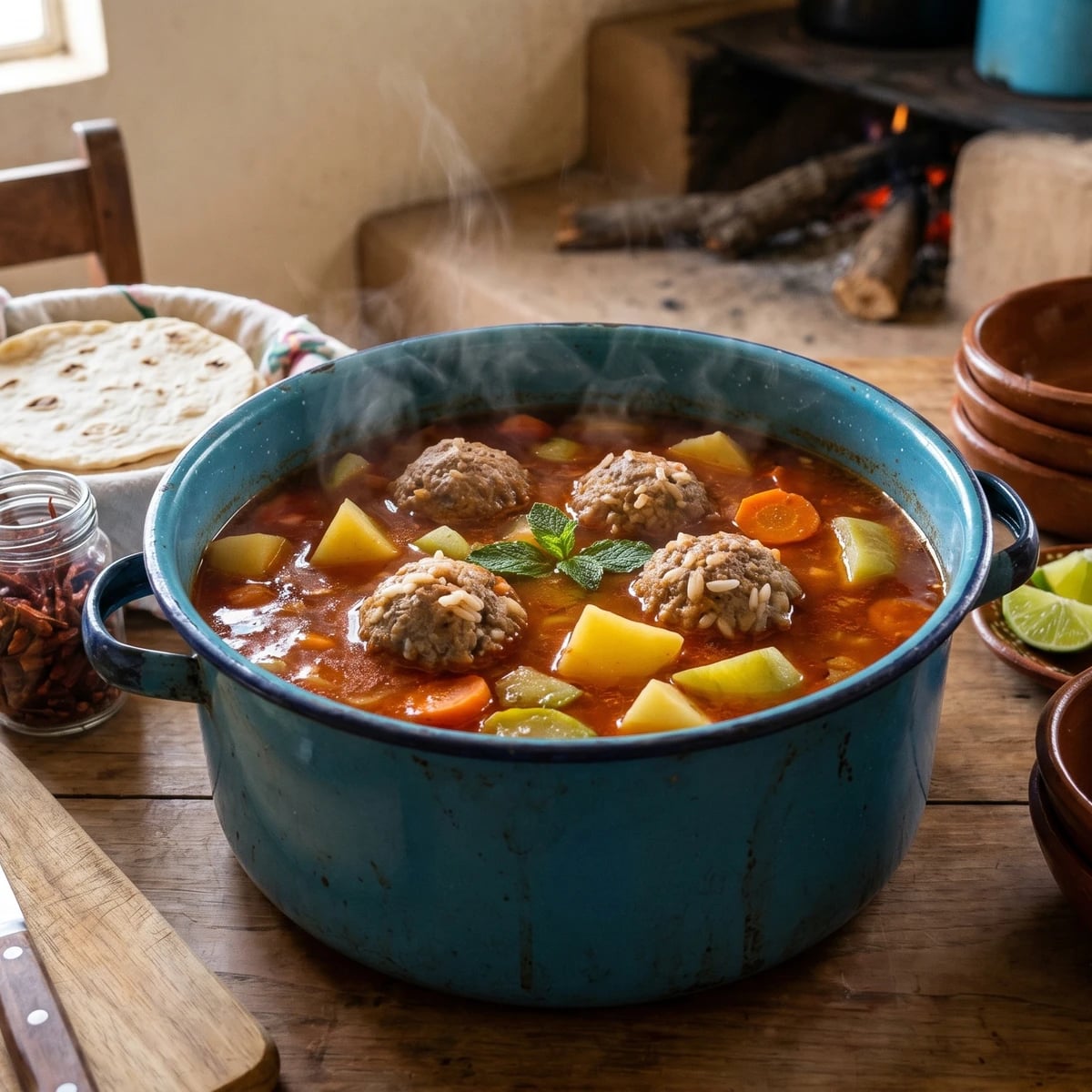
The northern Mexican meatball soup that anchors weekday tables from Chihuahua to Sonora: beef-and-rice albóndigas seasoned with hierbabuena, simmered in a charred-tomato and chipotle broth with potato, carrot, and calabacita.
Soups & Stews
Mexican
Comfort Food
Weeknight
Make Ahead
30 min
Active Time
1 hr 15 min cook•1 hr 45 min total
Yield6 to 8 servings
This is a noroeste dish. Chihuahua, Sonora, Coahuila, Nuevo Leon, the kitchens that stretch across the dry north where beef is the meat of every day and a pot of soup feeds a working family without complaint. Sopa de albóndigas is not glamorous and it does not pretend to be. It is a Tuesday dish, a Wednesday dish, the kind of soup a mother in Hermosillo or Saltillo puts on the table while she is also folding laundry and listening to one kid do homework.
The meatball is the dish. Ground beef, raw rice mixed straight into the meat, an egg to bind it, fresh hierbabuena, and enough garlic to know it is there. The rice is not cooked first. It goes in raw and swells inside the meatball as the soup simmers, locking the albóndiga together from the inside. That is the technique. Skip it, pre-cook the rice, and you have made something else, a meatball that falls apart when the spoon hits it.
The broth is built on tomatoes charred on a comal until the skins blacken, then blended with chipotles in adobo and fried in lard until the color deepens and the fat separates. That fry is the difference between a soup that tastes like watered-down salsa and a caldillo that tastes like the north. The chipotle is what tells you this is not a Mexico City soup. It is smoky, it is direct, it leans into the heat the way norteña cooking does without apology.
My mother was from Jalisco and she made albóndigas her own way, with hierbabuena and a little tomato. The norteña version I learned later, in a kitchen in Cuauhtemoc, Chihuahua, from a senora named Doña Tere who was suspicious of city cooks but warmed up when I rolled the meatballs the way her mother had taught her. She told me: cold meatballs, hot broth, raw rice. Three rules. Everything else is negotiation. The flour tortilla on the side is not optional in the north. Corn tortillas are for the south. Up here, you tear the harina, you scoop, you eat. Saber cocinar es saber vivir.
The albóndiga is Arab-Andalusian in origin, the word itself coming from the Arabic 'al-bunduqa,' meaning hazelnut, a reference to the small round shape, and arrived in Mexico through the Spanish colonial kitchen in the 16th century. The northern Mexican version diverged from its central and southern counterparts as the cattle ranching economy of the noroeste, established by Spanish missionaries and reinforced through the 18th and 19th centuries, made beef the everyday protein and pushed lamb and pork to the margins. The use of hierbabuena (Mentha spicata) in the meat mixture is a constant from Chihuahua to Sonora, distinguishing the norteña albóndiga from the chipotle-heavy versions of central Mexico and the almond-and-saffron baroque preparations of Puebla, and the addition of raw rice directly to the meat is a household-economy technique that stretches a pound of beef into a pot that feeds eight.
The technique, the tradition, and the story behind every dish.
finely chopped, plus a few whole leaves for the broth
garlic cloves (for meatballs)
Quantity
3
finely minced
small white onion (for meatballs)
Quantity
1/2
finely grated
kosher salt
Quantity
1 1/2 teaspoons, divided, plus more to taste
ground black pepper
Quantity
1/2 teaspoon
ground cumin
Quantity
1/2 teaspoon
manteca de cerdo (pork lard)
Quantity
2 tablespoons
medium white onion
Quantity
1
diced
garlic cloves (for broth)
Quantity
4
minced
ripe Roma tomatoes
Quantity
4 medium
charred on a comal
chiles chipotles en adobo
Quantity
2
plus 1 tablespoon of the adobo sauce
beef broth or water
Quantity
8 cups
fresh hierbabuena sprigs
Quantity
2
bay leaf
Quantity
1
yellow potatoes
Quantity
2 medium
peeled and cut into 3/4-inch chunks
carrots
Quantity
2 medium
peeled and cut into 1/2-inch coins
calabacitas (Mexican zucchini)
Quantity
2 medium
cut into 3/4-inch chunks
ear of sweet corn (optional)
Quantity
1
cut into 1-inch rounds
lime wedges (optional)
Quantity
for serving
chiltepín or chile de arbol (optional)
Quantity
for serving
crushed
flour tortillas (sobaqueras or harina) (optional)
Quantity
for serving
warmed
Ingredient
Quantity
ground beef chuck (80/20)
1 1/2 pounds
long-grain white ricerinsed
1/2 cup
large egg
1
fresh hierbabuena (spearmint)finely chopped, plus a few whole leaves for the broth
1/4 cup
garlic cloves (for meatballs)finely minced
3
small white onion (for meatballs)finely grated
1/2
kosher salt
1 1/2 teaspoons, divided, plus more to taste
ground black pepper
1/2 teaspoon
ground cumin
1/2 teaspoon
manteca de cerdo (pork lard)
2 tablespoons
medium white oniondiced
1
garlic cloves (for broth)minced
4
ripe Roma tomatoescharred on a comal
4 medium
chiles chipotles en adoboplus 1 tablespoon of the adobo sauce
2
beef broth or water
8 cups
fresh hierbabuena sprigs
2
bay leaf
1
yellow potatoespeeled and cut into 3/4-inch chunks
2 medium
carrotspeeled and cut into 1/2-inch coins
2 medium
calabacitas (Mexican zucchini)cut into 3/4-inch chunks
2 medium
ear of sweet corn (optional)cut into 1-inch rounds
1
lime wedges (optional)
for serving
chiltepín or chile de arbol (optional)crushed
for serving
flour tortillas (sobaqueras or harina) (optional)warmed
for serving
Equipment Needed
•Heavy 6-quart pot or wide cazuela
•Cast iron comal or heavy skillet for charring tomatoes
•High-powered blender
•Wooden spoon long enough to reach the bottom of the pot
Instructions
1
Mix the albóndigas
In a wide bowl, combine the ground beef, rinsed rice, egg, chopped hierbabuena, the 3 minced garlic cloves, grated onion, 1 teaspoon of the salt, the black pepper, and the cumin. Mix with your hands until everything is evenly distributed but stop the moment it comes together. Overworked meat turns into a rubber ball, not an albóndiga. The rice goes in raw. It will cook inside the meatball as the soup simmers, swelling against the meat and giving the albóndiga that texture you only find in the north.
Hierbabuena is not regular mint. It is spearmint, the mint of every norteña kitchen. If you have only peppermint at the supermarket, use less, half the amount. Peppermint is sharper and will dominate the meat.
2
Roll the meatballs
Wet your hands with cold water and roll the mixture into balls the size of a small lime, about 1 1/2 inches across. You should get 18 to 20. Place them on a plate as you go. Refrigerate while you build the broth. Cold meatballs hold their shape when they hit the pot.
3
Char the tomatoes
Heat a dry comal or heavy skillet over medium-high. Lay the Roma tomatoes directly on the hot surface and char them, turning every couple of minutes until the skins blister and blacken in patches and the flesh softens, about 8 minutes total. The black spots are not a mistake. That charred skin is the smoky backbone of a norteña tomato broth. Pull them off when they are slumped and soft.
4
Build the caldillo base
Blend the charred tomatoes with the chipotles, the tablespoon of adobo, and 1 cup of the broth until smooth. In a heavy 6-quart pot or wide cazuela, melt the manteca over medium heat. Add the diced onion and cook until translucent, 5 minutes. Add the 4 minced garlic cloves and cook 1 minute more. Pour the tomato-chipotle puree directly into the hot fat. It will sputter. Step back. Cook 8 to 10 minutes, stirring often, until the puree darkens, the color deepens to brick red, and the fat starts to separate at the edges. La manteca es el sabor. Skip this fry and the broth tastes raw and thin.
5
Simmer the broth
Pour in the remaining 7 cups of broth. Add the hierbabuena sprigs, bay leaf, and the remaining 1/2 teaspoon of salt. Bring to a gentle simmer, never a hard boil. Taste it now. The broth on its own should already taste like something you would want to eat. Adjust the salt before the meatballs go in.
6
Add the meatballs
Lower the cold meatballs into the simmering broth one at a time. Do not stir for the first 10 minutes. Let them firm up. Stirring too soon will break them apart and you will end up with a picadillo soup, not albóndigas. Once they have set, give the pot a gentle nudge with a wooden spoon to make sure nothing is stuck to the bottom.
7
Add the vegetables
After the meatballs have simmered 15 minutes, add the potatoes and carrots. They take the longest. Simmer 10 more minutes. Add the calabacitas and the corn rounds if you are using them. Simmer 10 to 12 more minutes, until the potatoes are tender, the calabacitas are just past raw but still hold their shape, and the meatballs are cooked through, the rice grains visible and swollen at the surface of each one. Total simmering time once the meatballs go in is about 35 to 40 minutes.
Calabacita goes mushy fast. If you cannot serve right away, undercook it by two minutes. The residual heat in the pot will finish it while it sits.
8
Serve at the table
Fish out the bay leaf and the spent hierbabuena sprigs. Taste the broth one last time and adjust the salt. Ladle into deep bowls, three or four meatballs per serving, with a generous share of broth and vegetables. Set lime wedges, crushed chiltepín, and a basket of warm flour tortillas on the table. The tortilla goes in your hand, not in the bowl. You tear it, you scoop, you eat. Asi se hace y punto.
Chef Tips
•Use 80/20 ground beef. Not lean. The fat carries the flavor and keeps the meatballs tender. Lean ground beef gives you dry, sad albóndigas that crumble in the spoon.
•Char the tomatoes on a real comal or a cast iron skillet, dry, with no oil. The blackened patches on the skin are the smoky backbone of the broth. Boiled tomatoes will not give you the same depth, no matter how long you simmer.
•If you cannot find chipotles en adobo, dry chipotle morita rehydrated in hot water and blended with a splash of vinegar will get you close. But find the canned chipotles if you can. La Costena and San Marcos both make a reliable adobo.
•In Sonora and Chihuahua, this soup is eaten with flour tortillas, sobaqueras when you can find them, the thin large kind that drape over your forearm. This is not a mistake or an Americanism. The wheat belt of the noroeste made flour tortillas the bread of the region long before the border was drawn. No me vengas con atajos: do not serve this with corn tortillas just because that is what you have. Make the harinas or buy good ones.
Advance Preparation
•The meatball mixture can be mixed and rolled one day ahead. Refrigerate the raw meatballs covered on a plate. Cold meatballs hold their shape better when they hit the broth, so this is an upgrade, not a compromise.
•The caldillo base, the fried tomato-chipotle puree before the broth is added, can be made up to three days ahead and refrigerated. The flavor deepens.
•The finished soup keeps refrigerated for three days. The rice in the meatballs will continue to absorb broth, so add a splash of water or stock when you reheat. Reheat gently. A hard boil breaks the meatballs.
Frequently Asked Questions
Nutrition Information
1 serving (about 525g)
Calories
450 calories
Total Fat
24 g
Saturated Fat
9 g
Trans Fat
1 g
Unsaturated Fat
14 g
Cholesterol
110 mg
Sodium
1080 mg
Total Carbohydrates
29 g
Dietary Fiber
3 g
Sugars
6 g
Protein
22 g
Where cooking meets culture.
Culinary guides, cultural storytelling, and the editorial depth that makes cooking meaningful.