
Chef Lupita
Aguascalientes Beef Tongue Pozole (Pozole de Lengua)
Aguascalientes' Bajio pozole de lengua, built with cacahuazintle hominy, tender beef tongue, chile ancho and guajillo, with xoconostle brightness and table garnishes.
A cooking platform built around craft, culture, and the stories behind what we eat.
Created by
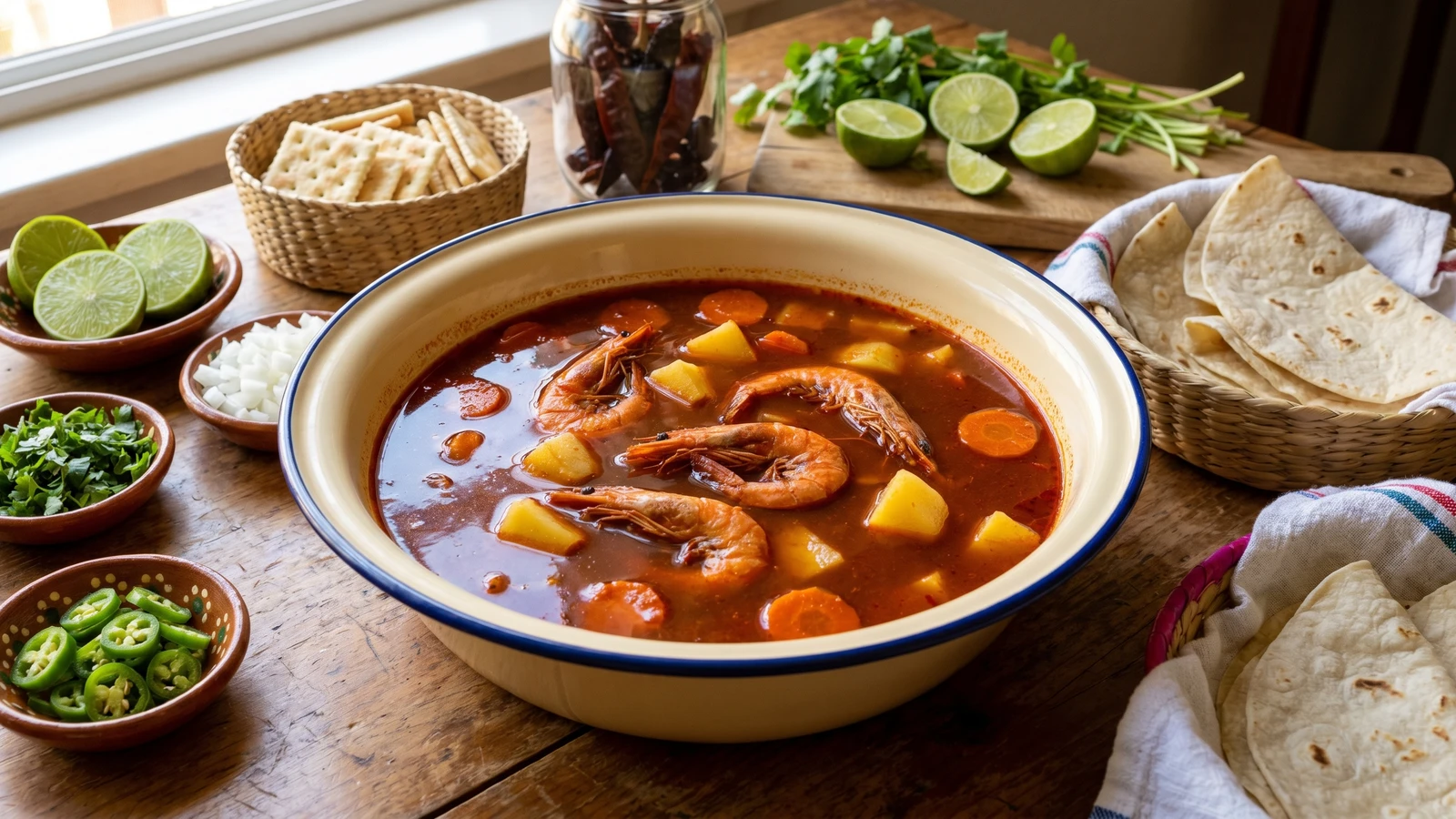
Sinaloa's smoky shrimp broth, built on toasted camarón seco, charred tomato, and a guajillo-pasilla salsa fried in lard, finished with potato, carrot, and a hard squeeze of lime at the table.
This caldo is from Sinaloa. The same coast that gives the country its aguachile and its chilorio also feeds the interior of the state, where the dried shrimp from Bahía de Topolobampo and the marshes around Escuinapa makes its way inland in burlap sacks and ends up in pots like this one. The fresh shrimp pays the boats. The dried shrimp feeds the family.
The broth is built in three parts. Toasted dried shrimp, ground to a coarse powder, gives the caldo its body and its sea. A salsa of guajillo and pasilla, charred tomato, and onion fried in manteca gives it color and depth. Potato and carrot give it the weight that turns a caldo into a meal. Skip the toasting of the shrimp and the broth will taste like fish water. Skip the frying of the salsa and the chile will taste raw. These are not optional steps. They are the recipe.
This is Lent food, vigilia food, the kind of dish a Sinaloense home cook makes on a Friday when meat is off the table, but it shows up on weeknights all year because dried shrimp keeps in a jar and the rest of the ingredients are whatever the mercado is selling that week. My notes from a kitchen in El Rosario, Sinaloa, have one line written across the top of the page: 'sin camarón seco no hay caldo.' Without dried shrimp there is no caldo. Cada estado, su propia cocina. This one belongs to Sinaloa.
Dried shrimp has been part of Sinaloan and broader noroeste cooking since pre-Columbian times, when the indigenous Totorame and Cahita peoples preserved Pacific shrimp by sun-drying it on the coastal flats around present-day Escuinapa and Teacapán, a practice that persists today in artisanal salineras. The modern caldo de camarón seco emerged as a Lenten dish during the colonial period, when Catholic Friday abstinence rules collided with Sinaloa's abundance of dried seafood, making the broth a vigilia staple in inland towns far from fresh-fish supply. Sinaloa now produces roughly 60 percent of Mexico's shrimp by volume, both wild-caught and farmed, and the dried-shrimp economy of the south coast remains a cottage industry tied to family salineras passed down across generations.
Quantity
4 ounces
divided
Quantity
6
stemmed and seeded
Quantity
3
stemmed and seeded
Quantity
2
stemmed
Quantity
4 medium
Quantity
1/2 medium, plus 1/4 finely diced for serving
Quantity
4
peeled
Quantity
2 tablespoons
Quantity
2 medium
peeled and cut into 3/4-inch cubes
Quantity
2
peeled and cut into 1/2-inch coins
Quantity
8 cups, divided
Quantity
1 sprig (or 1 teaspoon dried Mexican oregano)
Quantity
2
Quantity
to taste
Quantity
for serving
Quantity
for serving
Quantity
for serving
Quantity
for serving
| Ingredient | Quantity |
|---|---|
| dried shrimp with heads and shells on (camarón seco)divided | 4 ounces |
| dried chile guajillostemmed and seeded | 6 |
| dried chile pasillastemmed and seeded | 3 |
| dried chile de arbol (optional)stemmed | 2 |
| Roma tomatoes | 4 medium |
| white onion | 1/2 medium, plus 1/4 finely diced for serving |
| garlic clovespeeled | 4 |
| manteca de cerdo (pork lard) | 2 tablespoons |
| yellow potatoespeeled and cut into 3/4-inch cubes | 2 medium |
| large carrotspeeled and cut into 1/2-inch coins | 2 |
| water | 8 cups, divided |
| fresh epazote | 1 sprig (or 1 teaspoon dried Mexican oregano) |
| bay leaves | 2 |
| kosher salt | to taste |
| lime wedges (optional) | for serving |
| chopped cilantro (optional) | for serving |
| sliced fresh chile serrano (optional) | for serving |
| saltine crackers or hand-pressed corn tortillas (optional) | for serving |
Set aside about a third of the dried shrimp whole for the pot. Heat a dry comal or heavy skillet over medium. Toast the rest of the camarón seco for two to three minutes, turning often, until they smell deeply of the sea and the shells turn a shade darker. Do not let them blacken. Tip them onto a plate to cool, then grind to a coarse powder in a spice grinder or molcajete. This powder is the soul of the broth. The Sinaloa cooks call it the polvo de camarón and it is what makes this caldo and not a tomato soup.
On the same comal, toast the guajillo and pasilla chiles separately, about 20 to 30 seconds per side. The skin will puff and the kitchen will smell like the inside of a chile vendor's stall. The pasilla burns faster than the guajillo, watch it. If you want more heat, toast the chiles de arbol last for 10 seconds per side. Burned chile is bitter chile. There is no fixing it later.
Place the toasted chiles in a heatproof bowl and cover with hot tap water. Hot water, not boiling. Let them soften for 15 minutes. While they soak, char the tomatoes, the half onion, and the garlic on the comal until the skins blacken in spots and the flesh softens, about 8 minutes total, turning as they go. The char is the Sinaloan signature. It builds a smoky bottom note under the shrimp.
Drain the chiles. Transfer them to a blender with the charred tomatoes, charred onion, charred garlic, and one cup of fresh water. Blend on high until completely smooth, two to three minutes. Strain through a fine-mesh sieve into a bowl, pressing on the solids with the back of a ladle. Discard the skins. You want a clean, deep red puree with no grit.
Melt the manteca in a heavy 4-quart pot or cazuela over medium heat. When it shimmers, pour in the strained chile puree. It will sputter. Step back. Cook for six to eight minutes, stirring often, until the puree darkens by a shade and the fat starts to separate at the edges. La manteca es el sabor. This step takes the raw edge off the chile and is the difference between a thin caldo and a serious one. No me vengas con atajos.
Pour in the remaining seven cups of water. Stir in the ground shrimp powder, the reserved whole dried shrimp, the bay leaves, and the epazote. Bring to a gentle simmer. Taste before salting. Dried shrimp carries its own salt and you can ruin the pot in one careless pinch. Add salt only after you have tasted, and add it in small increments.
Add the carrots and let them cook for eight minutes. Then add the potatoes and simmer for another twelve to fifteen minutes, until both are tender at the point of a knife but still hold their shape. The potato should soak up the broth without falling apart. Taste again for salt. The caldo should taste of the sea, the chile, and the smoke from the charred tomato in that order.
Ladle the caldo into deep bowls, making sure each one gets some of the whole shrimp, a few pieces of potato, and carrot. Set the lime, diced onion, cilantro, sliced serrano, and saltines in small dishes for the table. Each person dresses their own bowl. The squeeze of lime at the last moment is what wakes the broth up. Asi se hace y punto.
1 serving (about 250g)
Culinary guides, cultural storytelling, and the editorial depth that makes cooking meaningful.
Discover Culinary ExplorerChef Lupita
Aguascalientes' Bajio pozole de lengua, built with cacahuazintle hominy, tender beef tongue, chile ancho and guajillo, with xoconostle brightness and table garnishes.

Chef Lupita
Veracruz's Gulf coast rice from Alvarado, built with seafood stock, tomato, chile chipotle, epazote, shrimp, fish, jaiba, and pulpo, served loose and brothy in a clay cazuela.

Chef Lupita
Costa Chica's wet salt-beef stew, built from chile costeño, guajillo, tomato, manteca, yuca, plantain, and masa dumplings, the ranching pot of Cuajinicuilapa and Pinotepa.

Chef Lupita
Michoacán's P'urhépecha atápakua is a masa-thickened sauce and stew at once, built with pork, chile guajillo, and hierbabuena added only at the end.