
Chef Jeong-sun
Aehobak-guk (애호박국, Korean Zucchini Soup)
A clean summer soup of Korean zucchini and salted shrimp, built on quick anchovy-kelp broth and finished before the half-moons lose their shape on a weeknight table.
A cooking platform built around craft, culture, and the stories behind what we eat.
Created by
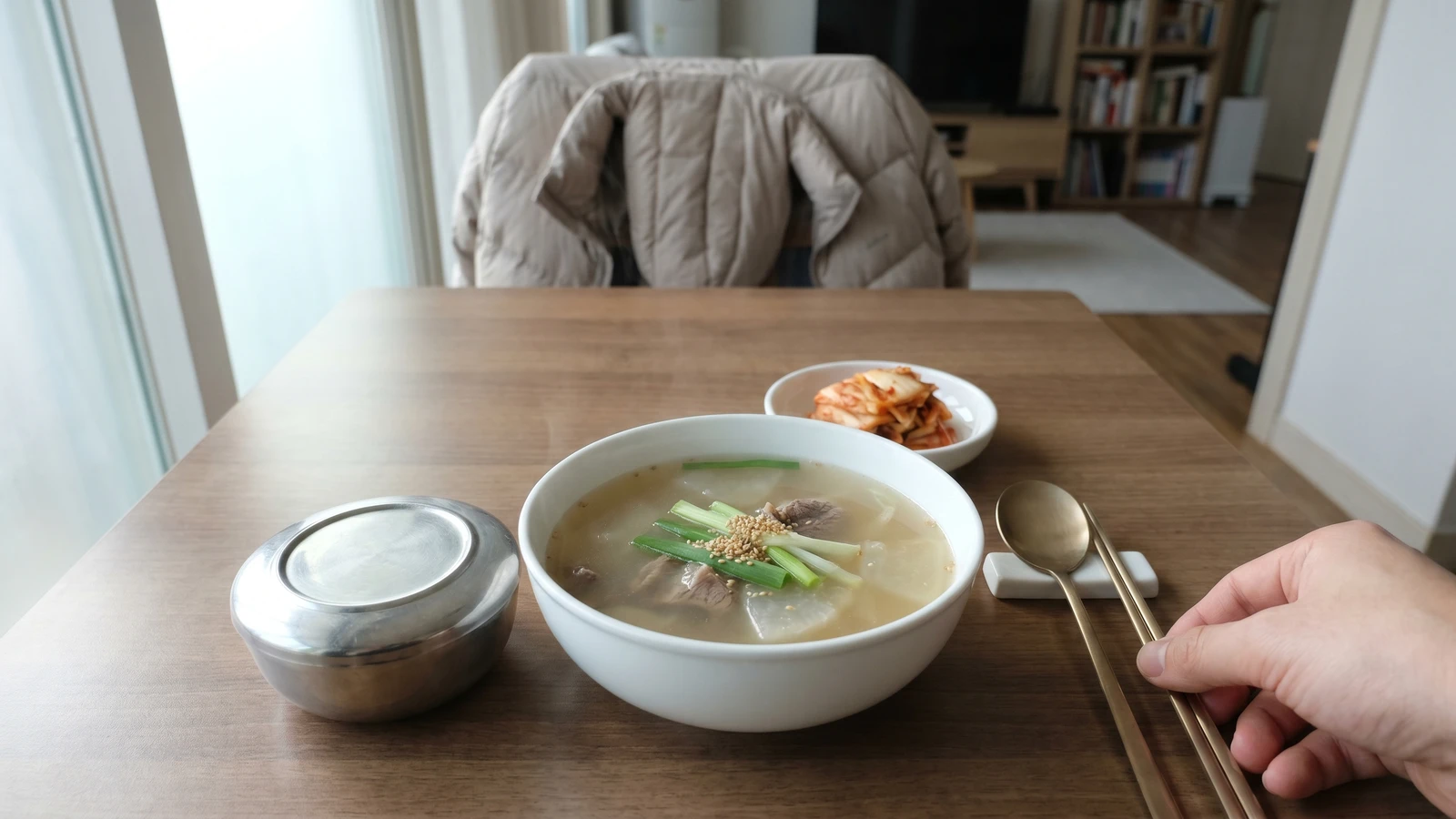
The clear home soup that asks for sweet Korean radish, a little beef, and patience; the mu turns translucent and gives the broth its quiet strength.
Cook the month you're standing in. Sogogi-muguk is best when Korean radish, mu, is heavy for its size and sweet from cold weather, because this soup belongs more to the radish than to the beef. People look for meat first. My mother's pot taught me otherwise: a small piece of beef can season the water, but the radish makes it taste like home.
This is weeknight soup, the kind that sits beside rice and kimchi without asking for attention. It is also the soup a tired person can eat when heavier stews feel like too much. The broth should be clear and gentle, with squares of radish softened until their edges go translucent. If the radish is chalky or bitter, no amount of beef will repair it. Buy a good one, peel it lightly, and cut the pieces evenly so they finish together.
The method is plain. Bloom the beef and radish in a little sesame oil, add water, skim carefully, and season in two steps: guk-ganjang (Korean soup soy sauce) for depth, salt for the final measure. Do not turn it dark with regular soy sauce. Do not boil it angrily until the radish breaks apart. Let it taste like itself. 손맛 is real; I measure it anyway, because the cook who comes after you deserves the same bowl.
Sogogi-muguk is an everyday Korean clear soup built from the old home-kitchen logic of stretching a small amount of beef with seasonal radish and rice. The pale Seoul and Gyeonggi style is the version most often served as a mild family soup, while Gyeongsang-do is known for a red, sharper beef radish soup seasoned with gochugaru and often soybean sprouts. The dish became especially practical in modern home cooking because inexpensive cuts like brisket, flank, and shank give broth enough body without making meat the center of the meal.
Quantity
300g
sliced thinly against the grain
Quantity
600g
peeled and cut into 1/2-inch thick squares
Quantity
1 tablespoon
Quantity
8 cups
Quantity
4 cloves
minced
Quantity
2 tablespoons
Quantity
1 teaspoon, plus more as needed
Quantity
1/4 teaspoon
freshly ground
Quantity
3
cut into 2-inch lengths
Quantity
1 teaspoon
| Ingredient | Quantity |
|---|---|
| beef brisket, flank, or shanksliced thinly against the grain | 300g |
| Korean radish (mu)peeled and cut into 1/2-inch thick squares | 600g |
| toasted sesame oil | 1 tablespoon |
| water | 8 cups |
| garlicminced | 4 cloves |
| guk-ganjang (Korean soup soy sauce) | 2 tablespoons |
| fine sea salt | 1 teaspoon, plus more as needed |
| black pepperfreshly ground | 1/4 teaspoon |
| scallionscut into 2-inch lengths | 3 |
| toasted sesame seeds (optional) | 1 teaspoon |
Peel the radish lightly and cut it into squares about 1 1/2 inches wide and 1/2 inch thick. Keep the pieces even. Thin scraps turn soft before the center pieces are ready, and then the broth clouds. Taste a raw piece. It should be juicy and faintly sweet, not woody.
Slice the beef thinly against the grain, then pat it dry. If the slices are long, cut them into spoon-size pieces. This is not a meat soup pretending to be rich. The beef seasons the broth and gives you a few tender bites, so thin, clean cuts matter more than a large amount.
Set a heavy pot over medium heat and add the sesame oil. Add the beef and stir for 1 minute, just until it loses its raw red color. Add the radish and stir 2 minutes more, coating every piece lightly. This first cooking wakes up the beef and radish before the water goes in, but do not brown them hard or the soup loses its clean taste.
Pour in 8 cups water and bring it just to a boil. Lower the heat to a steady simmer and skim off the gray foam for the first 10 minutes. Skimming is not vanity. It keeps the broth clear and clean, which is the whole character of this soup.
Add the minced garlic, 2 tablespoons guk-ganjang, 1 teaspoon salt, and the black pepper. Simmer uncovered for 35 to 40 minutes, until the radish is translucent at the edges and a chopstick slides through without force. Regular soy sauce will darken the broth and make it taste flat, so use guk-ganjang for savor and salt for the final correction.
Taste the broth. If it is dull, add salt 1/8 teaspoon at a time, waiting half a minute between additions. If it is too strong, add 1/2 cup water and simmer 3 minutes. Add the scallions and cook 1 minute, just until they soften and stay green. Scatter sesame seeds if you like them, then serve with rice and kimchi.
1 serving (about 650g)
Culinary guides, cultural storytelling, and the editorial depth that makes cooking meaningful.
Discover Culinary ExplorerChef Jeong-sun
A clean summer soup of Korean zucchini and salted shrimp, built on quick anchovy-kelp broth and finished before the half-moons lose their shape on a weeknight table.
Chef Jeong-sun
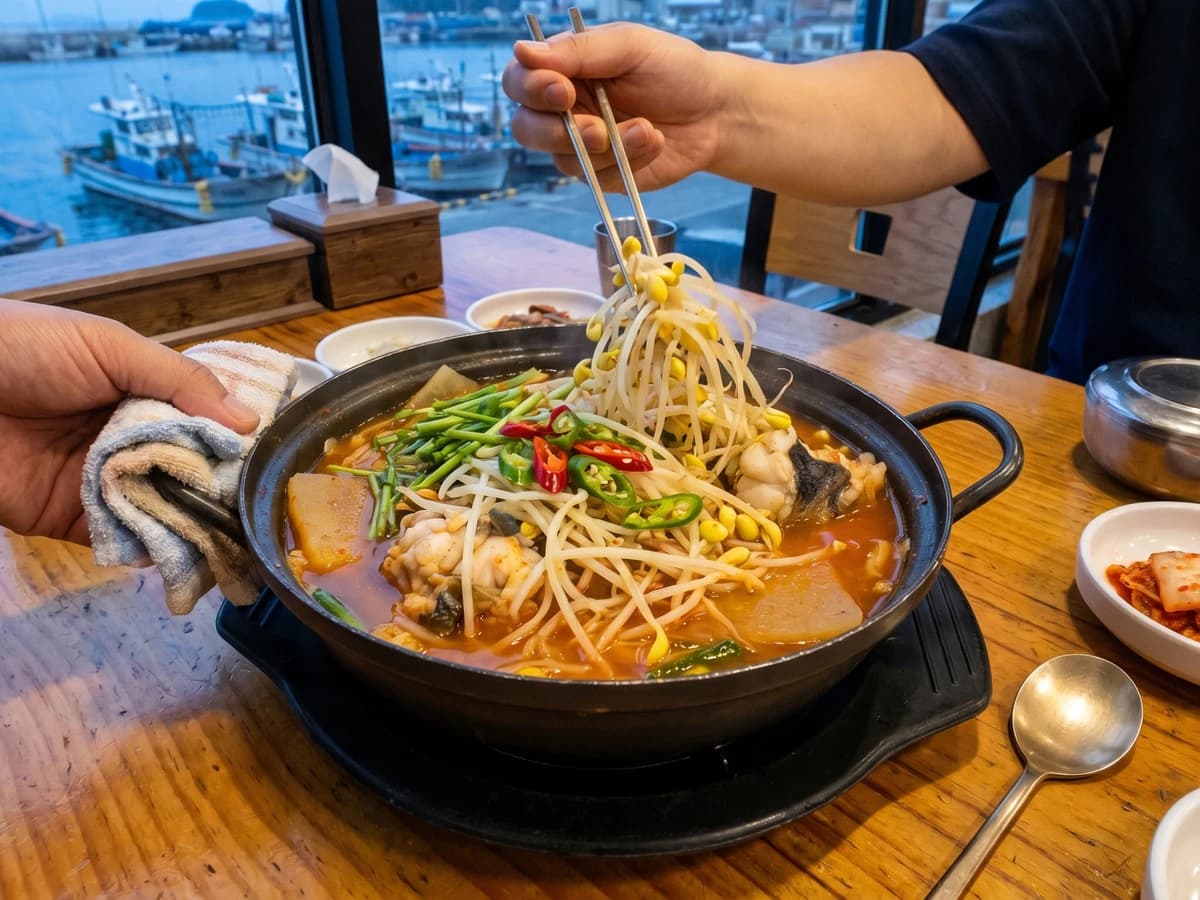
A Masan coast monkfish stew with firm white meat, gelatin at the bones, soybean sprouts for crunch, and a red broth seasoned to carry the fish, not bury it.

Chef Jeong-sun
A weeknight fish roe stew with radish and crown daisy in a clean spicy broth, where the whole success depends on adding the roe late enough that it sets tender, not chalky.

Chef Jeong-sun
Late-summer mallow leaves rubbed with salt until the bitter green water runs off, then simmered in a clean doenjang broth with dried shrimp, the quiet soup a Korean weeknight deserves.