
Chef Remy
Bourbon Chicken
Juicy chicken thighs lacquered in a sticky bourbon glaze with ginger, garlic, and just enough heat to keep things interesting. Mall food court nostalgia, elevated with real ingredients and proper technique.
A cooking platform built around craft, culture, and the stories behind what we eat.
Created by Chef Remy
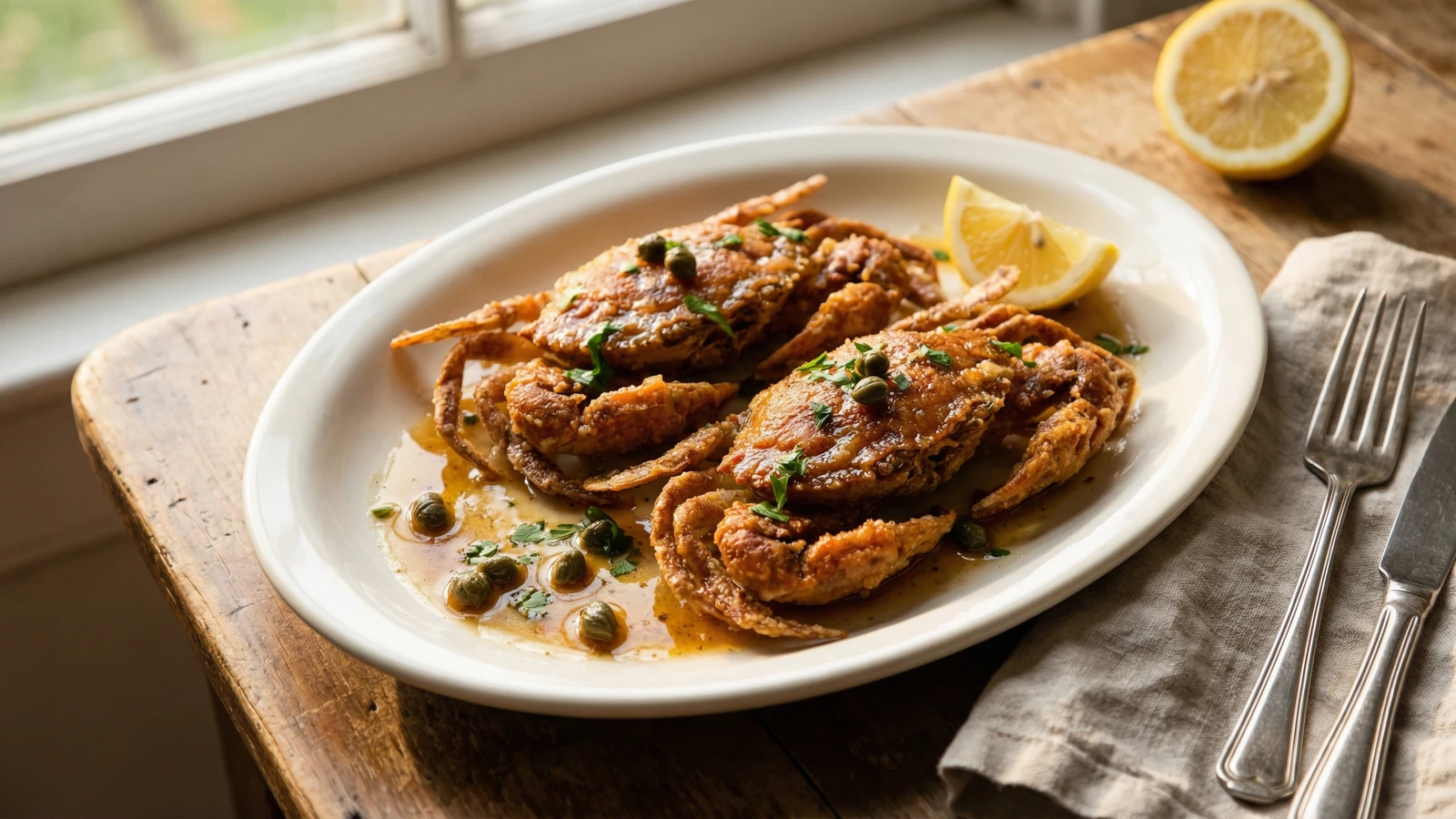
Crispy whole soft-shell crabs, golden and shatteringly delicate from the skillet, swimming in nutty brown butter with briny capers and bright lemon, the kind of seasonal Gulf treasure that makes spring worth the wait.
When soft-shell season hits the Gulf Coast, everything else on the menu takes a back seat. These are blue crabs caught in the brief window after they shed their hard shells and before the new ones harden, maybe forty-eight hours if you're lucky. The whole crab becomes edible: legs, claws, body, everything. It's nature giving us permission to eat the whole thing, and we do.
At Lagniappe, we start getting calls in April. "Chef, you got soft-shells yet?" People plan trips around them. And I understand why. There's nothing else like biting through that crispy, seasoned crust into the sweet, briny meat underneath, then letting the brown butter and capers bring it all home. This is Gulf luxury, pure and simple.
The technique here is honest and direct. You season your flour with cayenne and paprika, you get your pan hot, and you don't crowd those crabs. They need room to crisp. The brown butter happens fast at the end: you watch the milk solids turn from golden to deep amber, hit it with capers and lemon, and pour it over those beautiful crabs while everything is still sizzling. Four generations of Boudreaux cooks have made this dish, and every one of us learned the same lesson: don't walk away from brown butter. It goes from perfect to burned in seconds.
Quantity
4 large
cleaned
Quantity
1 cup
Quantity
1 teaspoon
Quantity
1 teaspoon
Quantity
1/2 teaspoon
Quantity
1/2 teaspoon
Quantity
1/4 teaspoon
freshly ground
Quantity
4 tablespoons
Quantity
2 tablespoons
Quantity
6 tablespoons
Quantity
3 tablespoons
drained
Quantity
2 tablespoons (about 1 lemon)
Quantity
2 tablespoons
chopped
Quantity
for serving
| Ingredient | Quantity |
|---|---|
| soft-shell crabscleaned | 4 large |
| all-purpose flour | 1 cup |
| kosher salt | 1 teaspoon |
| paprika | 1 teaspoon |
| cayenne pepper | 1/2 teaspoon |
| garlic powder | 1/2 teaspoon |
| black pepperfreshly ground | 1/4 teaspoon |
| unsalted butter (for frying) | 4 tablespoons |
| vegetable oil | 2 tablespoons |
| unsalted butter (for brown butter) | 6 tablespoons |
| capersdrained | 3 tablespoons |
| fresh lemon juice | 2 tablespoons (about 1 lemon) |
| fresh parsleychopped | 2 tablespoons |
| lemon wedges | for serving |
If your fishmonger hasn't cleaned the crabs, do it yourself. Lift each pointed side of the top shell and pull out the feathery gills underneath. They're gray and spongy, can't miss them. Snip off the face just behind the eyes with kitchen shears. Flip the crab over and pull off the triangular apron on the belly. Rinse gently and pat completely dry with paper towels. Wet crabs don't crisp.
Whisk together the flour, salt, paprika, cayenne, garlic powder, and black pepper in a shallow dish or pie plate. This is your seasoning layer for the crust. Taste the flour mixture. It should have presence, a little heat that wakes up your tongue. Adjust the cayenne if you like more fire. That's the bayou way: taste as you go.
Season each crab lightly with salt on both sides. Press each crab firmly into the seasoned flour, coating both sides and getting into all the crevices around the legs. Shake off excess flour. The coating should be even and complete but not caked on thick. Set dredged crabs on a wire rack.
Set your largest skillet over medium-high heat. Add four tablespoons of butter and the vegetable oil. The oil raises the smoke point so the butter doesn't burn. When the butter foam subsides and the fat shimmers and ripples, you're ready. Should take about two minutes. If the butter browns before you add the crabs, start over. Burned butter tastes bitter.
Lay the crabs in the hot fat, top shell down first. They'll sputter and pop, that's the moisture escaping. Don't jump back, but do use a splatter screen if you have one. Cook without moving for three to four minutes until the edges turn deep golden and the coating is crispy. Flip carefully with a fish spatula and cook another two to three minutes until the second side matches. The crab should feel firm when pressed gently.
Transfer finished crabs to a wire rack set over a sheet pan. Keep warm in a 200 degree oven while you cook remaining crabs. Add a bit more butter and oil between batches if the pan looks dry. Wipe out any burned flour bits with a paper towel before adding fresh fat.
Wipe out the skillet and set it over medium heat. Add six tablespoons of fresh butter. Watch it carefully. It will melt, then foam, then the foam will subside and the milk solids will begin to toast on the bottom. Swirl the pan constantly. You'll smell hazelnuts when it's getting close. The butter should turn the color of a pecan shell, deep amber with dark flecks. This takes about three minutes. Do not walk away.
The moment the butter reaches that deep amber color, pull the pan off the heat. Add the capers immediately, they'll sizzle and pop from the residual heat. Add the lemon juice, it will bubble up dramatically. That's the acid stopping the cooking and deglazing the pan. Swirl to combine. The sauce should look glossy and smell incredible: nutty, briny, bright all at once.
Place one crab on each warm plate. Spoon the brown butter sauce generously over and around each crab, making sure to get plenty of capers on top. Scatter fresh parsley over everything and add a lemon wedge to each plate. Serve immediately. This dish waits for nobody. The crust softens, the butter congeals. Eat it hot, eat it now.
1 serving (about 175g)
Culinary guides, cultural storytelling, and the editorial depth that makes cooking meaningful.
Discover Culinary ExplorerChef Remy
Juicy chicken thighs lacquered in a sticky bourbon glaze with ginger, garlic, and just enough heat to keep things interesting. Mall food court nostalgia, elevated with real ingredients and proper technique.

Chef Remy
Sweet Gulf crabmeat, barely held together with just enough binding to keep its shape, pan-fried until golden and crisp, served with a punchy Creole mustard sauce that wakes up every bite without stealing the show.

Chef Remy
A shimmering Creole treasure of fork-tender spiced beef suspended in amber aspic, sliced thin and served cold, the kind of elegant make-ahead dish that graces the finest holiday tables in New Orleans.

Chef Remy
Briny Gulf oysters cloaked in seasoned cornmeal, fried until golden and impossibly crisp at the edges, served with a fiery Crystal hot sauce aioli that cuts through the richness and makes you reach for another