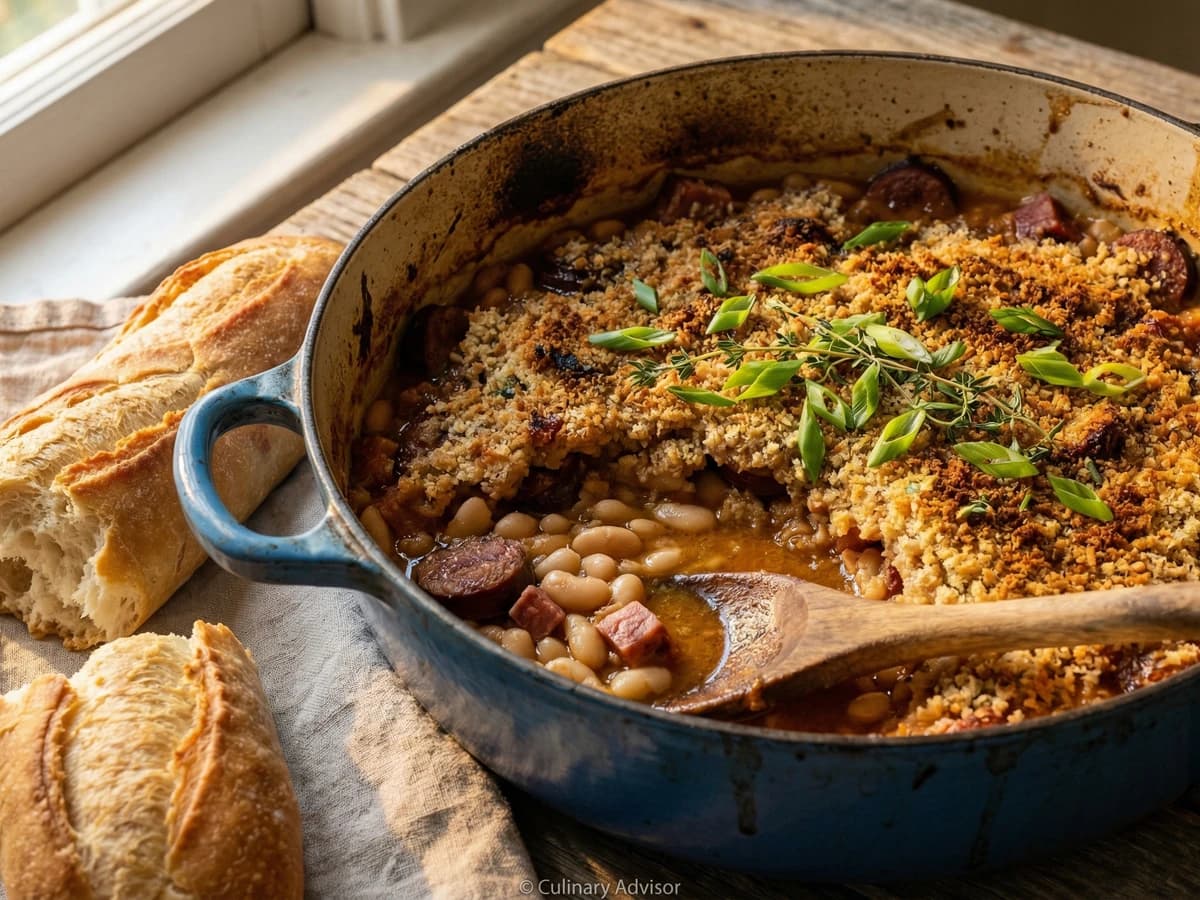
Tender pork wrapped around savory boudin stuffing, seared golden in cast iron and roasted until the meat is juicy and the rice-studded filling spills out in beautiful spirals with every slice.
Main Dishes
Cajun
Dinner Party
Special Occasion
Holiday
30 min
Active Time
35 min cook•1 hr 5 min total
Yield6 servings
Two of Louisiana's finest traditions belong together: the lean, delicate pork tenderloin and the rich, porky goodness of boudin. I've been making this dish at Lagniappe for nearly twenty years, and it still stops people mid-conversation when I slice into it at the table. That spiral of boudin filling against the pale pink pork is something special.
My grandmother Evangeline used to say that good Cajun cooking is about making humble ingredients shine. Boudin started as a way to use every part of the pig, stretched with rice and seasoned boldly. When you stuff it inside a tenderloin, you're honoring that tradition while creating something elegant enough for any dinner party. That's the bayou way: practical and beautiful at once.
The key here is building flavor in layers. Season the pork before it meets the boudin. Season the boudin before it goes inside. Then season the outside before it hits the cast iron. Each layer adds depth. At every step, you're making the next bite better than it would have been. This is not complicated cooking, but it rewards attention and patience.
Don't be intimidated by butterflying the tenderloin. I've taught hundreds of home cooks this technique, and once you understand what you're doing, it becomes second nature. You're creating a flat canvas for the filling, then rolling it back into shape. The meat forgives imperfection. Trust your hands.
The technique, the tradition, and the story behind every dish.
green onionswhite and light green parts sliced thin
4
fresh thyme leaves
1 tablespoon
chicken stock
1/2 cup
Creole mustard
2 tablespoons
fresh parsleychopped
for finishing
Equipment Needed
•12-inch cast iron skillet
•Kitchen twine
•Instant-read thermometer
•Sharp chef's knife
Instructions
1
Prepare the boudin filling
Remove the boudin from its casing by slitting it lengthwise and squeezing the filling into a bowl. Add one tablespoon of Cajun seasoning, the minced garlic, green onions, and thyme leaves. Mix with your hands until everything is evenly distributed. The filling should smell like Louisiana already. Set aside.
Fresh boudin from a Louisiana butcher is best. If using store-bought, taste the filling and adjust seasoning. Some brands run timid on the spices.
2
Butterfly the tenderloins
Lay one tenderloin on your cutting board. Hold your knife parallel to the board and slice horizontally through the meat, starting from the thicker side, stopping about half an inch from cutting all the way through. Open the tenderloin like a book. If certain areas are thicker than others, make shallow cuts and pound gently with the heel of your hand to even them out. You want a relatively uniform thickness, about three-quarters of an inch. Repeat with the second tenderloin.
A sharp knife matters here. Dull blades tear rather than slice, making clean butterflying difficult.
3
Season the pork
Season both sides of the butterflied tenderloins with the remaining tablespoon of Cajun seasoning, the salt, and the black pepper. Rub it in with your hands. Let the meat sit at room temperature while you prepare your workspace. This is your first layer of flavor, and it matters.
4
Stuff and roll
Divide the boudin filling between the two tenderloins, spreading it evenly over the cut surface and leaving about an inch border on all sides. Starting from the long edge, roll each tenderloin into a tight cylinder, tucking the filling in as you go. Some filling may try to escape at the ends. Nudge it back in. Tie each roll with kitchen twine at one-inch intervals, snug but not strangling. The pork will swell as it cooks.
5
Sear in cast iron
Preheat your oven to 400 degrees. Heat a 12-inch cast iron skillet over medium-high heat with the vegetable oil and one tablespoon of butter. When the butter foam subsides and you see the first whisper of smoke, lay the rolled tenderloins in the pan, seam side down. Sear without moving for two to three minutes until deeply golden. Roll them a quarter turn and repeat until browned on all sides. The sizzle should be steady and confident. If it sputters or screams, your pan is too hot.
6
Roast until done
Transfer the skillet directly to the oven. Roast for 18 to 22 minutes until an instant-read thermometer inserted into the center of the pork (not the filling) reads 140 degrees. The filling is already cooked, so you're only concerned with the pork reaching safe temperature while staying juicy. Remove from oven and transfer the tenderloins to a cutting board. Tent loosely with foil and let rest for ten minutes. The temperature will climb another five degrees as it rests.
7
Make the pan sauce
While the meat rests, set the skillet over medium heat (careful, that handle is hot). Add the chicken stock and scrape up the fond with a wooden spoon. Let it reduce by half, about two minutes. Remove from heat and whisk in the Creole mustard and remaining two tablespoons of butter. The sauce should be glossy and emulsified. Taste and adjust for salt. This is your finishing layer.
8
Slice and serve
Remove the kitchen twine from the rested tenderloins. Slice into rounds about three-quarters of an inch thick. Arrange on a warm platter, letting the beautiful spirals of boudin filling show. Drizzle the pan sauce over the slices, scatter fresh parsley on top, and bring the whole thing to the table. When folks see those spirals, they'll understand what Louisiana cooking is all about.
Chef Tips
•The best boudin comes from a Louisiana butcher or specialty store. Grocery store boudin can work, but taste it first. If it seems bland, add more garlic and a pinch of cayenne to the filling.
•Don't skip the resting time. Those ten minutes let the juices redistribute. Cut too early and your board will be swimming in liquid that should have stayed in the meat.
•This dish pairs beautifully with a simple green salad dressed in Creole mustard vinaigrette, or roasted sweet potatoes mashed with a little butter and brown sugar.
•If you're nervous about butterflying, ask your butcher to do it. Most will accommodate if you explain what you're making. Just tell them you want it opened flat for stuffing.
Advance Preparation
•The boudin filling can be prepared and refrigerated up to one day ahead. Bring to room temperature before stuffing.
•Tenderloins can be stuffed, rolled, and tied up to six hours ahead. Keep refrigerated and bring to room temperature 30 minutes before cooking.
•Leftovers reheat gently in a 300-degree oven, covered with foil, until warmed through. The slices make excellent po'boy filling the next day.
Frequently Asked Questions
Nutrition Information
1 serving (about 240g)
Calories
540 calories
Total Fat
27 g
Saturated Fat
10 g
Trans Fat
0 g
Unsaturated Fat
17 g
Cholesterol
200 mg
Sodium
1790 mg
Total Carbohydrates
14 g
Dietary Fiber
1 g
Sugars
1 g
Protein
54 g
Where cooking meets culture.
Culinary guides, cultural storytelling, and the editorial depth that makes cooking meaningful.