
Chef Jeong-sun
Amjuk (Dried-Grain Weaning Porridge)
Powdered rice or dried baekseolgi cooked thin in cloudy rice water, an old Korean first-spoon porridge that asks for patience at the sieve and gentleness at the stove.
A cooking platform built around craft, culture, and the stories behind what we eat.
Created by
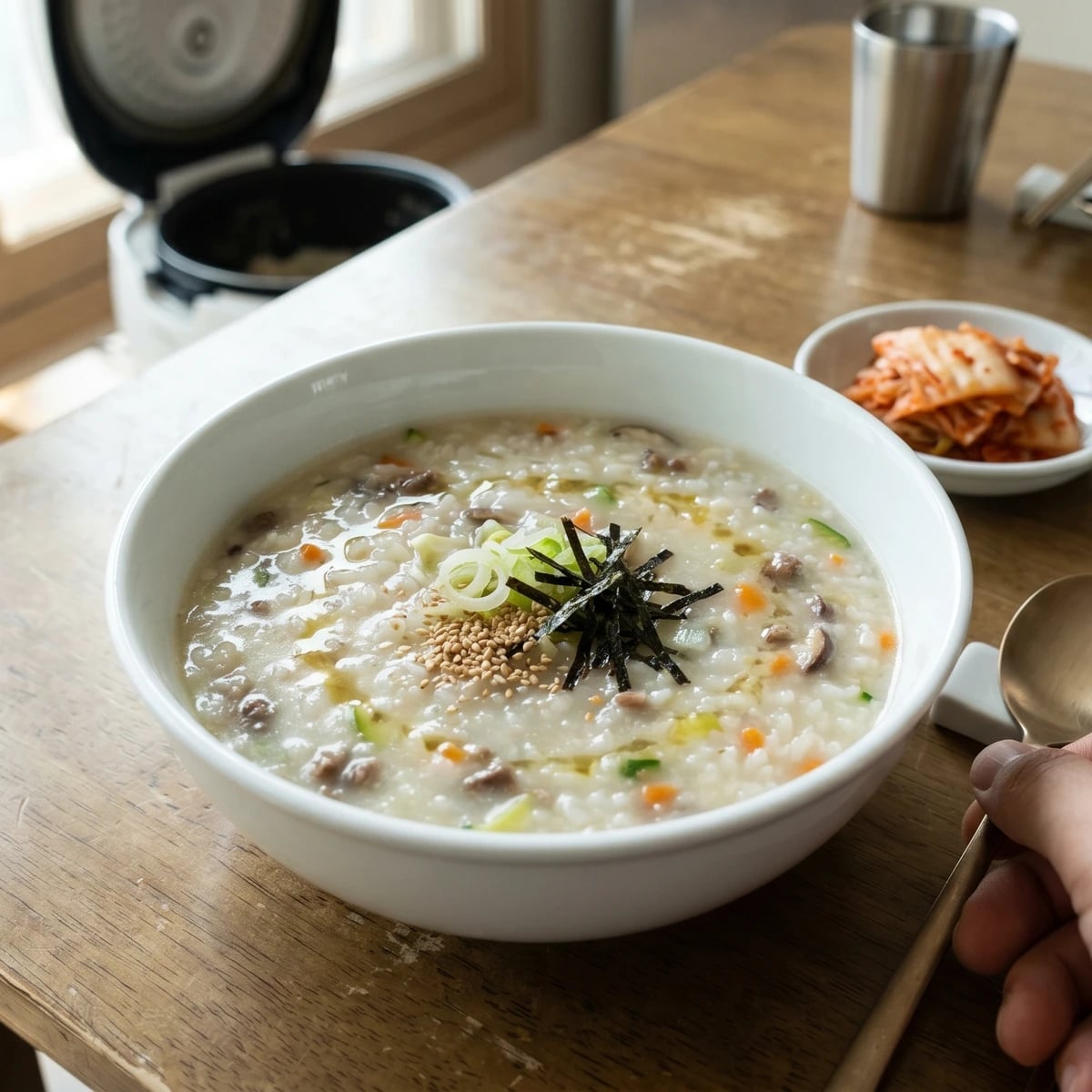
The all-purpose Korean comfort bowl: minced beef, small-cut vegetables, and rice simmered until soft enough for breakfast, sickness, or a tired weeknight table.
Juk lives or dies by the first ten minutes, before the water goes in. If you rush the beef and vegetables straight into a pot of liquid, you get rice soup with things floating in it. Toast them first in sesame oil, gently and patiently, so the grains take on the fat and the beef gives its flavor to the whole bowl.
This is not a show dish. Soegogi-yachae-juk (쇠고기야채죽, beef and vegetable porridge) is what a Korean mother makes when someone is recovering, when breakfast needs to be kind, or when dinner has to ask very little of the body. The vegetables must be cut small and even, about 5 mm dice, because porridge is eaten by the spoon. A chunk of carrot in a soft bowl feels careless. My teacher would have pushed it to the side without speaking, which was worse than speaking.
Use short-grain rice, rinse it, and soak it if you have time. The soaking is a safe corner to skip on a weeknight if you cook longer, but the stirring and the small knife work are not. Season late and lightly. The bowl should taste of rice, beef, sesame oil, and sweet vegetables, each one still clear. 손맛 is real. I still measure it, so it can be handed on.
Juk (죽, porridge) is one of Korea's oldest grain preparations, appearing across Joseon-era household and medical food records in forms ranging from plain white rice porridge to pine nut, red bean, and abalone versions. Beef and vegetable juk belongs to the everyday home lineage rather than to court display: a soft, digestible bowl for children, elders, and anyone recovering from illness. In the early 2000s, modern juk restaurants spread through Korean cities and made bowls like this a common purchased breakfast or office lunch, but the method remains the same home pot of rice cooked down with restraint.
Quantity
1 cup
Quantity
280g
finely minced
Quantity
1 tablespoon
divided
Quantity
1 teaspoon
for beef marinade
Quantity
1 teaspoon
Quantity
1 small clove
finely minced
Quantity
1/8 teaspoon
freshly ground
Quantity
1 tablespoon
for cooking
Quantity
1/2 small
finely diced
Quantity
1/2 medium
finely diced
Quantity
3
stems removed, caps finely diced
Quantity
1/2 small
finely diced
Quantity
5 cups
Quantity
1/2 teaspoon, plus more to taste
Quantity
1
finely sliced
Quantity
1 teaspoon
Quantity
1 sheet
cut into thin strips
| Ingredient | Quantity |
|---|---|
| short-grain white rice | 1 cup |
| lean beef brisket or sirloinfinely minced | 280g |
| soy saucedivided | 1 tablespoon |
| toasted sesame oilfor beef marinade | 1 teaspoon |
| mirin or rice wine (optional) | 1 teaspoon |
| garlicfinely minced | 1 small clove |
| black pepperfreshly ground | 1/8 teaspoon |
| toasted sesame oilfor cooking | 1 tablespoon |
| onionfinely diced | 1/2 small |
| carrotfinely diced | 1/2 medium |
| fresh shiitake mushroomsstems removed, caps finely diced | 3 |
| zucchini (aehobak)finely diced | 1/2 small |
| unsalted beef stock, anchovy-kelp broth, or water | 5 cups |
| fine sea salt | 1/2 teaspoon, plus more to taste |
| scallionfinely sliced | 1 |
| toasted sesame seeds | 1 teaspoon |
| roasted gim (optional)cut into thin strips | 1 sheet |
Rinse the rice in several changes of cold water until the water runs mostly clear, then soak it for 20 minutes if you have the time. Drain well. Rinsing keeps the porridge clean instead of gluey, and soaking helps the grains break down evenly without scorching at the bottom.
Mix the minced beef with 2 teaspoons of the soy sauce, 1 teaspoon sesame oil, the mirin if using, garlic, and black pepper. Let it sit while you cut the vegetables. This short seasoning gives the beef a little depth without turning the whole porridge salty.
Dice the onion, carrot, shiitake, and zucchini into small, even pieces, about 5 mm. Keep the zucchini separate because it softens faster. This knife work is not decoration. Porridge should move smoothly on the spoon, with little bites of vegetable, not large pieces interrupting the bowl.
Warm 1 tablespoon sesame oil in a heavy pot over medium heat. Add the beef and stir until it loses its raw color, about 2 minutes. Add the drained rice, onion, carrot, and shiitake, and stir 4 to 5 minutes, until the rice looks glossy and the vegetables begin to soften. This is the step that gives juk its body; the oil coats the grains and carries the beef flavor through the pot.
Add 5 cups stock, broth, or water and scrape the bottom of the pot clean. Bring it to a gentle boil, then lower the heat and simmer uncovered for 25 to 30 minutes, stirring every few minutes and more often near the end. The rice should swell, split, and thicken the liquid into a soft porridge. If it gets too thick before the grains are tender, add hot water 1/4 cup at a time.
Stir in the diced zucchini for the last 7 minutes of cooking. Add it earlier and it disappears; add it now and it stays green and gentle, which is what this bowl needs.
Stir in the remaining 1 teaspoon soy sauce and 1/2 teaspoon fine sea salt, then taste. Add more salt in pinches only if the porridge tastes flat. Seasoning late matters because simmering concentrates the pot, and a porridge meant to comfort should not leave the mouth thirsty.
Ladle the juk into warm bowls. Scatter scallion, sesame seeds, and gim strips over the top if using. Serve with a spoon, kimchi or a mild jangajji (pickled vegetable) on the side, and more salt or soy sauce at the table for those who need it.
1 serving (about 430g)
Culinary guides, cultural storytelling, and the editorial depth that makes cooking meaningful.
Discover Culinary Explorer
Chef Jeong-sun
Powdered rice or dried baekseolgi cooked thin in cloudy rice water, an old Korean first-spoon porridge that asks for patience at the sieve and gentleness at the stove.

Chef Jeong-sun
A soft summer rice porridge of kneaded mallow greens, dried shrimp, and careful doenjang broth, plain enough for breakfast and exact enough to keep the grit and bitterness out.

Chef Jeong-sun
A west-coast clam porridge from Buan's tidal flats: live bajirak opened for their liquor, sesame-slicked rice toasted in the pot, and vegetables cut small enough to comfort without hiding the clams.

Chef Jeong-sun
An autumn juk of boiled chestnuts and soaked short-grain rice, simmered low until smooth and softly sweet, the kind of bowl you set before an elder, a child, or yourself.