
Chef Thomas
A Bloomer
A proper British bloomer, slashed deep and baked until the cuts open wide and the crust turns deep, glossy gold. The kind of loaf that makes the rest of the day feel deliberate.
A cooking platform built around craft, culture, and the stories behind what we eat.
Created by Chef Thomas
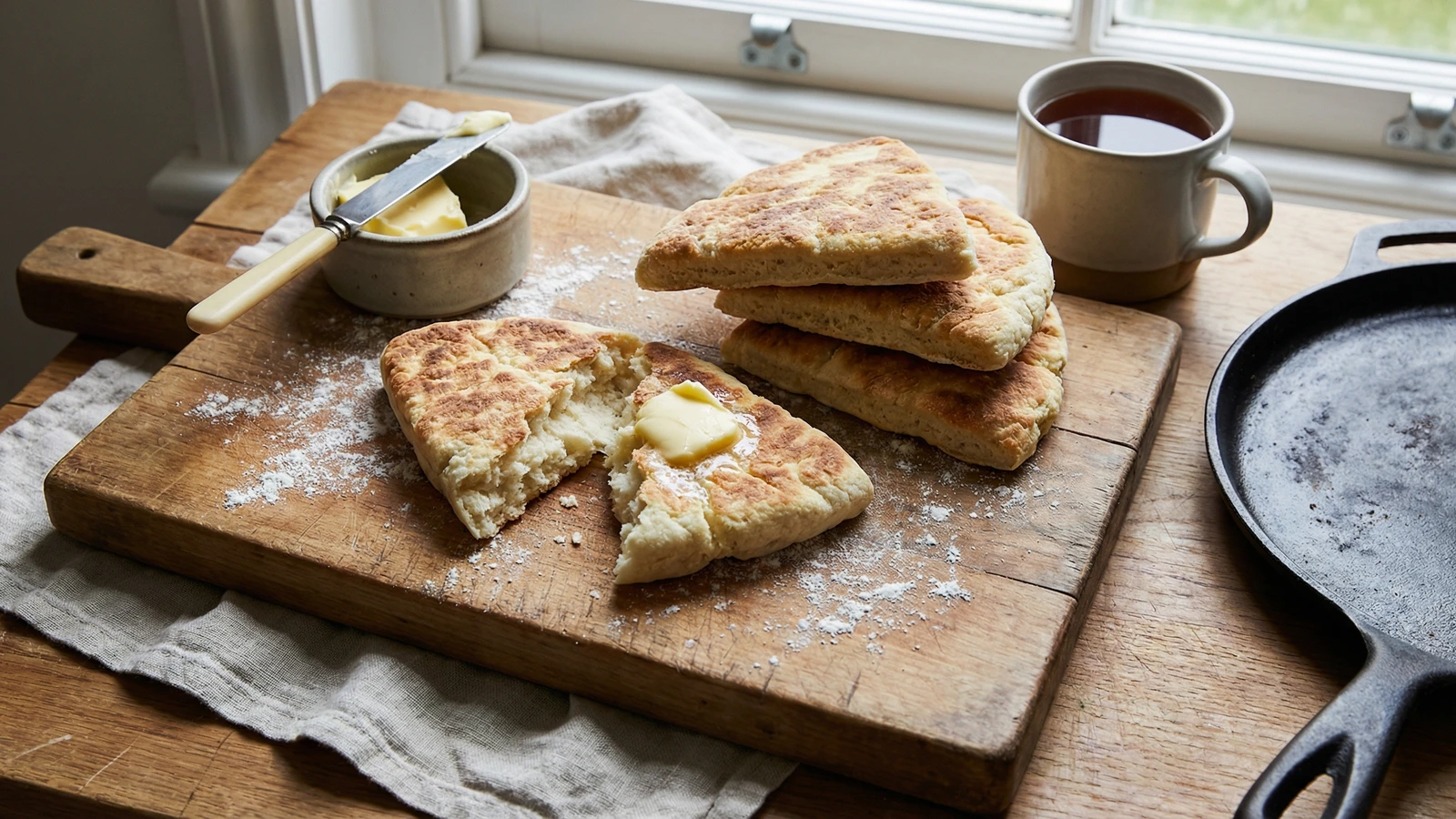
Four floury quarters of soft soda bread cooked on a dry griddle until the crust goes the colour of a brown paper bag, torn open while still warm and spread thickly with cold butter.
There's a particular kind of cold morning where nothing else will do. The light is grey, the kettle is on, and somebody in the house is going to want feeding before they're properly awake. This is when a soda farl earns its keep.
I didn't grow up with these. They belong to Ulster, properly speaking, and I learned them late, from a friend who made them on a flat griddle she'd had since she was married. She didn't measure anything. She just tipped the flour into a bowl, pressed a hollow into it with her knuckles, poured in the buttermilk, and brought it together with her fingers. Five minutes from bowl to pan. I stood at her elbow and tried to write it down afterwards, and the note in the notebook is brief: flour, buttermilk, a hot dry pan, don't overwork. That's most of it.
The shape matters. A round of dough cut into four, so each farl has two soft cut sides and one curved floury edge. They cook flat on the griddle, not in the oven, which is what makes them what they are. Soft and pillowy in the middle. A proper crust on top and bottom. The edges chewy and slightly raw-looking, in the best way.
A good soda farl wants very little. Cold butter, melting into the torn middle. A fried egg if you're going the whole way. Bacon if there's bacon. We're only making breakfast. But it's the kind of breakfast that makes you sit down at the table instead of eating standing up at the counter, and that's worth the fifteen minutes it takes.
Quantity
450g
plus extra for dusting
Quantity
1 teaspoon
Quantity
1 teaspoon
Quantity
400ml
| Ingredient | Quantity |
|---|---|
| plain flourplus extra for dusting | 450g |
| bicarbonate of soda | 1 teaspoon |
| fine sea salt | 1 teaspoon |
| buttermilk | 400ml |
Put a heavy, dry frying pan or a flat griddle over a medium heat and let it warm through properly while you mix the dough. It needs to be hot before the farls go on, not hot in the way you sear a steak, but evenly hot, the kind of heat that toasts a slice of bread in about a minute. Test it with a pinch of flour. If it browns slowly and steadily without scorching, you're there.
Sift the flour, bicarbonate of soda and salt into a wide bowl. Make a well in the middle and pour in most of the buttermilk, holding back a splash. Bring it together quickly with one hand, fingers spread, moving in circles from the centre outwards. You're not kneading. You're coaxing. Add the rest of the buttermilk if it feels dry. The dough should be soft, slightly sticky, and just hold its shape. Stop the moment it comes together. The longer you handle it, the tougher it gets.
Tip the dough onto a well-floured surface. Pat it gently into a round about 2cm thick. Don't roll it. Hands only. Flour the top, then cut the round into quarters with a sharp knife, straight down through the dough, one cut and then the other at right angles. Those are your farls. Four of them.
Lift the farls onto the hot dry pan, leaving a little space between them. Let them cook for six or seven minutes on the first side. Don't fuss with them. You're listening for a faint hiss and watching for a deep golden crust to form on the underside. When you turn one and see it's gone the colour of a brown paper bag, with a few darker spots where the pan was hottest, flip the lot and cook the other side for another six or seven minutes.
Stand a farl on its cut edge and cook those edges too, a minute or so each, rolling them along the pan. This is what gives a proper farl its floury, slightly chewy sides. To test, tap the bottom of one. It should sound hollow, the way a good loaf does. Wrap them in a clean tea towel and let them sit for five minutes before you tear one open. The steam inside finishes the job.
1 serving (about 215g)
Culinary guides, cultural storytelling, and the editorial depth that makes cooking meaningful.
Discover Culinary ExplorerChef Thomas
A proper British bloomer, slashed deep and baked until the cuts open wide and the crust turns deep, glossy gold. The kind of loaf that makes the rest of the day feel deliberate.

Chef Thomas
A simple white loaf made from flour, water, yeast, and salt. The kind of bread that fills the kitchen with the smell of a Saturday morning and teaches you, slowly, everything you need to know about baking.

Chef Thomas
A dark, fruit-heavy Welsh tea loaf, soaked overnight in strong tea and baked slowly until the kitchen smells of spice and orange peel. Sliced thick and buttered cold.

Chef Thomas
Rich, butter-laden Georgian buns from Bath, glazed deep gold and crowned with crushed sugar nibs that crack beneath your teeth, the kind of bake that turns a Sunday afternoon into something deliberate.