
Chef Thomas
A Bloomer
A proper British bloomer, slashed deep and baked until the cuts open wide and the crust turns deep, glossy gold. The kind of loaf that makes the rest of the day feel deliberate.
A cooking platform built around craft, culture, and the stories behind what we eat.
Created by Chef Thomas
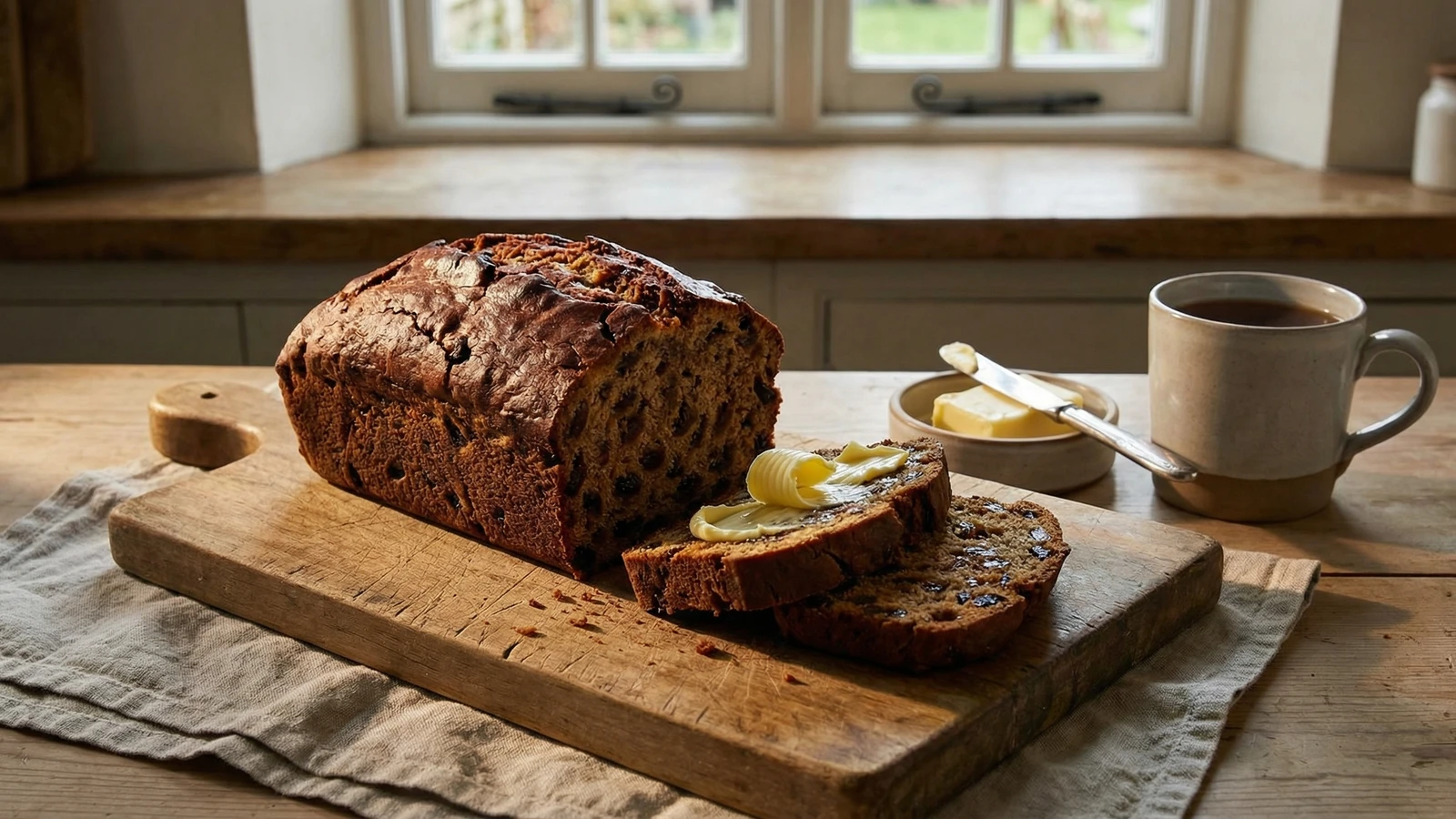
A dark, fruit-heavy Welsh tea loaf, soaked overnight in strong tea and baked slowly until the kitchen smells of spice and orange peel. Sliced thick and buttered cold.
There's a kind of afternoon in late autumn when the light goes flat by three o'clock and the only sensible response is to put the kettle on. Rain on the window. A book you've been meaning to finish. A loaf of bara brith on the counter, wrapped in paper, waiting to be sliced. This is the bread for that afternoon.
Bara brith means speckled bread in Welsh, and the speckles are the whole point: dried fruit soaked overnight in strong black tea until it goes glossy and dark, then folded into a spiced batter and baked low and slow into a dense, fragrant loaf. There's no yeast here, no kneading, no proving. It's a tea loaf, properly speaking, which means anyone can make it on a quiet Sunday afternoon and have it ready for the week ahead. We're only making dinner. Or in this case, tea.
The overnight soak is the trick. The fruit drinks the tea and swells, the sugar dissolves, the marmalade does its quiet work in the background. By morning you've got a bowl of something that already tastes of more than the sum of its parts. From there it's flour, an egg, a bit of spice, and an oven set low enough to let the loaf bake without bullying it. Easy. Forgiving. Worth the wait.
I wrote it down in the notebook years ago after a Welsh holiday where I ate bara brith every day at a small guest house and asked the woman who ran it for the method. She didn't have a recipe, just a way of doing it. Tea, fruit, sugar, flour, egg, spice. Slice it and butter it. I've been making it that way ever since.
Quantity
350g
sultanas, raisins, currants
Quantity
300ml
freshly brewed and hot
Quantity
150g
Quantity
1 tablespoon
Quantity
1
lightly beaten
Quantity
250g
Quantity
1 teaspoon
Quantity
1/2 teaspoon
Quantity
pinch
Quantity
to serve
| Ingredient | Quantity |
|---|---|
| mixed dried fruitsultanas, raisins, currants | 350g |
| strong black teafreshly brewed and hot | 300ml |
| soft dark brown sugar | 150g |
| orange marmalade | 1 tablespoon |
| large egglightly beaten | 1 |
| self-raising flour | 250g |
| mixed spice | 1 teaspoon |
| ground cinnamon | 1/2 teaspoon |
| fine sea salt | pinch |
| salted butter (optional) | to serve |
Tip the dried fruit into a large bowl. Brew a proper, strong pot of black tea, the kind you'd protest against drinking, and pour it hot over the fruit. Stir in the brown sugar and the marmalade while everything is still warm so the sugar dissolves into the tea. Cover the bowl with a plate and leave it on the counter overnight. By morning the fruit will have drunk the tea, plumped up, and turned glossy and dark. The kitchen will smell faintly of orange peel and something sweet you can't quite place.
Heat the oven to 160C/140C fan. Line a 900g loaf tin with baking parchment, leaving a generous overhang on the long sides so you can lift the loaf out later. Don't be neat about it. The parchment can crumple at the corners. It always does.
Beat the egg into the soaked fruit. It will look slightly alarming, dark and wet and uncertain, but trust it. Sift the flour, mixed spice, cinnamon and salt over the top and fold everything together with a wooden spoon. No need to be vigorous. You want the flour just incorporated, no dry pockets, no overworking. The batter will be thick and heavy and studded with fruit.
Spoon the batter into the prepared tin and level the top roughly with the back of the spoon. Bake on the middle shelf for an hour and a half, give or take. You're looking for a deep mahogany top, a loaf that feels firm when you press the centre, and a skewer that comes out clean or with a few sticky crumbs clinging to it. If the top is browning faster than you'd like, lay a piece of foil loosely over it for the last twenty minutes. Trust your nose more than the timer. When the kitchen smells of warm spice and dark fruit and you can't quite ignore it any longer, it's ready.
Let the loaf cool in the tin for ten minutes, then lift it out by the parchment and let it cool completely on a rack. This is the patient part. Bara brith is better the day after baking, when the spices have settled in and the fruit has shared its sweetness with the crumb. Wrap the cooled loaf in greaseproof paper and leave it on the counter overnight if you can manage it. When you're ready, cut thick slices and butter them generously with cold salted butter. That's the whole thing.
1 serving (about 92g)
Culinary guides, cultural storytelling, and the editorial depth that makes cooking meaningful.
Discover Culinary ExplorerChef Thomas
A proper British bloomer, slashed deep and baked until the cuts open wide and the crust turns deep, glossy gold. The kind of loaf that makes the rest of the day feel deliberate.

Chef Thomas
A simple white loaf made from flour, water, yeast, and salt. The kind of bread that fills the kitchen with the smell of a Saturday morning and teaches you, slowly, everything you need to know about baking.

Chef Thomas
Rich, butter-laden Georgian buns from Bath, glazed deep gold and crowned with crushed sugar nibs that crack beneath your teeth, the kind of bake that turns a Sunday afternoon into something deliberate.
Chef Thomas
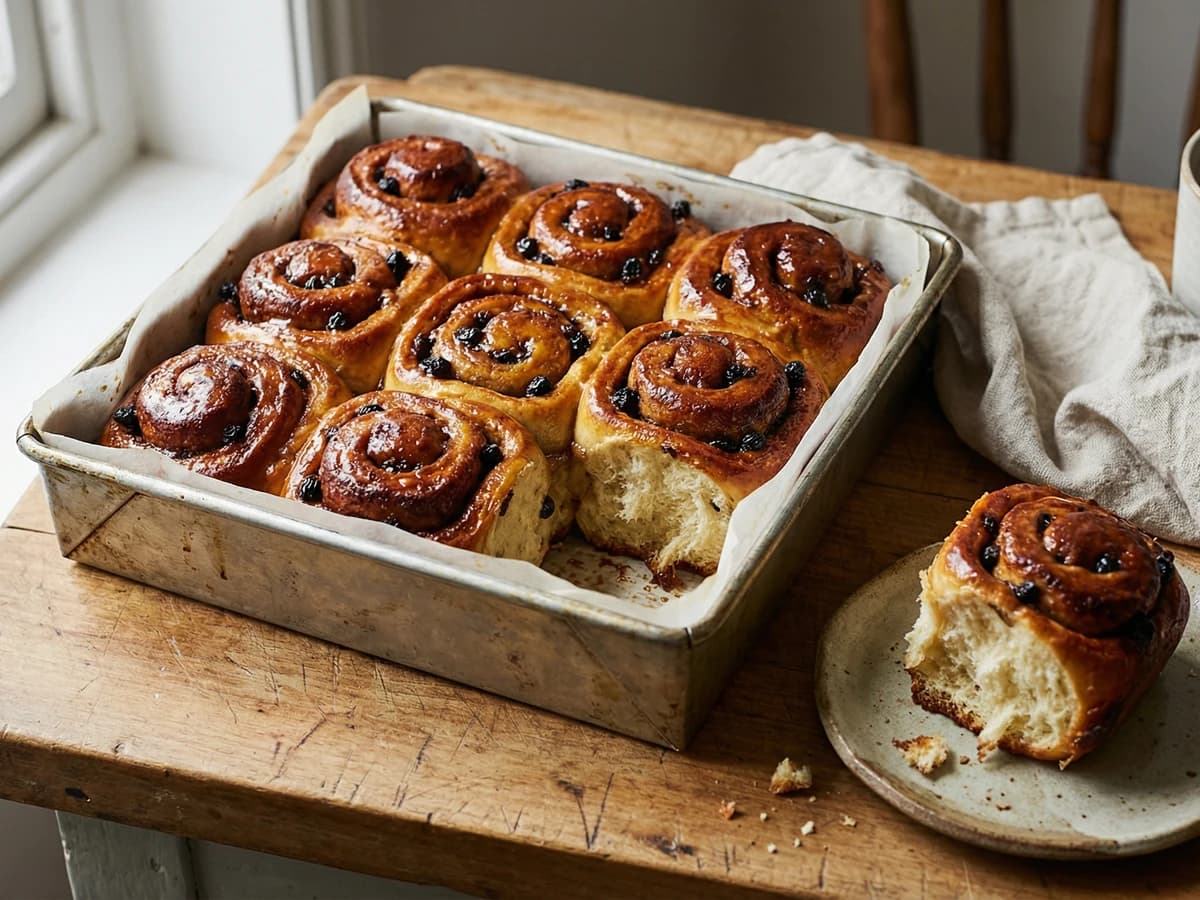
Soft, spiralled buns full of spiced sugar and currants, glazed sticky while still warm from the oven. The kind of baking that turns a wet Sunday into something worth getting out of bed for.