
Chef Freja
Æblegelé
Tart autumn apples, slow-boiled and strained clear overnight, then cooked with sugar to a trembling pale amber jelly that belongs on the cheese board, on morning toast, and in the kitchen of anyone who respects the season.
A cooking platform built around craft, culture, and the stories behind what we eat.
Created by Chef Freja
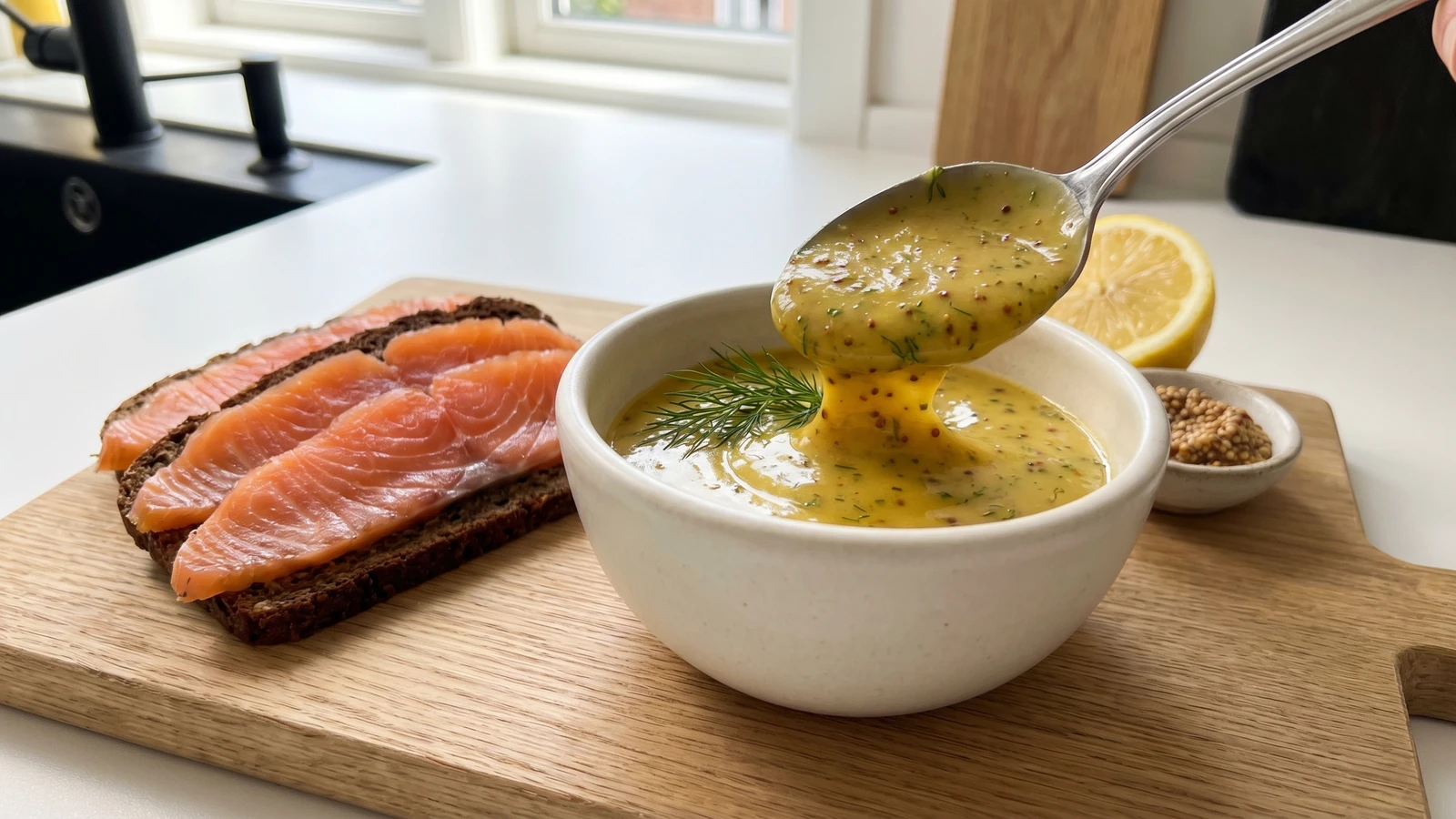
Grainy mustard, sugar, vinegar, and oil whisked into a thick golden emulsion and folded with fresh dill. The sauce that has stood beside gravlax at every Danish table for as long as anyone can remember.
Gravlax without sennepssauce is like bread without butter. You can do it, but you shouldn't. In Denmark, nobody would think to serve one without the other. They arrive together, always: the coral-pink salmon, silky from its days under salt and sugar and dill, and beside it a bowl of this sauce, thick and golden, sharp with mustard, sweet with sugar, green with so much dill it looks like a garden in a bowl.
The sauce itself takes ten minutes. That's all. You whisk mustard with sugar and vinegar until the sugar dissolves, then drizzle in oil slowly until it thickens into something that holds a trail from the whisk. Then you fold in the dill. There's no cooking, no heat, no special equipment. But those ten minutes contain one moment that makes the difference between a sauce and a dressing: the emulsification. Add the oil too fast and the sauce breaks, thin and greasy. Add it slowly and the mustard binds everything into a thick, glossy suspension that clings to the salmon and holds its own against the richness of the fish.
I want you to taste as you go. The balance is everything: sweet, then sharp, then that slow mustard warmth at the back of your throat. If it leans too far in any direction, you'll know, and I'll tell you how to bring it back. This is a sauce cooked with love, made entirely by hand, and once you've made it yourself you won't go back to a jar.
Sød sennepssauce appears wherever gravlax appears in the Danish kitchen, and the pairing is old. Gravlax itself dates to medieval Scandinavia, when fishermen buried salmon in sand and salt above the high-tide line to preserve it, the word grav meaning to dig or to bury. The sweet mustard sauce that accompanies it evolved from the strong Scandinavian mustard traditions of the 18th and 19th centuries, when Danish mustard makers in Copenhagen and Odense developed the grainy, slightly sweet style that distinguishes Danish sennep from its sharper French and English cousins. The addition of fresh dill to the sauce mirrors the dill packed around the curing salmon, binding the two into a single tradition where herb, fish, and condiment speak the same language.
Quantity
3 tablespoons
Quantity
1 tablespoon
Quantity
2 tablespoons
Quantity
1 tablespoon
Quantity
5 tablespoons
Quantity
1 small bunch
finely chopped
Quantity
pinch
Quantity
pinch
| Ingredient | Quantity |
|---|---|
| coarse-grain Danish mustard | 3 tablespoons |
| smooth Dijon mustard | 1 tablespoon |
| light brown sugar | 2 tablespoons |
| white wine vinegar | 1 tablespoon |
| cold-pressed rapeseed oil | 5 tablespoons |
| fresh dillfinely chopped | 1 small bunch |
| fine sea salt | pinch |
| white pepper | pinch |
Spoon both mustards into a medium bowl and add the sugar and vinegar. Whisk steadily until the sugar has dissolved completely into the mustard. This takes a minute or two. You'll feel the resistance change under your whisk as the graininess disappears. The sugar isn't just sweetness here. It rounds the sharpness of the mustard and creates a smooth base that will hold the oil when you add it. If you skip this step or rush it, undissolved sugar will leave the sauce gritty.
Add the rapeseed oil in a very thin, steady stream, whisking constantly as you pour. This is the step that matters most. The mustard acts as an emulsifier, binding the oil and vinegar together into something thick and glossy, but only if the oil goes in slowly. Pour it all in at once and the sauce breaks, thin and greasy. You'll know it's working when the sauce thickens to the consistency of a loose mayonnaise and holds a trail from the whisk. It takes about two minutes of steady whisking. Season with a small pinch of salt and white pepper.
Add the chopped dill and fold it through with a spoon, not the whisk. Whisking bruises the dill and turns it dark. Folding keeps the herbs bright and distinct, little flecks of green suspended through the gold. Be generous. The dill is not a garnish here. It's half the identity of the sauce. Taste and adjust: a little more sugar if the mustard is too sharp, a drop more vinegar if it's too sweet. You'll know when it's right. The balance is sweet, then sharp, then the warmth of mustard at the back of your throat, and dill through all of it.
Cover the bowl and let the sauce rest in the fridge for at least thirty minutes before serving. The flavors need time to settle into each other. The sugar softens further, the dill perfumes the oil, and the whole thing rounds out into something more unified than what you tasted at the bowl. Serve cold, always cold, alongside gravlax on rugbrod.
1 serving (about 30g)
Culinary guides, cultural storytelling, and the editorial depth that makes cooking meaningful.
Discover Culinary ExplorerChef Freja
Tart autumn apples, slow-boiled and strained clear overnight, then cooked with sugar to a trembling pale amber jelly that belongs on the cheese board, on morning toast, and in the kitchen of anyone who respects the season.

Chef Freja
Autumn apples simmered slowly with vanilla until they collapse into a rough, golden sauce. The condiment that waits on the shelf for flaeskesteg, for roast duck, for the meals that carry you through the Danish winter.

Chef Freja
The pan sauce that holds the Danish Christmas plate together. Duck drippings, good stock, cream, and a spoonful of red currant jelly for the tart brightness that makes juleaften taste like itself.

Chef Freja
September plums slow-cooked with onion, ginger, vinegar, and warm spice into a dark, glossy chutney that belongs beside aged cheese on a cold evening. The joy of waiting, sealed in a jar.