
Chef Joost
Aardappelschotel met Gehakt
A plain name for a quietly clever dish: fresh mince, sweet fried onion, nutmeg, and mashed potato baked until the top goes golden and the table goes silent.
A cooking platform built around craft, culture, and the stories behind what we eat.
Created by
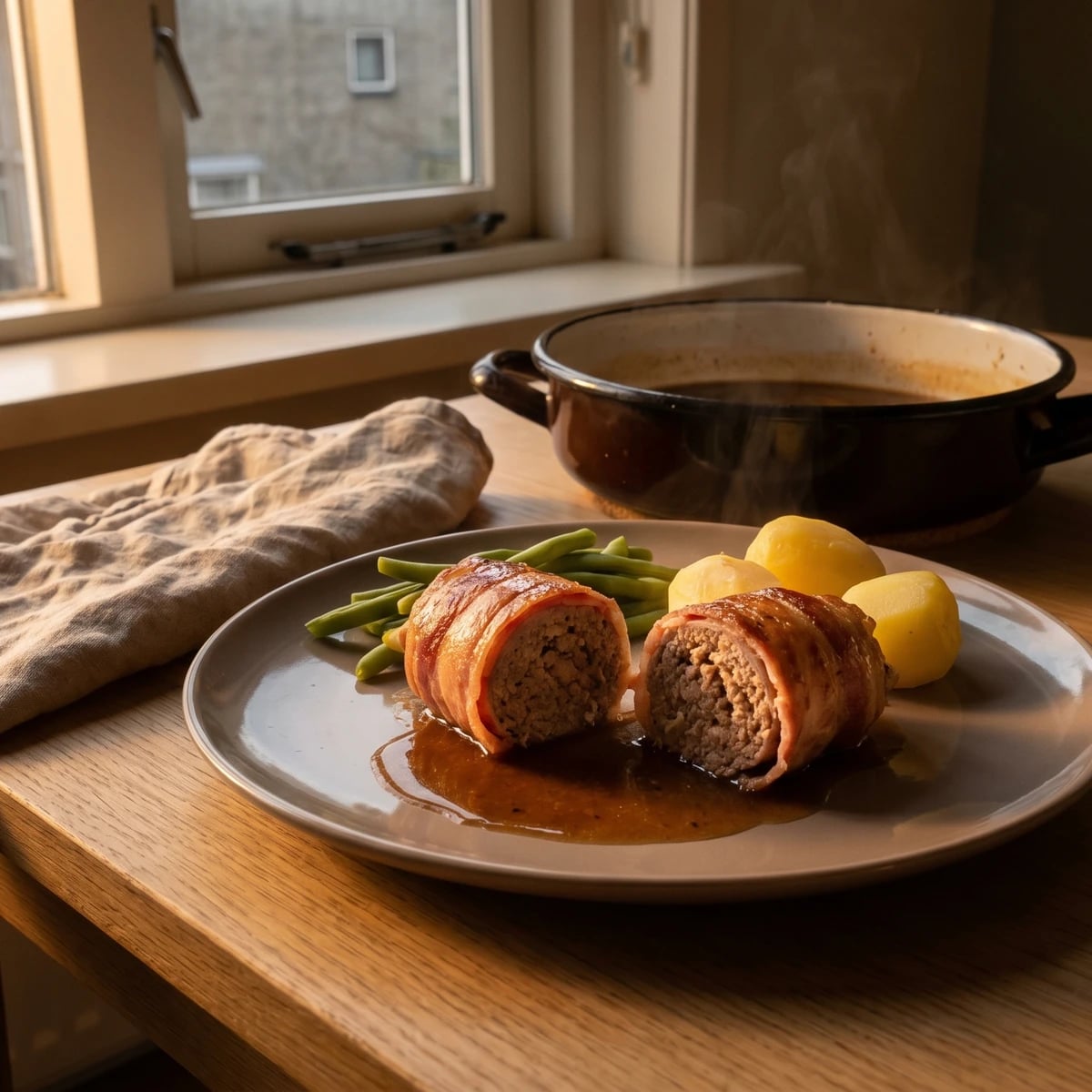
The butcher's salad-bird is no salad and no bird: just seasoned mince wrapped in streaky bacon, fried until the bacon bastes the meat and the weeknight pan makes its own gravy.
Slavink is the sort of word that tells on a country. Sla is lettuce, vink is finch, and here is a cylinder of seasoned minced meat in bacon, with neither leaf nor bird in sight. Dutch humour can be very dry, especially when wrapped by a butcher before supper.
At my grandmother's table, this was not Sunday food. It belonged to the small ordinary triumph of getting a proper meal on the table after work: boiled potatoes, a green vegetable, and one browned roll per plate, two if the child had cycled through rain and looked persuasive. But let me tell you a secret. These small butcher's inventions are where Dutch food often hides its cleverness, not in spectacle, but in a strip of ontbijtspek, thin breakfast bacon, arranged so it bastes the mince while it crisps around it.
The older blinde vink, blind finch, used veal or beef around a minced filling; the slavink walks into the postwar butcher's counter and comes out cheaper, quicker, and frankly more useful. A little nutmeg in the gehakt, minced meat, is not extravagance but the old spice cupboard made domestic. Brown it with patience, seam side first, then lower the heat and let the bacon do its work. Hou het altijd simpel: if the outside is dark before the centre is cooked, the pan is bragging and the supper is losing.
The slavink is generally credited to butcher Ton Spoelder of Laren, North Holland, who introduced it in 1952 as a bacon-wrapped variation on the older blinde vink, a small meat roll already known in Dutch and Belgian kitchens. Its name plays with sla, salad or lettuce, and vink, finch, because the new roll belonged beside the quick salad and potato suppers of the postwar butcher's counter, not because bird or greens ever belonged inside it. The dish became part of the Dutch aardappelen-groente-vlees plate, potatoes, vegetables, meat, where a ready-to-fry portion made weeknight cooking faster without giving up the braadjus, pan gravy.
Quantity
250g
Quantity
250g
Quantity
35g or 2
crushed
Quantity
2 tablespoons
Quantity
1 small
beaten
Quantity
1 teaspoon
Quantity
1 teaspoon
Quantity
1/2 teaspoon
Quantity
1/2 teaspoon
Quantity
16 slices, about 200g
Quantity
25g
Quantity
1 tablespoon
Quantity
60ml
| Ingredient | Quantity |
|---|---|
| minced pork | 250g |
| minced beef | 250g |
| fine dry breadcrumbs or beschuitencrushed | 35g or 2 |
| whole milk | 2 tablespoons |
| eggbeaten | 1 small |
| Dutch mustard or Dijon mustard | 1 teaspoon |
| fine salt | 1 teaspoon |
| freshly ground black pepper | 1/2 teaspoon |
| ground nutmeg | 1/2 teaspoon |
| thin streaky bacon (ontbijtspek) | 16 slices, about 200g |
| butter | 25g |
| neutral oil | 1 tablespoon |
| water or light stock | 60ml |
Stir the breadcrumbs with the milk in a mixing bowl and let them sit for five minutes. This little paste keeps the gehakt, minced meat, tender; skip it and the filling tightens like a fist in the pan.
Add the minced pork, minced beef, beaten egg, mustard, salt, pepper, and nutmeg to the soaked crumbs. Mix with your hands just until even. Stop when it looks joined together; overworking mince gives you bounce, and a slavink should eat like supper, not a rubber ball.
Divide the meat mixture into eight portions and shape each into a firm cylinder about 8 centimetres long. Wet your hands lightly if the mixture sticks. The rolls should be compact enough to hold together but not squeezed hard; the bacon will do the binding.
Lay two thin slices of ontbijtspek, streaky breakfast bacon, slightly overlapping on the board. Place one meat roll at the short end and wrap the bacon around it in a snug spiral, starting and ending underneath. Repeat with the rest. Thin bacon matters; thick-cut bacon behaves like a belt when you need a bandage.
Heat the butter and oil in a large frying pan over medium heat. Set the slavinken in the pan seam-side down and leave them alone for three minutes so the bacon seals itself. Turn gently and brown all sides, about six to eight minutes total. The bacon should be deep golden with crisp edges, not black.
Lower the heat, cover the pan, and cook for another eight to ten minutes, turning once or twice. The centre should reach 71C/160F on a thermometer. If you don't have one, cut one open; the filling should be firm, hot, and no longer raw-pink. Lift the lid for the final two minutes so the bacon tightens again.
Move the slavinken to a warm plate and pour the water or light stock into the pan. Scrape up the browned bits with a wooden spoon and let the liquid reduce for a minute into a small glossy braadjus, pan gravy. Spoon it over the rolls and serve with boiled potatoes and a green vegetable.
1 serving (about 170g)
Culinary guides, cultural storytelling, and the editorial depth that makes cooking meaningful.
Discover Culinary Explorer
Chef Joost
A plain name for a quietly clever dish: fresh mince, sweet fried onion, nutmeg, and mashed potato baked until the top goes golden and the table goes silent.

Chef Joost
Balkenbrij is the old slaughter-day wisdom of Limburg and Brabant: pork broth, scraps, liver, rommelkruid, and buckwheat cooked into a loaf that feeds twice.

Chef Joost
The bone is not decoration here: it is the old promise that a feast should taste of patience, mustard, honey, and the family table gathered close.

Chef Joost
A hot pan, a spoonful of butter, and a splash of water: the Dutch steak whose real luxury is the jus, glossy enough to demand bread at the table.