
Chef Joost
Aardappelschotel met Gehakt
A plain name for a quietly clever dish: fresh mince, sweet fried onion, nutmeg, and mashed potato baked until the top goes golden and the table goes silent.
A cooking platform built around craft, culture, and the stories behind what we eat.
Created by
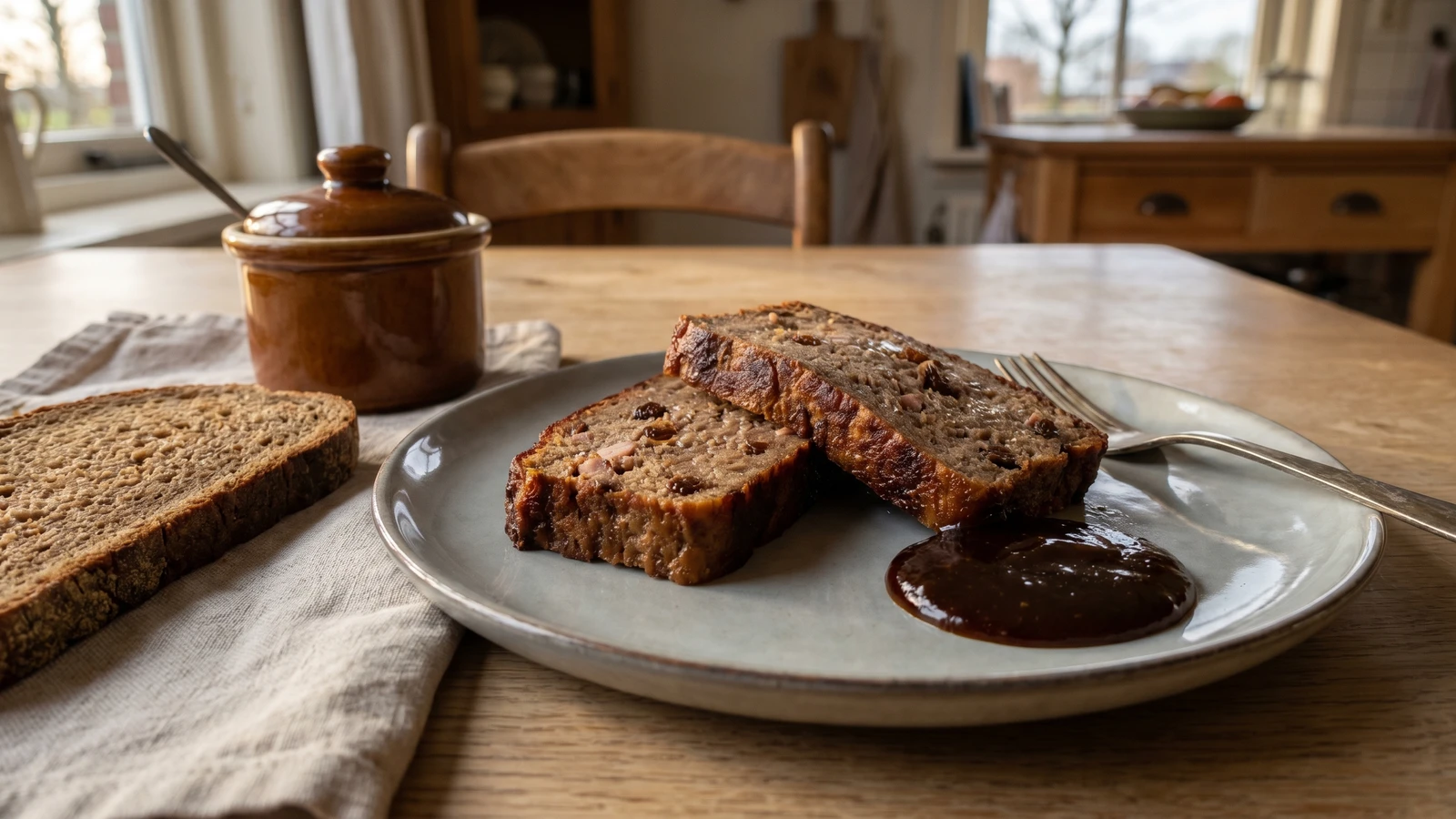
Balkenbrij is the old slaughter-day wisdom of Limburg and Brabant: pork broth, scraps, liver, rommelkruid, and buckwheat cooked into a loaf that feeds twice.
In my grandmother's second notebook, the humble dishes have the fewest words. That is how you know they mattered. Balkenbrij was never written as a performance; it was written as memory, the dish made when a pig had been slaughtered and the household had one duty left: waste nothing. Not the stock. Not the liver. Not the little pieces too good to throw away and too small to become anything grand.
The name already tells you part of the truth. Brij means porridge, the same thick spoon-food that kept half of northern Europe alive through damp winters. Balken is less tidy; in dialect and old usage it has been linked to the bits and body parts left from butchering, while some cooks hear the cooled loaf's squared shape in it. I won't force the word to behave better than history allows. But let me tell you a secret: the dish itself is very clear. It is poverty with a spice drawer.
That spice drawer matters. Balkenbrij without rommelkruid, the old Dutch mixed spice with clove, anise, cinnamon, mace, and sometimes liquorice root, is only pork porridge with ambitions. With it, the loaf becomes southern Dutch slaughter-day cookery: dark, fragrant, sustaining, and a little strange to anyone who thinks Dutch food forgot the spice ships ever came home. Hou het altijd simpel. Simmer the meat, chop it fine, thicken the stock with buckwheat until your spoon fights back, then let the loaf go cold. The next day, slice it and fry it in butter until the edges turn crisp and brown. That is when thrift becomes supper.
Balkenbrij belongs especially to Limburg, Noord-Brabant, Gelderland, and Overijssel, where it was made during the winter slaughter season from pork stock, head meat, liver, scraps, and buckwheat or rye flour. Its closest relatives include German Panhas and American scrapple, both part of the same waste-nothing butchering tradition carried by rural households and migrants. The defining Dutch note is rommelkruid, a regional spice mixture whose exact formula varied by village and household, but commonly included clove, cinnamon, anise, mace, and liquorice root.
Quantity
750g
Quantity
250g
Quantity
1.5 liters
Quantity
1
halved
Quantity
2
Quantity
10
Quantity
2 teaspoons
plus more to taste
Quantity
250g
Quantity
2 tablespoons
Quantity
1/2 teaspoon
Quantity
50g
Quantity
as needed
for frying
| Ingredient | Quantity |
|---|---|
| pork shoulder, pork head meat, or mixed pork scraps | 750g |
| pork liver | 250g |
| water | 1.5 liters |
| onionhalved | 1 |
| bay leaves | 2 |
| black peppercorns | 10 |
| saltplus more to taste | 2 teaspoons |
| buckwheat flour | 250g |
| rommelkruid | 2 tablespoons |
| ground black pepper | 1/2 teaspoon |
| raisins (optional) | 50g |
| butter or lardfor frying | as needed |
Put the pork, onion, bay leaves, peppercorns, salt, and water into a heavy pot. Bring it just to a boil, skim the grey foam, then lower the heat and let it murmur gently for about 2 hours, until the meat is tender enough to pull apart with a fork. You are making both the filling and the glue, so don't rush the stock.
Add the liver for the last 20 minutes only. Liver goes bitter and grainy when bullied for hours, and balkenbrij already asks enough bravery from modern eaters. When it is firm and just cooked through, lift all the meat and liver from the pot and strain the stock.
Chop the pork and liver very finely, or pulse briefly in a food processor until coarse but not pasty. You want a loaf that slices cleanly, with little flecks of meat visible. Measure 1 liter of the strained stock back into the pot.
Bring the stock to a simmer and whisk in the buckwheat flour gradually, handful by handful, so it thickens without lumps. Stir constantly with a wooden spoon for 10 to 15 minutes, until the mixture pulls heavily from the sides and the spoon leaves a clear track along the bottom. This is brij, porridge, but it should be firm porridge with shoulders.
Stir in the chopped meat, rommelkruid, ground pepper, and raisins if you use them. Taste carefully and add salt if needed; cold food tastes less salty than hot food, so season it a little more boldly than soup. Scrape the mixture into a rinsed loaf tin or shallow dish and smooth the top.
Cover and refrigerate for at least 4 hours, preferably overnight, until the balkenbrij is fully set. This rest is not decoration. Without it, the slices collapse in the pan and you are back to porridge, which is historically respectable but less useful for supper.
Turn the loaf out and cut it into slices about 1.5 centimeters thick. Fry them in butter or lard over medium heat for 3 to 4 minutes per side, until the outside is dark brown and crisp at the edges while the middle stays soft and fragrant. Serve with dark rye bread, apple syrup, or fried apples.
1 serving (about 190g)
Culinary guides, cultural storytelling, and the editorial depth that makes cooking meaningful.
Discover Culinary ExplorerChef Joost
A plain name for a quietly clever dish: fresh mince, sweet fried onion, nutmeg, and mashed potato baked until the top goes golden and the table goes silent.

Chef Joost
Ajam Besengek is the golden chicken stew of the Indo-Dutch table: coconut milk, turmeric, and candlenut cooked down until the sauce clings to the meat like memory.

Chef Joost
The old Dutch spelling says ajam, the city says Batavia, and the pot says exactly what the rijsttafel always was: memory, trade, and dinner in one dish.

Chef Joost
The name means simply fried chicken, but the Dutch spelling carries a whole Indies kitchen: turmeric, coriander, garlic, and a golden crust that remembers the boemboe.