
Chef Jeong-sun
Aehobak-bokkeum (Korean Stir-Fried Zucchini)
Tender Korean zucchini half-moons cooked quickly over real heat, seasoned with salted shrimp so the squash tastes deeper than oil and still clean enough for a weeknight table.
A cooking platform built around craft, culture, and the stories behind what we eat.
Created by
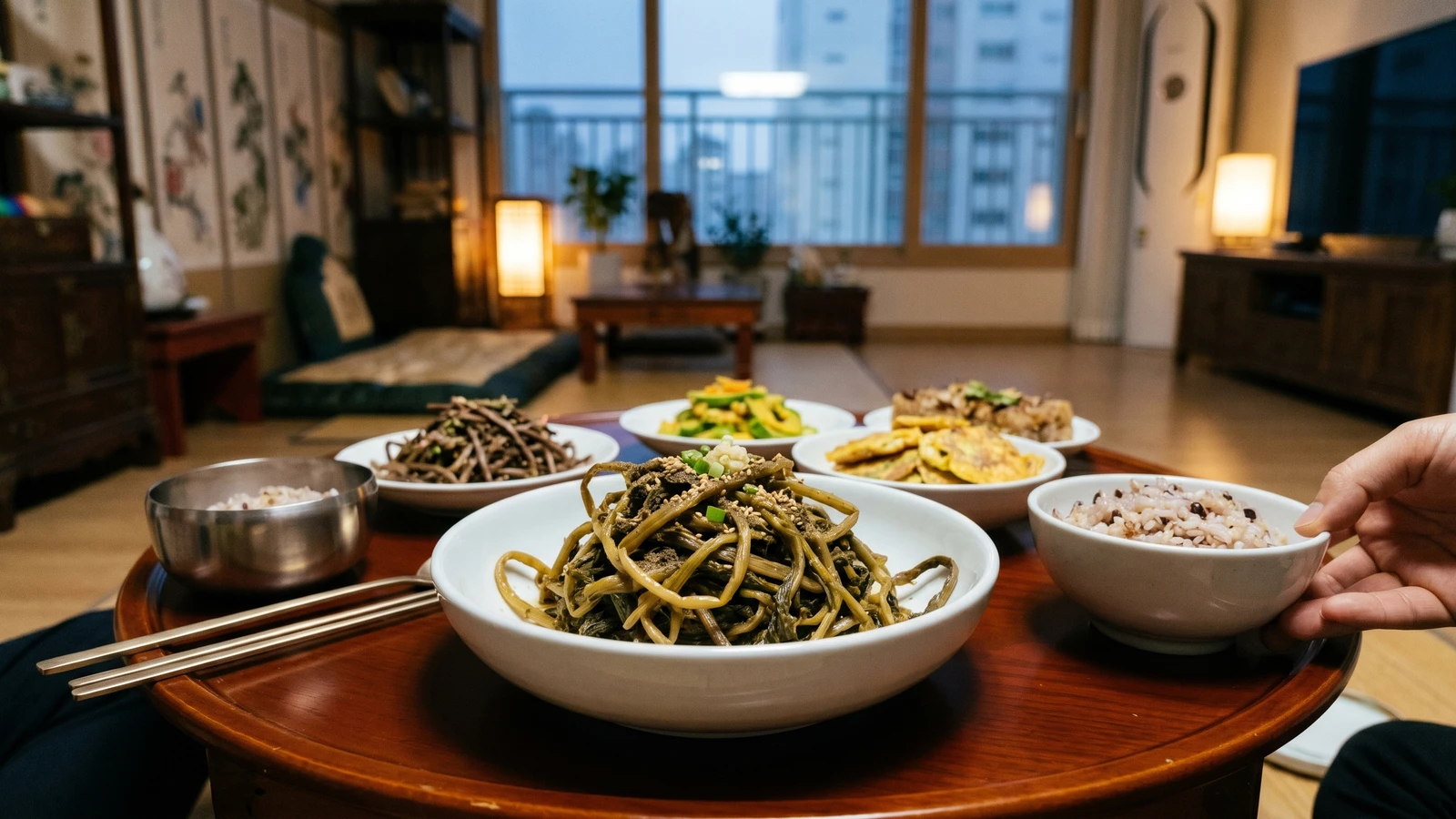
Radish tops saved from the winter pantry, boiled until tender, peeled by hand, then sauteed with doenjang and perilla until they taste deep, earthy, and clean.
Siraegi begins at the market when the radishes are still carrying their tops. In late autumn, after kimjang work, those tops get saved, tied, and dried because a Korean kitchen does not throw away the part that can feed February. Cook the month you're standing in. Fresh radish greens belong to autumn; dried siraegi belongs to the cold months, when the pantry has to do more of the work.
Siraegi, the dried leaves and stems of Korean radish, comes from the winter storage habits of rural kitchens, especially after autumn radish harvest and kimjang. It is one of the dried greens used for 묵은 나물 (old-season namul), the set of stored vegetables eaten around Jeongwol Daeboreum, the first full moon of the lunar year, with ogokbap (five-grain rice). The dish has no need for palace decoration; its history is the household pantry, thrift, and the skill of making tough greens tender.
Quantity
60g
Quantity
8 cups
for boiling
Quantity
1 teaspoon
for boiling
Quantity
1 cup
Quantity
1 1/2 tablespoons
Quantity
1 tablespoon
plus more if needed
Quantity
1 tablespoon
Quantity
1 teaspoon
Quantity
2 cloves
minced
Quantity
1
finely chopped
Quantity
2 tablespoons
Quantity
1 teaspoon
Quantity
1/4 teaspoon
| Ingredient | Quantity |
|---|---|
| dried siraegi (dried Korean radish greens) | 60g |
| waterfor boiling | 8 cups |
| coarse saltfor boiling | 1 teaspoon |
| anchovy-kelp broth or water | 1 cup |
| doenjang (Korean fermented soybean paste) | 1 1/2 tablespoons |
| guk-ganjang (Korean soup soy sauce)plus more if needed | 1 tablespoon |
| perilla oil (deulgireum) | 1 tablespoon |
| toasted sesame oil | 1 teaspoon |
| garlicminced | 2 cloves |
| scallionfinely chopped | 1 |
| perilla seed powder (deulkkae-garu) | 2 tablespoons |
| toasted sesame seeds | 1 teaspoon |
| gochugaru (Korean chili flakes) (optional) | 1/4 teaspoon |
Rinse the dried siraegi under running water, rubbing away dust and any grit caught in the stems. Put it in a large bowl, cover with at least 2 inches of cold water, and soak 8 hours or overnight. Dried radish greens do not forgive impatience; soaking lets the stems relax before boiling, so they turn tender instead of stringy.
Drain the soaked greens and put them in a pot with 8 cups fresh water and 1 teaspoon coarse salt. Bring to a boil, then lower to a steady simmer and cook 45 to 60 minutes, until the thickest stem bends easily between your fingers. If it still snaps, it is not ready. Add more water if the pot drops below the greens.
Drain the greens and rinse in cool water until you can handle them. Pinch a thick stem near the end and pull away the tough outer skin where it comes off easily. Do not chase every thread until you hate the dish. Peel the thick stems, leave the tender leaves alone, and squeeze gently so the greens stay damp but not dripping.
Cut the greens into 2-inch lengths. Put them in a mixing bowl with the doenjang, guk-ganjang, perilla oil, sesame oil, garlic, scallion, perilla seed powder, sesame seeds, and gochugaru if using. Massage everything in by hand for 1 minute, separating the leaves so the seasoning reaches inside. Taste one strand now. It should taste slightly stronger than finished, because the broth will soften it.
Set a wide skillet over medium heat. Add the seasoned greens and stir for 2 minutes, just until the doenjang smells rounded and the garlic loses its raw edge. Pour in 1 cup anchovy-kelp broth or water, lower the heat, cover, and cook 12 to 15 minutes, stirring once or twice. The liquid should mostly disappear, leaving the greens glossy and tender, not dry.
Taste before adding anything. If it needs salt, add 1/2 teaspoon more guk-ganjang, not another spoon of doenjang, or the soybean paste will bury the radish greens. Let the namul rest 10 minutes off the heat before serving. Siraegi tastes better warm or at room temperature, after the seasoning settles into the stems.
1 serving (about 115g)
Culinary guides, cultural storytelling, and the editorial depth that makes cooking meaningful.
Discover Culinary ExplorerChef Jeong-sun
Tender Korean zucchini half-moons cooked quickly over real heat, seasoned with salted shrimp so the squash tastes deeper than oil and still clean enough for a weeknight table.

Chef Jeong-sun
Tender Korean summer zucchini softened gently in the pan with saeujeot for salt and depth, finished with sesame so the vegetable stays sweet, green, and plainly itself.

Chef Jeong-sun
A bittersweet spring green from the southern shore, blanched just until pliant, then seasoned lightly so its clean coastal bitterness stays alive on the rice table.

Chef Jeong-sun
Torn king oyster or shiitake mushrooms, browned until their own water disappears, then finished with soy, garlic, sesame oil, and onion for a quiet banchan that earns its place.