
Chef Takumi
Candied Japanese Sweet Potatoes (大学芋, Daigakuimo)
Daigakuimo is simple student comfort: sweet potato cut stout, fried until the corners take color, then turned in a soy-sugar syrup that sets shiny instead of sticky.
A cooking platform built around craft, culture, and the stories behind what we eat.
Created by
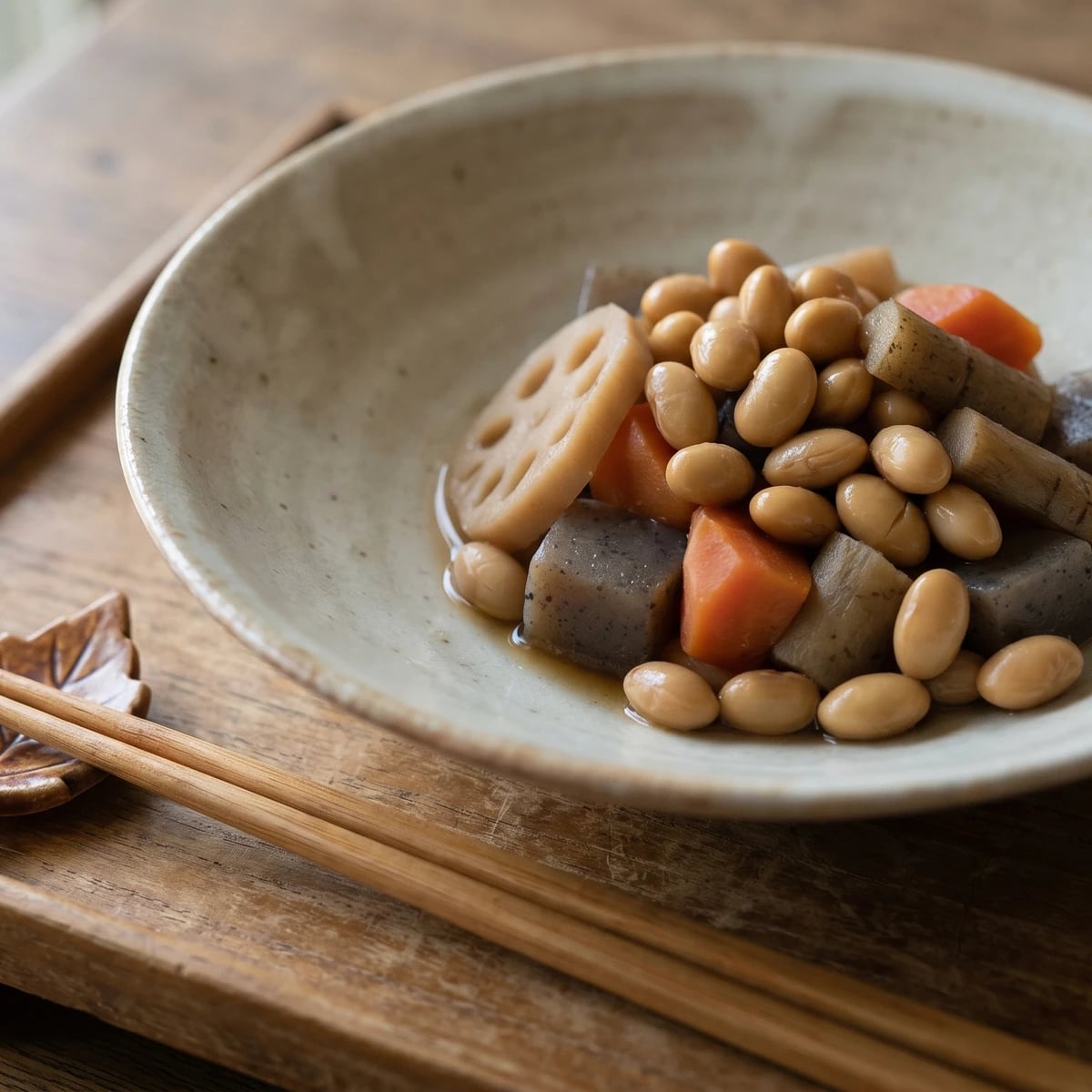
A patient side dish of soybeans, konnyaku, and root vegetables simmered in clear dashi until every piece tastes seasoned through, not sauced over, and sits quietly beside rice.
Abowl of simmered soybeans doesn't ask you to admire it. It sits beside the rice, steady and brown and useful, the sort of okazu that makes tomorrow's lunch easier before anyone has said the word meal prep. This is honmono in its plainest clothes: beans, konnyaku, root vegetables, dashi, soy sauce, and a little sweetness.
The part that decides the dish comes early. Cook the soybeans in plain water until they are tender before you season them. Add soy sauce too soon and the skins tighten while the centers stay stubborn, which is not technique failing you, only impatience wearing an apron. Once the beans are tender, they can drink the broth without losing their shape.
Konnyaku asks for its own small respect. Score it, dice it, blanch it, then dry it briefly in the pot until the surface looks matte. That removes the alkaline scent and gives the seasoning somewhere to cling. A wooden drop-lid, otoshibuta, keeps everything just under the broth so you don't need to stir and bruise the pieces. A circle of parchment does the same quiet work.
Serve this warm, cool, or straight from the refrigerator after it has come back to room temperature. Nimono often improves after resting, because the flavor moves inward as it cools. Nothing hidden, nothing hurried. The dish is better the second day because it has finally had time to become itself.
Daizu to Konnyaku no Nimono belongs to the household family of gomoku-mame, literally "five-item beans," in which soybeans are simmered with konnyaku and small-cut vegetables. The word gomoku often means a mixed assortment rather than a strict count of five, as in gomoku-gohan and gomoku-zushi. Its usefulness comes from dried soybeans, a long-standing Japanese pantry staple that made seasoned side dishes like this suited to keeping for several days.
Quantity
1 cup (about 180g)
rinsed and soaked 8 to 12 hours
Quantity
3 cups
for dashi
Quantity
1 piece (about 10g)
Quantity
20g
Quantity
1 block (about 250g)
scored and cut into 1/2-inch dice
Quantity
1 small root (about 100g)
scrubbed and diced
Quantity
1 medium (about 120g)
diced
Quantity
1 small piece (about 150g)
peeled and diced
Quantity
2 tablespoons
Quantity
1 1/2 tablespoons
Quantity
2 tablespoons
Quantity
3 tablespoons
Quantity
as needed
for soaking and simmering
| Ingredient | Quantity |
|---|---|
| dried soybeansrinsed and soaked 8 to 12 hours | 1 cup (about 180g) |
| cold waterfor dashi | 3 cups |
| konbu (dried kelp) | 1 piece (about 10g) |
| katsuobushi (bonito flakes) | 20g |
| konnyakuscored and cut into 1/2-inch dice | 1 block (about 250g) |
| gobō (burdock root)scrubbed and diced | 1 small root (about 100g) |
| carrotdiced | 1 medium (about 120g) |
| renkon (lotus root)peeled and diced | 1 small piece (about 150g) |
| sake | 2 tablespoons |
| sugar | 1 1/2 tablespoons |
| mirin | 2 tablespoons |
| soy sauce | 3 tablespoons |
| waterfor soaking and simmering | as needed |
Rinse the soybeans and pick out any broken ones. Cover them with plenty of cold water, at least three inches above the beans, and soak 8 to 12 hours. They should swell and look smooth, not wrinkled. Soaking lets water reach the center before heat tightens the skins, which means the beans cook evenly instead of splitting outside and staying chalky within.
Wipe the konbu with a damp cloth, but don't wash it. Put it in 3 cups cold water and warm it slowly over low heat, about ten minutes. Pull the konbu out when the water trembles and small bubbles climb the sides of the pot. Boil it and the dashi turns faintly bitter and slick, and you've traded clarity for nothing.
Bring the konbu water to a gentle boil, add the katsuobushi all at once, and take the pot off the heat. Leave it alone for two or three minutes, until the flakes sink. Strain through a cloth or fine strainer and let it drip naturally. Don't squeeze, because squeezing pushes strong, oily flavors into the clear stock.
Drain the soaked soybeans and put them in a pot with fresh water to cover by two inches. Bring to a boil, skim the foam, then lower the heat and simmer gently for 60 to 75 minutes, adding hot water if the level drops. The beans are ready when one crushes easily between your fingers but still keeps its shape. Do not season them yet. Soy sauce at this stage makes the skins tighten before the centers are ready.
Score both sides of the konnyaku shallowly in a crosshatch, then cut it into 1/2-inch dice. Boil the pieces for three minutes, drain, and return them to the dry pot over medium heat for two minutes, shaking until the surface looks dull and you hear a faint squeak. This removes the alkaline smell and roughens the surface so the broth can cling.
Cut the gobō, carrot, and renkon into 1/2-inch dice, close to the size of the konnyaku. Soak the gobō and renkon in fresh water for five minutes, then drain. Don't soak them longer. You want to tame the harsh edge and keep the color clean, not wash away the flavor.
Drain the cooked soybeans and put them in a wide pot with the konnyaku, gobō, carrot, and renkon. Add 2 1/2 cups dashi, the sake, sugar, and mirin. The liquid should come almost to the top of the ingredients, not drown them. Bring to a gentle simmer and set a wooden drop-lid, otoshibuta, directly on the surface. Simmer for 15 minutes so the slower sweetness enters first.
Add the soy sauce and keep simmering gently under the drop-lid for 25 to 30 minutes, until the vegetables are tender and the broth has reduced to a shallow glossy pool. Shake the pot once or twice instead of stirring. Stirring breaks the beans and chips the vegetables, while shaking moves the broth without bruising the dish.
Take the pot off the heat and let everything cool in the broth for at least 30 minutes. This is when the seasoning moves inward, especially into the soybeans. Serve warm or at room temperature, with only a little of the reduced broth spooned over. If you can wait until tomorrow, the dish will repay your rare and noble restraint.
1 serving (about 240g)
Culinary guides, cultural storytelling, and the editorial depth that makes cooking meaningful.
Discover Culinary Explorer
Chef Takumi
Daigakuimo is simple student comfort: sweet potato cut stout, fried until the corners take color, then turned in a soy-sugar syrup that sets shiny instead of sticky.

Chef Takumi
Japanese potato salad asks for warm floury potatoes, salted cucumber, a little ham, and Kewpie folded in after the heat has faded. Keep it rough, tangy, and quietly generous.

Chef Takumi
Skin-on satsumaimo rounds, a little sugar, and thin lemon slices simmer into a bright side dish that keeps its shape and tastes even better after resting.

Chef Takumi
Lotus root is all clean cut and crisp bite here: thin coins warmed in sesame oil, glossed with soy and sweetness, and finished before the snap has a chance to leave.