Culinary Explorer

A cooking platform built around craft, culture, and the stories behind what we eat.
Discover Culinary Explorer
Lemon-Simmered Japanese Sweet Potatoes (さつまいものレモン煮, Satsumaimo no Remon-ni)

Lemon-Simmered Japanese Sweet Potatoes (さつまいものレモン煮, Satsumaimo no Remon-ni)

Created by

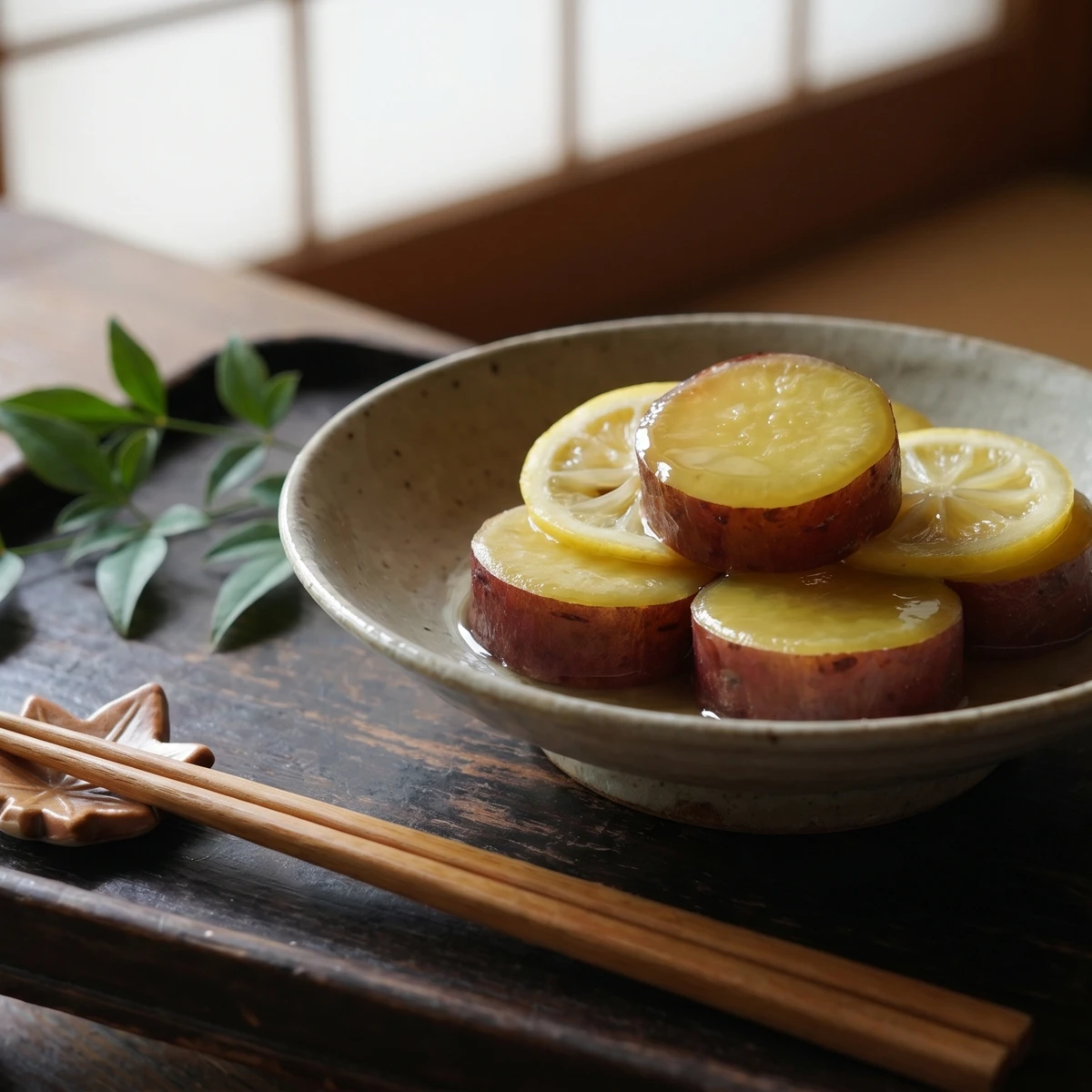
Skin-on satsumaimo rounds, a little sugar, and thin lemon slices simmer into a bright side dish that keeps its shape and tastes even better after resting.

Side Dishes
Japanese
Weeknight
Picnic
Make Ahead
10 min
Active Time
20 min cook30 min total
Yield4 servings

Satsumaimo comes into its own when the air cools, the skin red-purple and the flesh pale gold, dense enough to hold a knife mark. This is a small dish, but a very useful one: sweet, sharp, tidy, and happy at room temperature. The kind of side dish that earns its place in a bento because it behaves itself.

The first secret is the cut. Slice the sweet potato into even rounds and leave the skin on, because the skin helps each piece hold together while the center turns tender. Soak the slices briefly after cutting. Not as ceremony. Satsumaimo darkens and carries a little surface starch, and water clears both away so the syrup stays bright instead of muddy.

Lemon-ni is hardly more than water, sugar, and lemon, which is why the ingredient matters. Choose satsumaimo that feels heavy and firm, with taut skin and no soft spots. Simmer it quietly under an otoshibuta, a drop-lid, or a circle of parchment. The lid keeps the slices submerged and seasoned without stirring, and stirring is how a neat round becomes a sad corner of potato. We don't need drama here. We need patience.

Serve it cool or at room temperature, with a little of the lemon syrup clinging to the surface. In the method-not-menu thinking of washoku, this is a simmered side, a nimono, but lighter than the soy-dashi kind. Sweet potato, lemon, and restraint. Nothing hidden.

Satsumaimo is named for Satsuma, the old province in present-day Kagoshima, after the sweet potato reached mainland Japan through the Ryukyu Islands in the early Edo period. It became valued as a hardy crop that could grow in poor soil and helped protect communities from famine, especially after its cultivation spread more widely in the eighteenth century. Lemon-ni is a modern household and bento preparation, using the Western citrus to keep the color bright and the sweetness clean.

The technique, the tradition, and the story behind every dish.

Discover Culinary Explorer

Ingredients

satsumaimo (Japanese sweet potatoes)

Quantity

2 medium (about 500g)

scrubbed, skin left on

water

Quantity

2 cups

plus more for soaking

sugar

Quantity

5 tablespoons

mirin

Quantity

1 tablespoon

sea salt

Quantity

1/4 teaspoon

lemon

Quantity

1/2

thinly sliced, seeds removed

lemon juice (optional)

Quantity

1 teaspoon

to finish if the syrup needs brightness

Equipment Needed

  • Wide shallow pot
  • Wooden drop-lid (otoshibuta), or a circle of parchment
  • Skewer or cake tester

Instructions

  1. 1

    Cut the satsumaimo

    Scrub the satsumaimo well and leave the skin on. Cut it crosswise into rounds about 3/4 inch thick, keeping the slices as even as you can. Even rounds cook at the same pace, and the skin helps each one hold its shape instead of fraying at the edge.

  2. 2

    Soak the slices

    Put the rounds in a bowl of cold water for 10 minutes, then drain and rinse once. This clears surface starch and some of the bitterness that can sit just under the skin. It also keeps the cut faces pale, so the finished syrup stays clean and bright.

    If the water turns cloudy, that's the starch leaving. Let it go. Cloudy soaking water is better than cloudy syrup.
  3. 3

    Build the syrup

    Lay the drained rounds in a wide pot in a single layer. Add the 2 cups water, sugar, mirin, and salt. The liquid should come just about level with the sweet potatoes. A wide pot matters because stacked slices cook unevenly, and this dish is judged by whether the rounds stay neat.

  4. 4

    Add the lemon

    Lay the lemon slices over and between the sweet potato rounds, removing every seed first. Lemon seeds can make the syrup bitter, while the peel and juice keep the sweetness lively. This is a small detail, but it decides the dish.

  5. 5

    Simmer gently

    Bring the pot just to a simmer over medium heat, then lower the heat and set an otoshibuta, a wooden drop-lid, directly on the surface. Simmer gently for 15 to 20 minutes, until a skewer slides into the center with little resistance. Keep the bubbles small. A hard boil knocks the rounds around and breaks the edges.

    No otoshibuta? Cut a circle of parchment slightly smaller than the pot and snip a small hole in the center. It keeps the syrup moving over the slices without asking you to stir.
  6. 6

    Rest in syrup

    Turn off the heat and let the satsumaimo cool in the syrup for at least 20 minutes. It will taste better after this rest, because the seasoning settles inward as the slices cool. Taste the syrup. If it needs a sharper edge, add the optional teaspoon of lemon juice now, after cooking, so the brightness stays clear.

  7. 7

    Serve with restraint

    Lift the rounds carefully with a spoon and serve them cool or at room temperature, with a little syrup spooned over. Set a few lemon slices among them, but don't drown the dish. The surface should glisten, not swim.

Chef Tips

  • Choose satsumaimo that are firm, heavy for their size, and evenly shaped. Long, even potatoes give you tidy rounds, and tidy rounds cook like they were taught manners.
  • Do not peel them. The skin is not decoration here. It helps hold the slices together and gives the pale flesh its proper frame.
  • Use a wide pot and a drop-lid. The authentic tool is an otoshibuta, but parchment does honest work. What matters is keeping the slices covered without stirring.
  • This is a make-ahead dish by nature. The flavor is clearer once it cools, and the rounds firm up enough to pack neatly into bento.

Advance Preparation

  • Make the dish up to two days ahead and refrigerate it in its syrup. Bring it back to room temperature before serving.
  • For bento or picnic use, drain the rounds lightly before packing so they stay glossy without leaking syrup into the rest of the meal.

Frequently Asked Questions

Nutrition Information

1 serving (about 200g)

Calories
240 calories
Total Fat
0 g
Saturated Fat
0 g
Trans Fat
0 g
Unsaturated Fat
0 g
Cholesterol
0 mg
Sodium
210 mg
Total Carbohydrates
58 g
Dietary Fiber
4 g
Sugars
22 g
Protein
2 g

Note: Chef personas and recipes are created with AI assistance. Cook with care: follow safe food-handling practices, check doneness with a thermometer when needed, and adapt for allergies and your kitchen.

Where cooking meets culture.

Culinary guides, cultural storytelling, and the editorial depth that makes cooking meaningful.

Discover Culinary Explorer

More from Vegetable Nimono & Kinpira

Browse the full collection