
Chef Takumi
Autumn Mushroom Rice (きのこの炊き込みご飯, Kinoko Takikomi Gohan)
Autumn mushrooms do most of the work here. Rinse the rice well, season the liquid before cooking, and let the pot rest so every grain comes out separate and fragrant.
A cooking platform built around craft, culture, and the stories behind what we eat.
Created by
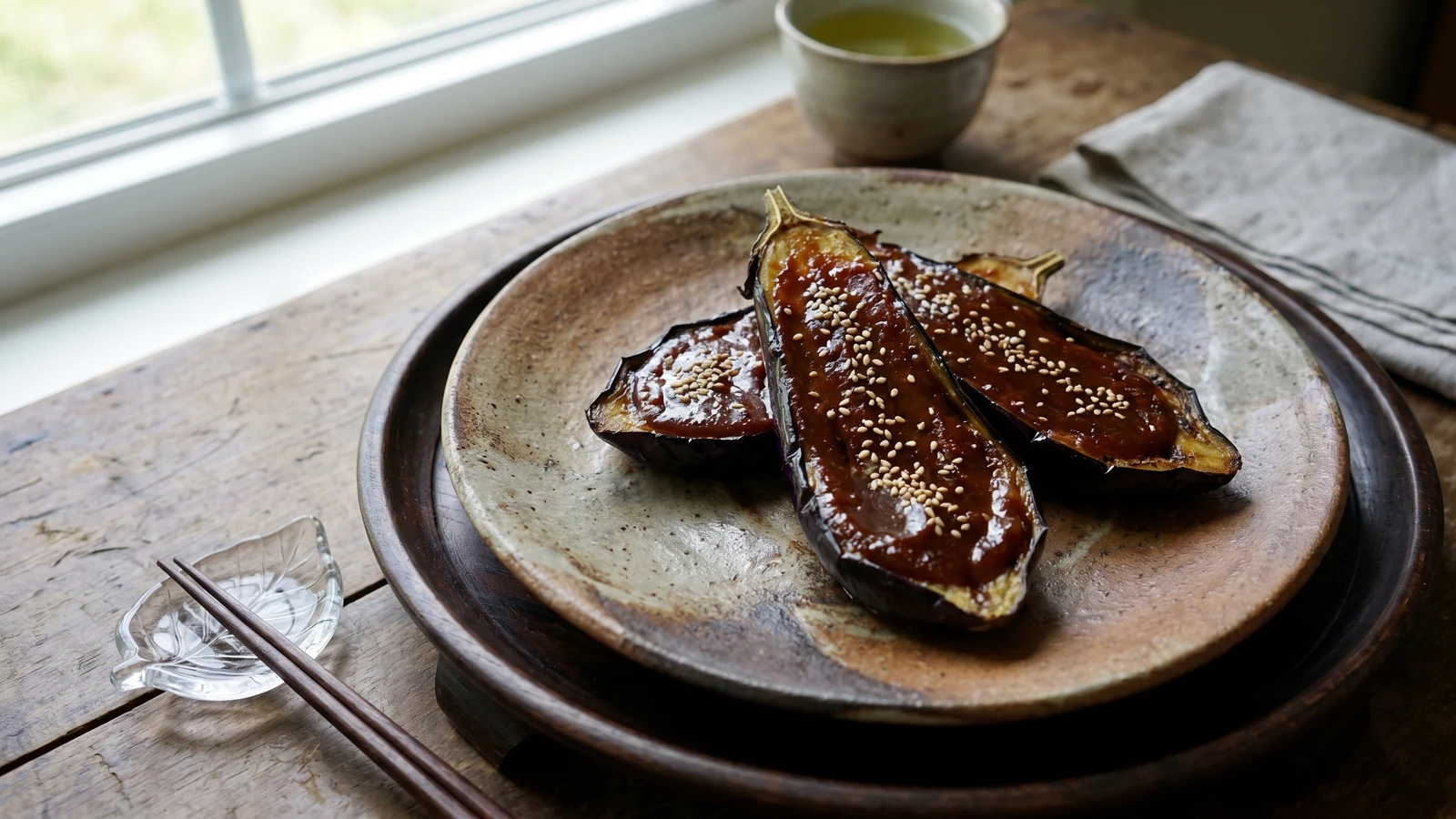
Summer eggplant does most of the work here: tender slabs, a sweet aka-miso glaze, a brief spell under fierce heat, and sesame for the small crackle at the end.
Nasu is a summer vegetable with a short temper. Buy it taut-skinned and heavy, then cook it the day you bring it home, while the flesh is still pale and sweet. In shun, eggplant needs very little persuasion: oil, heat, and a miso glaze that knows when to stop.
The mistake is brushing the miso on too soon. Sweet miso burns before eggplant becomes tender, and then you have a handsome top and a stubborn middle, which is cooking as costume. We cook the eggplant first until the cut face collapses under a spoon, then glaze and blister it at the end. Tender first, glaze last. That is the whole secret.
Dengaku sits nicely beside rice and clear soup, rich enough to feel generous but small enough to behave as a side dish. Aka-miso gives the sauce its dark, salty backbone; mirin, sake, sugar, and a spoonful of dashi round it without burying the eggplant under sweetness. Leave the plate open, scatter sesame while the glaze is tacky, and let the vegetable speak through the shine. Nothing hidden.
Dengaku refers first to a medieval rice-field performance, and the food name is generally tied to skewered tofu whose upright sticks recalled the dancers' props. By the Edo period, miso-coated tofu and vegetables were common teahouse fare, and Tofu Hyakuchin, the 1782 Edo cookbook devoted to tofu, records dengaku among its standard preparations. Eggplant became a natural summer version, with darker mame-miso styles favored in Nagoya and the Tokai region and sweeter white miso used in parts of Kyoto.
Quantity
4 small (about 500g total)
trimmed and halved lengthwise
Quantity
1/4 teaspoon
Quantity
2 tablespoons, plus more if needed
Quantity
3 tablespoons
Quantity
1 1/2 tablespoons
Quantity
1 tablespoon
Quantity
1 tablespoon
Quantity
2 tablespoons
Quantity
1 tablespoon
| Ingredient | Quantity |
|---|---|
| Japanese eggplantstrimmed and halved lengthwise | 4 small (about 500g total) |
| fine sea salt | 1/4 teaspoon |
| neutral oil | 2 tablespoons, plus more if needed |
| aka-miso (red miso) | 3 tablespoons |
| mirin | 1 1/2 tablespoons |
| sake | 1 tablespoon |
| sugar | 1 tablespoon |
| dashi | 2 tablespoons |
| toasted white sesame seeds | 1 tablespoon |
Put the aka-miso, mirin, sake, sugar, and dashi in a small saucepan. Stir over low heat for 3 to 4 minutes, until the sugar dissolves and the glaze falls from the spoon in a slow ribbon. Keep it below a hard boil. Miso scorches easily, and fierce heat makes it taste sharp just when you want it round.
Trim the tough stem tips, then halve the eggplants lengthwise. Cut a shallow crosshatch into the flesh, about 3mm deep, without cutting through the skin. The cuts let heat and seasoning enter; the uncut skin keeps each piece together. Sprinkle the cut faces lightly with salt and let them stand for 5 minutes, then pat them dry so they brown instead of sweating in the pan.
Heat the oil in a heavy skillet over medium heat. Lay the eggplants cut-side down and cook for 4 to 5 minutes, until the scored flesh is golden and beginning to soften. Browning the cut face brings out the eggplant's sweetness, so the finished dish tastes of vegetable first and glaze second.
Turn the eggplants skin-side down, lower the heat slightly, cover the pan, and cook for 4 to 6 minutes more. A skewer should slide through the thickest part with no resistance, and the cut face should sag a little under its own softness. This is the point to guard: the eggplant must be tender before the miso goes on, because the glaze will brown faster than the flesh can cook.
Heat the broiler, or use the grill drawer of a Japanese fish grill if you have one. Move the eggplants cut-side up to a broiler tray and brush the miso glaze over the scored faces, leaving the purple skin mostly clean. Broil for 1 to 3 minutes, watching closely, until the glaze bubbles, shines, and blisters in a few dark spots at the edges. Sugar moves quickly from lacquer to bitter, so this is not the moment to go admire the sink.
Scatter the toasted sesame seeds over the glaze while it is still tacky so they cling. Let the eggplant rest for 2 minutes, then serve warm or at room temperature. Set the pieces off-center on a small plate and leave space around them. The glaze is rich; the plate should stay calm.
1 serving (about 135g)
Culinary guides, cultural storytelling, and the editorial depth that makes cooking meaningful.
Discover Culinary ExplorerChef Takumi
Autumn mushrooms do most of the work here. Rinse the rice well, season the liquid before cooking, and let the pot rest so every grain comes out separate and fragrant.

Chef Takumi
A whole salmon fillet laid on seasoned rice does nearly all the work. Cook it gently, flake it back through, and autumn has found its bowl.

Chef Takumi
Daigakuimo is simple student comfort: sweet potato cut stout, fried until the corners take color, then turned in a soy-sugar syrup that sets shiny instead of sticky.

Chef Takumi
Chawanmushi looks delicate, but the secret is plain: good dashi, strained egg, and quiet heat. Keep the steam soft and the custard sets smooth, tender, and calm.