
Chef Takumi
Autumn Mushroom Rice (きのこの炊き込みご飯, Kinoko Takikomi Gohan)
Autumn mushrooms do most of the work here. Rinse the rice well, season the liquid before cooking, and let the pot rest so every grain comes out separate and fragrant.
A cooking platform built around craft, culture, and the stories behind what we eat.
Created by
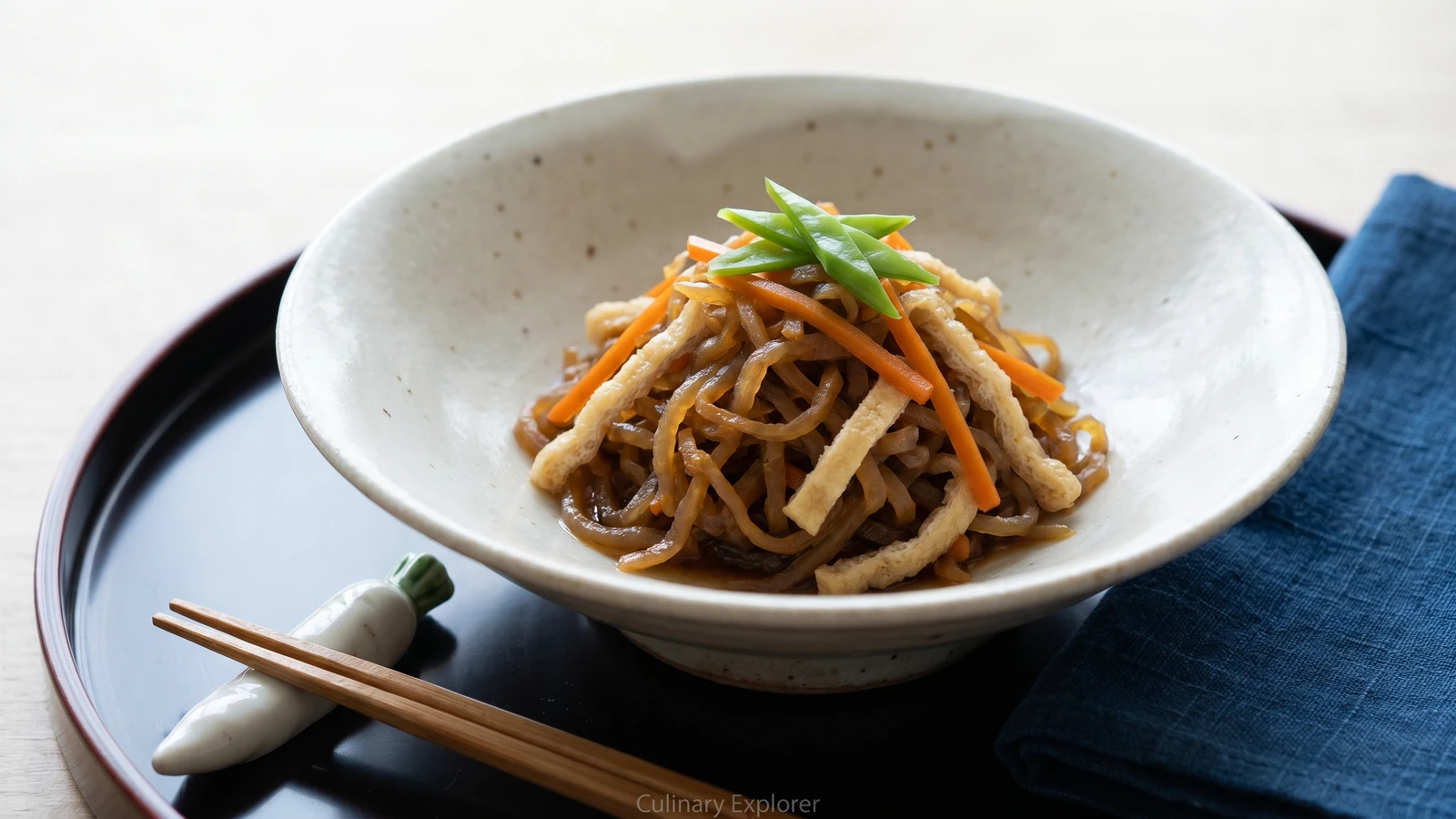
Dried daikon looks like straw, then water wakes it. Simmer it with carrot, abura-age, and clear dashi, and it becomes glossy winter food that keeps its manners for days.
Kiriboshi daikon begins as a modest tangle of sun-dried strips, the sort of thing that makes a nervous cook wonder whether dinner has become packing material. Give it water and it remembers itself. The daikon swells, sweetens the bowl, and brings back the cold-season field it came from.
This is 旬 (shun) preserved, daikon at its winter prime cut small and dried so the season lasts past the harvest. In the Japanese meal it is jōbisai, a prepared side dish kept ready for rice, soup, and whatever grilled or vinegared thing is taking the louder part of the table. Quiet food earns its keep.
The detail that decides it is the soaking. Rinse away dust, soak only until pliant, then taste the soaking water before you use a little of it in the pot. If it smells sweet and earthy, it belongs with the dashi; if it smells stale, let it go. 本物 (honmono) is not stubbornness.
After that, the method is ordinary nimono. Coat the strips in a little oil, give them dashi, sweetness first, soy after, and rest a drop-lid on the surface so the seasoning moves through without stirring. The daikon should finish glossy, not drowned, with enough chew to answer your teeth. Make it ahead. This one gets better after it sits, which is the pantry being polite for once.
Kiriboshi daikon belongs to kanbutsu, the dried pantry foods that let Japanese households carry vegetables through the cold months before refrigeration. The name means "cut and dried daikon," and modern commercial production is strongly associated with Miyazaki Prefecture in Kyushu, where clear winter weather suits drying shredded roots outdoors. Simmering it with abura-age and carrot made it a standard jōbisai, a side dish cooked ahead and eaten over several meals.
Quantity
2 cups
Quantity
1 piece (about 5g)
Quantity
12g
Quantity
50g
Quantity
2 cups
Quantity
1 sheet (about 30g)
oil-blanched and cut into thin strips
Quantity
1 medium (about 100g)
cut into thin matchsticks
Quantity
1 teaspoon
Quantity
1 tablespoon
Quantity
1 tablespoon
Quantity
2 teaspoons
Quantity
2 tablespoons
Quantity
6
blanched and slivered
| Ingredient | Quantity |
|---|---|
| cold water, for dashi | 2 cups |
| konbu (dried kelp) | 1 piece (about 5g) |
| katsuobushi (bonito flakes) | 12g |
| kiriboshi daikon (dried daikon strips) | 50g |
| cool water, for soaking the daikon | 2 cups |
| abura-age (fried tofu pouch)oil-blanched and cut into thin strips | 1 sheet (about 30g) |
| carrotcut into thin matchsticks | 1 medium (about 100g) |
| neutral oil | 1 teaspoon |
| sake | 1 tablespoon |
| mirin | 1 tablespoon |
| sugar | 2 teaspoons |
| shōyu (soy sauce) | 2 tablespoons |
| snow peas (kinusaya) (optional)blanched and slivered | 6 |
Put the kiriboshi daikon in a bowl, cover it with water, swish it well, and drain. This first wash removes dust from drying and storage, not flavor. Cover the daikon with 2 cups cool water and soak for 15 to 20 minutes, until the strips bend easily but still have a little spring. Squeeze them gently, reserve 1/2 cup of the soaking liquid, and cut the daikon into shorter lengths if the strands are long.
Wipe the konbu with a damp cloth, but don't wash it. Put it in 2 cups cold water and bring it up slowly over low heat, about 10 minutes. Pull the konbu when the water trembles and small bubbles climb the sides of the pot. Bring the water just to a gentle boil, add the katsuobushi all at once, take the pot off the heat, and leave it alone for 2 minutes. Strain through a cloth or fine-mesh strainer and let it drip without pressing. Measure out 1 1/2 cups dashi for the simmering pot.
Pour boiling water over the abura-age, then pat it dry and cut it into thin strips. You are not washing away its usefulness. You are removing the tired surface oil so the fried tofu can take in the dashi cleanly. Cut the carrot into matchsticks and blanch the snow peas if you are using them.
Set a wide pot over medium heat and add the oil. Add the squeezed daikon, carrot, and abura-age, and toss for 2 minutes, until the daikon smells sweet and the strands gleam lightly. Do not brown them. This little coating gives the finished dish shine and helps the dried strips take seasoning evenly without turning heavy.
Add 1 1/2 cups dashi, the reserved 1/2 cup soaking liquid, sake, mirin, and sugar. Bring to a gentle simmer, set a wooden drop-lid (otoshibuta) directly on the food, and cook for 6 minutes. Add the shōyu, set the drop-lid back in place, and simmer 12 to 15 minutes more, until the daikon is tender and only a few spoonfuls of liquid remain.
Take the pot off the heat, fold in the slivered snow peas if using, and let the daikon rest in the pot for at least 20 minutes. This is when nimono settles. The strips finish drinking the broth as they cool, becoming glossy and seasoned through. Serve warm, cool, or at room temperature, in a small mound with room left around it.
1 serving (about 140g)
Culinary guides, cultural storytelling, and the editorial depth that makes cooking meaningful.
Discover Culinary ExplorerChef Takumi
Autumn mushrooms do most of the work here. Rinse the rice well, season the liquid before cooking, and let the pot rest so every grain comes out separate and fragrant.

Chef Takumi
A whole salmon fillet laid on seasoned rice does nearly all the work. Cook it gently, flake it back through, and autumn has found its bowl.

Chef Takumi
Daigakuimo is simple student comfort: sweet potato cut stout, fried until the corners take color, then turned in a soy-sugar syrup that sets shiny instead of sticky.

Chef Takumi
Chawanmushi looks delicate, but the secret is plain: good dashi, strained egg, and quiet heat. Keep the steam soft and the custard sets smooth, tender, and calm.