
Chef Margarida
Aletria
The Christmas twin of arroz doce, where angel hair pasta meets warm milk, golden egg yolks, and cinnamon. Convent sweetness born from surplus yolks, humble magic from grandmother's kitchen.
A cooking platform built around craft, culture, and the stories behind what we eat.
Created by
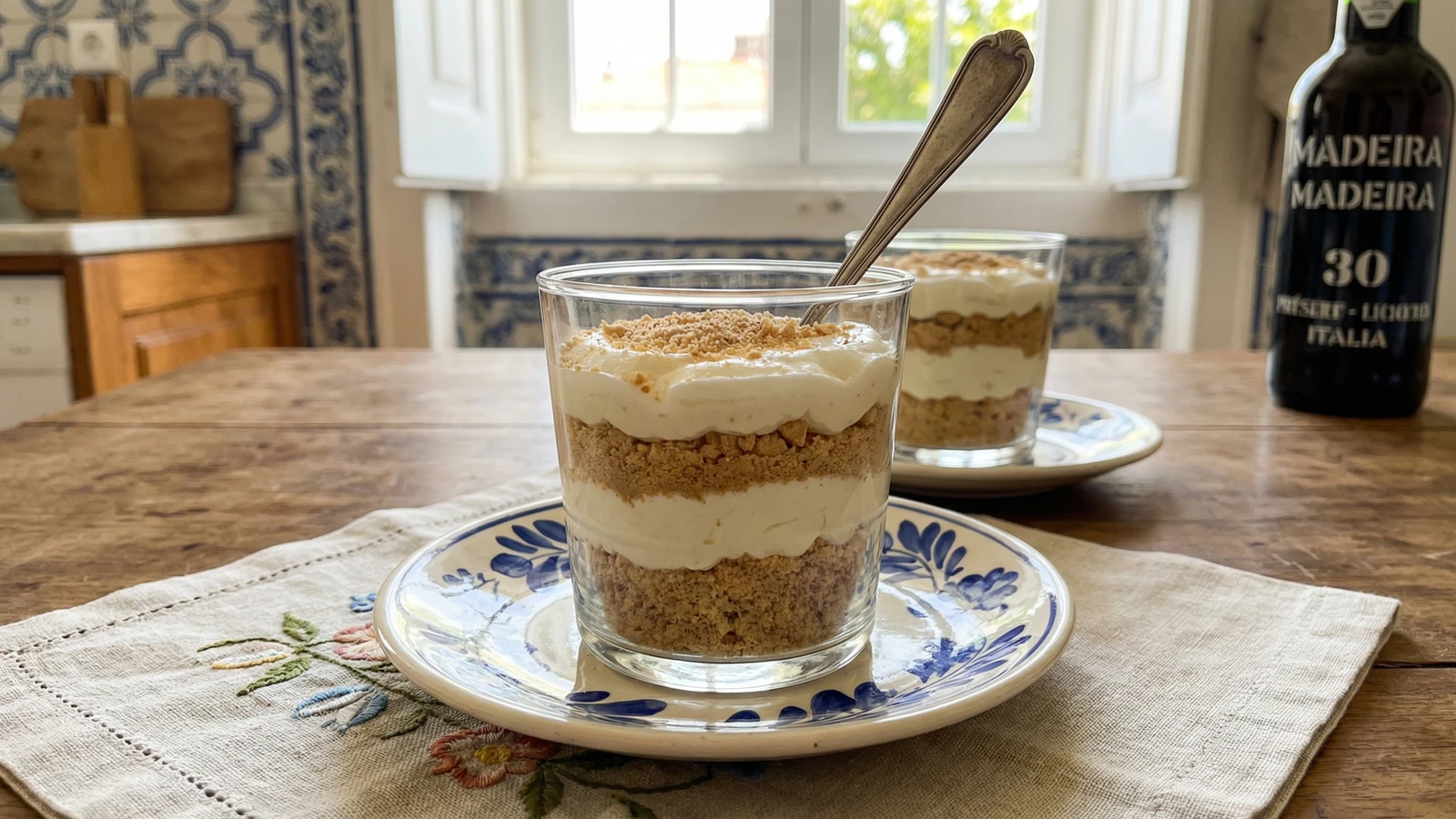
Crushed Maria biscuits layered with clouds of sweetened cream. A dessert that traveled from Macau to Lisbon and into the hearts of every Portuguese family that tastes it.
Some recipes come home before the people do. Serradura traveled from Macau to Portugal in the pockets of those who left, in the memories of families who had built lives on the other side of the world. By the time the colonies returned to their origins in 1999, this dessert had already planted itself in Portuguese hearts.
The name means sawdust. Look at the crushed Maria biscuits and you'll understand. Fine as powder, golden as pine shavings, layered between clouds of sweetened cream. It sounds like nothing. Three ingredients, maybe four. No cooking. No technique that would impress anyone at a culinary school.
But taste it. Close your eyes and taste it. This is childhood in a spoon. The familiar sweetness of bolacha Maria, the biscuit every Portuguese child grows up eating. The richness of cream and condensed milk, which turns simple into luxurious. The way the layers soften overnight but never lose their identity.
At Mesa da Avó, I serve serradura when I want to remind people that comfort doesn't require complexity. The diaspora grandmothers taught me this. They left Portugal with almost nothing and recreated home wherever they landed. A cozinha é memória. The kitchen is memory. And serradura tastes like coming home to a place you've never been.
Serradura emerged in Macau during the mid-20th century, created by Portuguese colonists using ingredients available in the territory. The dessert gained its name from the sawdust-like appearance of finely crushed biscuits. When Macau returned to Chinese administration in 1999, many Portuguese families brought the recipe back to Portugal, where it has since become a beloved comfort dessert.
Quantity
200g
Quantity
500ml
very cold
Quantity
200g
Quantity
1 teaspoon
| Ingredient | Quantity |
|---|---|
| Maria biscuits (bolacha Maria) | 200g |
| heavy whipping cream (natas)very cold | 500ml |
| sweetened condensed milk | 200g |
| vanilla extract | 1 teaspoon |
Place the Maria biscuits in a food processor and pulse until they become a fine powder, like sawdust. This is where the name comes from. No chunks, no pieces. You want something that looks like it could have come from a carpenter's workshop. If you don't have a processor, seal them in a bag and crush with a rolling pin until completely fine. Sift out any larger pieces.
Pour the very cold cream into a large bowl. Using an electric mixer or a whisk and considerable patience, beat until soft peaks form. The cream should hold its shape when you lift the beaters but still look silky, not stiff. Add the condensed milk and vanilla, then continue beating just until combined and the mixture holds firm peaks. Don't overbeat or you'll make butter.
Choose your vessels: individual glasses, small bowls, or one large serving dish. Start with a layer of crushed biscuits on the bottom, about 1 centimeter thick. Spoon or pipe a layer of cream over the biscuits, spreading gently. Repeat the layers, ending with biscuits on top. You should have 3-4 layers of each in individual portions, or more in a larger dish. Press the final biscuit layer gently so it settles.
Cover with cling film and refrigerate for at least 4 hours, or overnight. The cream needs time to soften the biscuits slightly while staying distinct. When you serve, the layers should be visible through the glass: stripes of white cream and golden crumbs. This is the beauty of serradura. It looks like nothing special until you taste it.
1 serving (about 147g)
Culinary guides, cultural storytelling, and the editorial depth that makes cooking meaningful.
Discover Culinary ExplorerChef Margarida
The Christmas twin of arroz doce, where angel hair pasta meets warm milk, golden egg yolks, and cinnamon. Convent sweetness born from surplus yolks, humble magic from grandmother's kitchen.

Chef Margarida
The rice pudding that appears on every Portuguese celebration table, golden with egg yolks from the convent tradition, crowned with cinnamon art that tells you someone cared enough to make it beautiful.

Chef Margarida
The cake that defines Portuguese childhood. Layers of Maria biscuits soaked in coffee, bound with golden egg yolk cream, chilled until it becomes something magical. Every birthday, every Sunday, every grandmother's kitchen.

Chef Margarida
The dark, dense Christmas cake of Madeira, perfumed with cinnamon and cloves, sweetened with sugarcane molasses, and packed with walnuts. Break it by hand. Never cut it. This is how it's been done for six centuries.