Chef Klaus
Allgäuer Kaspressknödel
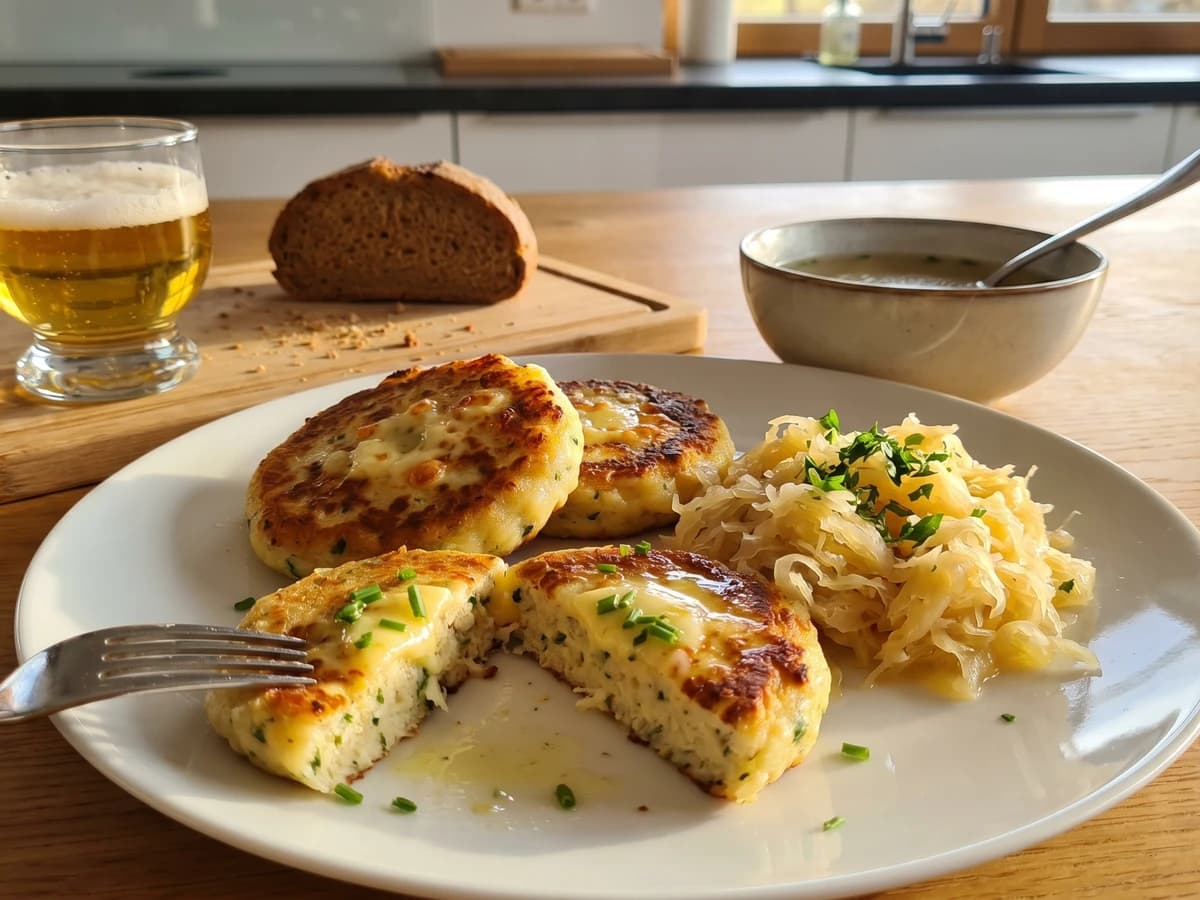
Pressed bread dumplings from the Alpine south, fried until the cheese catches at the edges and the middle stays soft enough for broth, kraut, or a weekday plate.
A cooking platform built around craft, culture, and the stories behind what we eat.
Created by
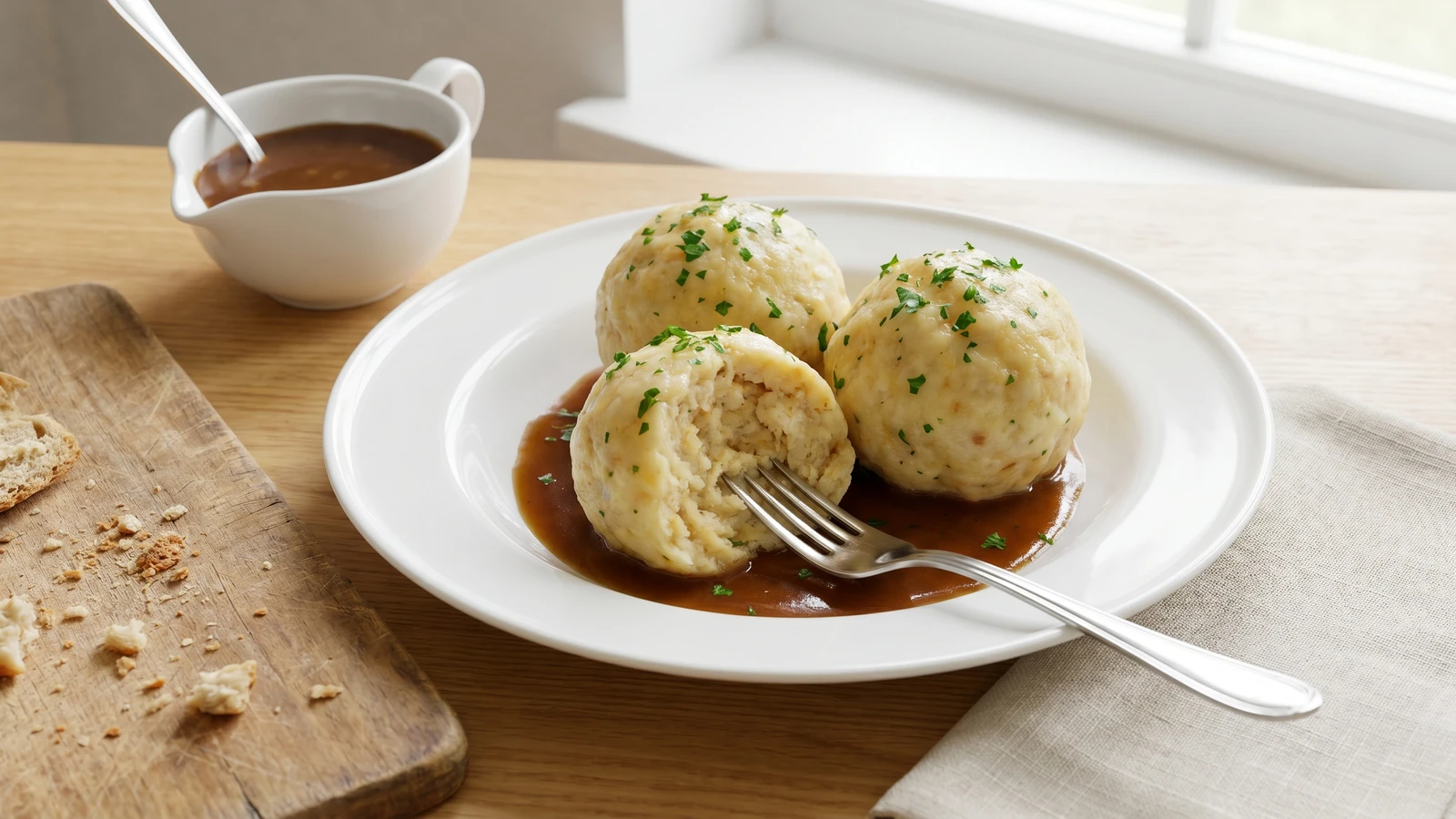
Altbayern's bread dumpling lives on stale rolls and patience: dry bread, warm milk, a gentle hand, and water that trembles instead of boils.
Semmelknödel, bread dumplings, belong to Altbayern, Austria, and the Alpine table, where a basket of stale rolls becomes the thing that catches roast gravy on Sunday or mushroom sauce on a weeknight. This is Hausmannskost, honest home cooking, and it starts with thrift. Weggeworfen wird nichts. Yesterday's bread is not old bread. It's dumpling bread.
The regions argue in the usual useful way. In Bavaria the Knödel are round, parsley-flecked, and served beside Schweinebraten or Pilzrahm. In Bohemia and parts of Saxony the bread dumpling may be shaped as a loaf and sliced. In the north, this is not the home ground; Im Norden anders, im Süden anders. Don't flatten the country into one plate.
The single rule is dry bread soaked until soft, not wet bread mashed to paste. If the rolls are too fresh, they drink milk badly, turn gummy, and fall apart in the water. If you squeeze and mix hard, you make glue. Fold gently, let the cubes keep some shape, and cook a test dumpling in water that only trembles. Boiling water beats a Knödel to pieces. Das braucht seine Zeit.
Semmelknödel are documented across the Bavarian and Austrian kitchen from at least the early modern period, when wheat rolls, milk, and eggs marked a richer southern bread culture than the rye-heavy north. A well-known visual ancestor appears in a 13th-century fresco at Hocheppan Castle in South Tyrol, often called the dumpling eater, showing how firmly Knödel belonged to the Alpine table. The round Bavarian dumpling and the sliced Bohemian Serviettenknödel show the regional split clearly: same stale-bread logic, different shape at the pot.
Quantity
300g
2 to 3 days old, cut into 1cm cubes
Quantity
250ml
Quantity
2
Quantity
1
finely diced
Quantity
30g
Quantity
3 tablespoons
finely chopped
Quantity
1 teaspoon, plus more for the water
Quantity
a pinch
Quantity
to taste
Quantity
1 to 3 tablespoons
| Ingredient | Quantity |
|---|---|
| stale white rolls or Kaiser rolls2 to 3 days old, cut into 1cm cubes | 300g |
| whole milk | 250ml |
| large eggs | 2 |
| small onionfinely diced | 1 |
| butter | 30g |
| flat-leaf parsleyfinely chopped | 3 tablespoons |
| fine salt | 1 teaspoon, plus more for the water |
| freshly grated nutmeg | a pinch |
| freshly ground black pepper | to taste |
| fine breadcrumbs (optional) | 1 to 3 tablespoons |
Cut the stale rolls into 1cm cubes and spread them in a wide bowl. The bread must be dry through the middle, not just old at the crust, because dry bread drinks milk evenly and keeps its shape. Fresh bread turns to paste. If your rolls still feel soft, leave the cubes uncovered for a few hours, or dry them briefly in a low oven and let them cool.
Melt the butter in a small pan and cook the onion gently until soft and pale, about 6 minutes. Don't brown it; browned onion pushes the dumpling toward sweetness and bitterness, and this Knödel wants a clean bread-and-milk taste. Stir in the parsley at the end so it warms and stays green.
Warm the milk until it feels hot to the finger but is not boiling, then pour it over the bread cubes. Warm milk moves into dry bread faster than cold milk, but boiling milk makes the outside mushy before the centre has softened. Cover the bowl and let it stand 20 minutes, turning the cubes once with your hands or a spoon.
Beat the eggs with the salt, nutmeg, and black pepper, then add them to the soaked bread with the onion, butter, and parsley. Fold with your hands, don't knead. You want a mixture that holds together when pressed, with some bread cubes still visible; kneading crushes the bread and builds glue. If it feels loose and wet, add breadcrumbs one spoon at a time and wait 5 minutes before judging again.
Wet your hands and shape 8 round Knödel, each about the size of a small orange. Press them firmly enough to remove air pockets, because trapped air opens the dumpling in the water, but don't pack them like snowballs. Bring a wide pot of salted water to a boil, then lower it until the surface only trembles. Cook one test dumpling for 15 minutes. If it holds, cook the rest. If it frays, fold a spoon more breadcrumbs into the mixture.
Lower the dumplings into the trembling water and cook 18 to 20 minutes, turning them once so they set evenly. The water must not boil; a rolling boil knocks the bread apart before the egg has set. Lift them out with a slotted spoon, let them drain for a minute, and serve with roast gravy, mushroom sauce, or browned butter. Nicht aus dem Glas: if there is sauce, make it worth the dumpling.
1 serving (about 100g)
Culinary guides, cultural storytelling, and the editorial depth that makes cooking meaningful.
Discover Culinary ExplorerChef Klaus
Pressed bread dumplings from the Alpine south, fried until the cheese catches at the edges and the middle stays soft enough for broth, kraut, or a weekday plate.

Chef Klaus
The Bavarian potato salad that works because warm waxy slices drink hot broth first, then oil last, until the bowl turns glossy without mayonnaise.

Chef Klaus
White cabbage shaved thin, wilted with hot caraway vinegar, and finished with crisp Speck fat: the Bavarian salad that belongs beside bread, sausages, and roast pork.

Chef Klaus
The south's sweet-sour white cabbage, cooked from fresh Kraut rather than sauerkraut, soft enough for roast pork and sharp enough to wake the plate.