Chef Klaus
Allgäuer Kaspressknödel
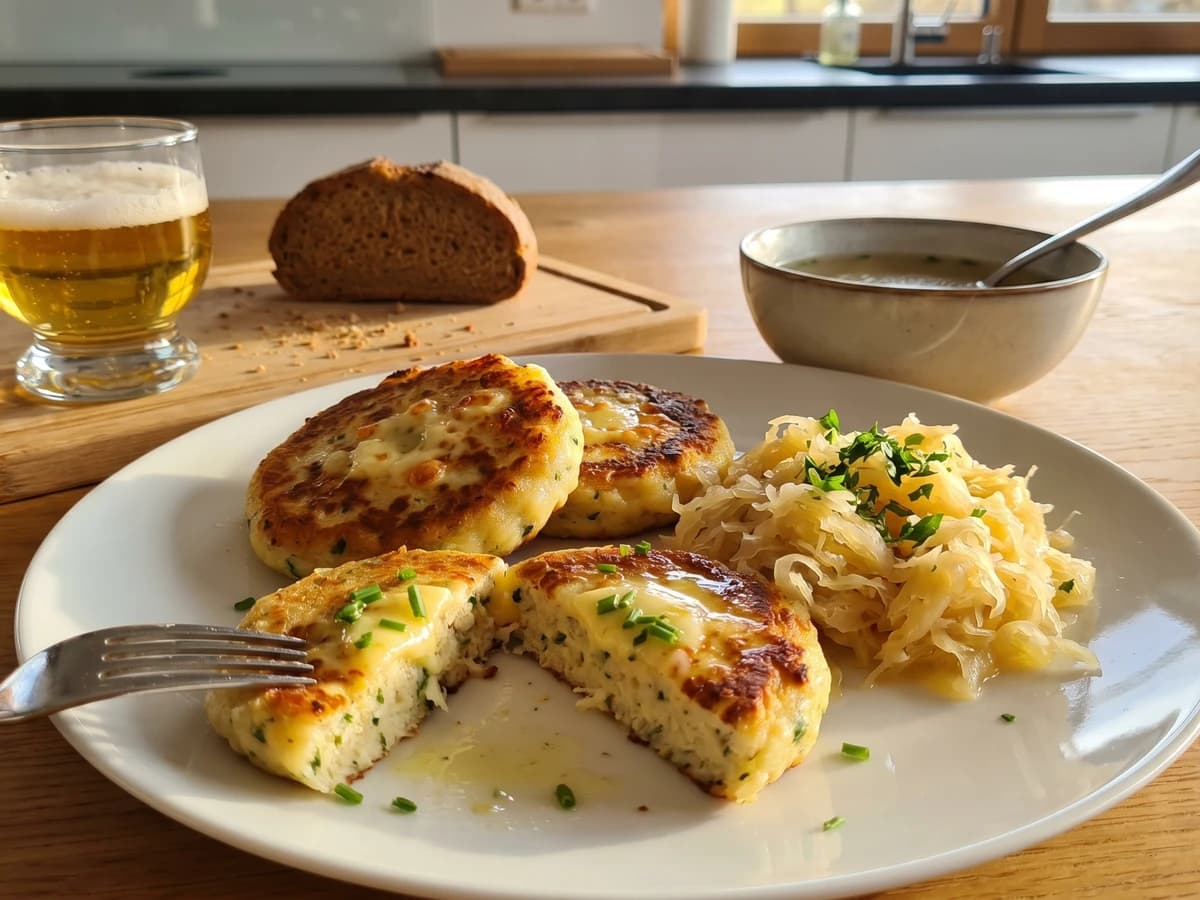
Pressed bread dumplings from the Alpine south, fried until the cheese catches at the edges and the middle stays soft enough for broth, kraut, or a weekday plate.
A cooking platform built around craft, culture, and the stories behind what we eat.

Created by
The south's sweet-sour white cabbage, cooked from fresh Kraut rather than sauerkraut, soft enough for roast pork and sharp enough to wake the plate.
Bayerisches Kraut belongs to the southern table, beside Schweinebraten, sausages, dumplings, and Christmas goose when red cabbage isn't wanted. It starts with fresh white cabbage, not sauerkraut from the barrel. That matters. The sweetness, vinegar, caraway, and slow cooking make the dish in the pot, not before it gets there.
Im Norden anders, im Süden anders. The north leans harder on stored sauerkraut and plain boiled cabbage; the Rhineland reaches for red cabbage with apple; Bavaria takes white cabbage, browns onion and a little sugar, then lets vinegar pull it back into balance. It should be soft and schlotzig, that good spoonable gloss, not wet and not crisp like a salad.
The single technique is this: salt the shredded cabbage and squeeze it before it meets the pan. Salt draws water out of the leaves, so the cabbage collapses quickly into the fat and takes the sweet-sour seasoning instead of flooding the pot. Skip that and you boil it in its own water. Do it properly and a cheap head of cabbage turns into a side dish people take twice.
Use lard or bacon fat if you've got it. Weggeworfen wird nichts, the rind from a piece of smoked bacon can simmer in the pot and come out at the end. Das braucht seine Zeit, but not ceremony.
White cabbage was one of the hard winter vegetables of southern Germany long before refrigeration, valued because tight heads stored well in cellars and could be fermented, braised fresh, or stretched with pork fat through the cold months. Bavaria's fresh sweet-sour Kraut sits apart from barrel sauerkraut: it uses vinegar and sugar in the pot to imitate the appetite of preserved cabbage while keeping the softer texture of fresh leaves. Caraway marks the southern and Alpine line strongly, not just for flavour but because cooks long paired it with cabbage and pork to make a heavy meal sit easier.
Quantity
1.2kg
tight and heavy, quartered, cored, and finely shredded
Quantity
2 teaspoons
for drawing the cabbage
Quantity
2 tablespoons
Quantity
100g
diced
Quantity
1 large
finely sliced
Quantity
1 tablespoon
Quantity
1
peeled and coarsely grated
Quantity
1 teaspoon
lightly crushed
Quantity
150ml
Quantity
3 tablespoons
Quantity
1
Quantity
to taste
Quantity
to finish
| Ingredient | Quantity |
|---|---|
| white cabbagetight and heavy, quartered, cored, and finely shredded | 1.2kg |
| fine saltfor drawing the cabbage | 2 teaspoons |
| lard, bacon fat, or neutral oil | 2 tablespoons |
| smoked bacon (optional)diced | 100g |
| onionfinely sliced | 1 large |
| sugar | 1 tablespoon |
| tart applepeeled and coarsely grated | 1 |
| caraway seedslightly crushed | 1 teaspoon |
| light stock or water | 150ml |
| white wine vinegar or cider vinegar | 3 tablespoons |
| bay leaf | 1 |
| freshly ground black pepper | to taste |
| salt | to finish |
Put the shredded cabbage in a large bowl with the 2 teaspoons of fine salt and work it hard with your hands for 2 minutes, then leave it 20 minutes. The salt pulls water from the leaves and softens the ribs, so the cabbage can braise in fat and seasoning instead of leaking a pond into the pan.
Lift handfuls of cabbage and squeeze out the liquid, then set the cabbage beside the stove. Don't rinse it. The salt left behind seasons the inside of the leaves, and rinsing puts back the water you just worked to remove.
Warm the lard or bacon fat in a wide heavy pan over medium heat, add the diced bacon if using, and cook until the fat runs and the edges colour. Add the onion and cook until pale gold, then stir in the sugar and let it melt to a light amber. That little caramel gives the cabbage its round Bavarian sweetness; burn it and the whole pot tastes bitter.
Add the squeezed cabbage, grated apple, crushed caraway, bay leaf, and black pepper, then turn everything through the fat for 5 minutes. This first frying matters because the cabbage leaves get coated before liquid goes in, and coated leaves braise glossy instead of turning flat and watery.
Pour in the stock or water and 2 tablespoons of the vinegar, scrape the browned sweetness from the bottom, cover, and cook gently for 35 to 45 minutes, stirring now and then. Runter mit der Temperatur. A hard boil breaks the cabbage into dull shreds before the flavour settles; a low braise gives you soft leaves with body.
Uncover the pan and cook a few minutes longer until the cabbage is moist and glossy, not soupy. Stir in the last tablespoon of vinegar, then taste for salt, pepper, and sugar. Würzen, Fett, Salz zum Schluss: the final vinegar goes in late because its sharpness lifts the sweet cabbage instead of disappearing into the long cook.
1 serving (about 245g)
Culinary guides, cultural storytelling, and the editorial depth that makes cooking meaningful.
Discover Culinary ExplorerChef Klaus
Pressed bread dumplings from the Alpine south, fried until the cheese catches at the edges and the middle stays soft enough for broth, kraut, or a weekday plate.

Chef Klaus
The Bavarian potato salad that works because warm waxy slices drink hot broth first, then oil last, until the bowl turns glossy without mayonnaise.

Chef Klaus
White cabbage shaved thin, wilted with hot caraway vinegar, and finished with crisp Speck fat: the Bavarian salad that belongs beside bread, sausages, and roast pork.

Chef Klaus
The Saarland bean soup that waits until the beans are tender before the vinegar goes in, with bacon fat and potato doing the work properly.