Chef Freja
Aebleflaesk
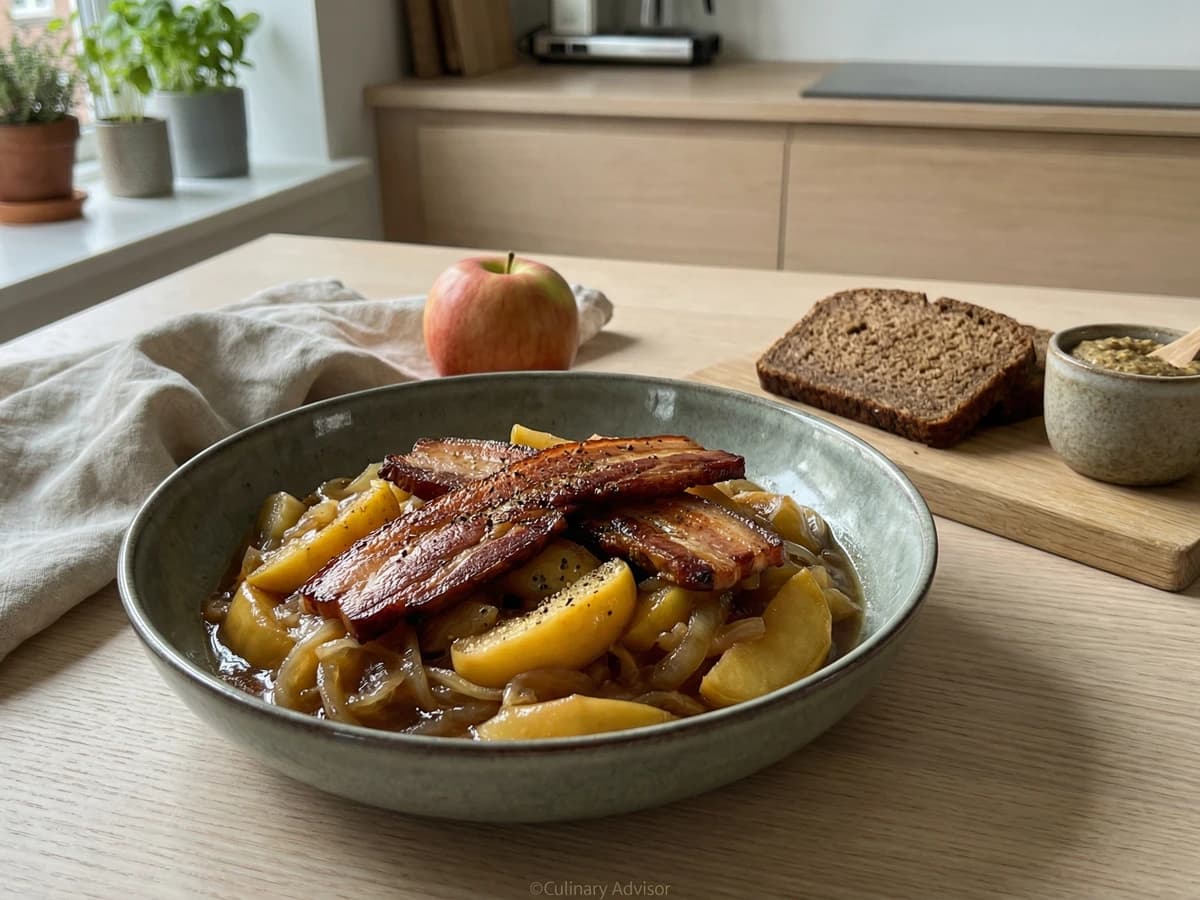
The Fyn autumn supper where thick pork belly renders slowly into its own fat, then meets apples and onions that cook down into a deep amber tangle. Sweet, salt, and the oldest pairing in the Danish larder.
A cooking platform built around craft, culture, and the stories behind what we eat.

Created by Chef Freja
Danish celeriac soup finished with cream, fresh nutmeg, and a vivid drizzle of parsley oil. Autumn's earthy answer when the root vegetables come in and the evenings draw down.
Celeriac is not a beautiful vegetable. It arrives at the market knobbled and muddy, with hairy roots still clinging to its base, and for most of the year nobody looks twice at it. Then October turns into November, the first frosts come, and suddenly this is the root you want. The cold concentrates the sugars in celeriac the way it does with kale and parsnip, and by late autumn the flavor is at its peak: nutty, sweet, faintly of hazelnut and wet earth.
Sellerisuppe is how Danish kitchens have always honored the ugly vegetables of the root cellar. You sweat leeks and onion in butter, add the celeriac and a little potato for body, simmer everything in good stock until it collapses, and blend it until the texture turns to silk. Cream goes in at the end to round the edges. Fresh nutmeg on top, because celeriac and nutmeg belong to each other in a way you only understand once you've tasted them together. A drizzle of bright green parsley oil to cut through the richness and catch the light.
I want you to pay attention to two things. The first is the moment you add the celeriac to the softened leeks and let it cook for five minutes before the stock goes in. That short time in butter is where the nuttiness develops, and skipping it gives you a flatter soup. The second is the nutmeg. Grate it fresh from a whole nut, never from a jar of pre-ground dust. The difference is the difference between a photograph and a memory. This is the kind of bowl that makes a grey Copenhagen evening feel like something you chose instead of something that happened to you.
Celeriac has been grown in Danish kitchen gardens since at least the 1700s, part of the knoldselleri and kaelderrodfrugter tradition: the knobbled roots that Danish households stored in sand-filled cellar boxes to carry them through the months when nothing fresh grew. For generations it was considered humble food, peasant stock, rarely written about in the cookbooks of the Copenhagen bourgeoisie. Its rehabilitation came in the late twentieth century, when Danish cooks rediscovered the root vegetables of their own pantry and found that celeriac, slowly cooked, had a depth of flavor the imported produce of the supermarket had never matched.
Quantity
1 large, about 900g
peeled and cut into 2cm cubes
Quantity
300g
peeled and roughly chopped
Quantity
1 medium
white and pale green parts, sliced
Quantity
1 small
finely chopped
Quantity
50g
Quantity
1 litre
Quantity
150ml
Quantity
for grating
Quantity
to taste
Quantity
to taste
Quantity
small bunch, about 30g
leaves picked
Quantity
100ml
for the parsley oil
Quantity
thick slices, to serve
| Ingredient | Quantity |
|---|---|
| celeriacpeeled and cut into 2cm cubes | 1 large, about 900g |
| floury potatoespeeled and roughly chopped | 300g |
| leekwhite and pale green parts, sliced | 1 medium |
| yellow onionfinely chopped | 1 small |
| unsalted butter | 50g |
| chicken or vegetable stock | 1 litre |
| double cream | 150ml |
| whole nutmeg | for grating |
| fine sea salt | to taste |
| white pepper | to taste |
| flat-leaf parsleyleaves picked | small bunch, about 30g |
| mild olive oil or neutral oilfor the parsley oil | 100ml |
| dark rugbrod | thick slices, to serve |
Melt the butter in a heavy pot over a gentle heat. Add the chopped onion and sliced leek with a good pinch of salt. Stir them through the butter, put the lid on, and sweat them for eight to ten minutes until soft and translucent. You never want them browned. Brown gives caramel and bitterness, and this soup is built on quiet earthy sweetness, not sugar.
Tip in the cubed celeriac and stir it through the softened leeks and butter. Let it cook for five minutes with the lid off, stirring now and then. This step matters. The celeriac releases a little of its starch and begins to mellow. Raw celeriac tastes of parsley and earth. Cooked slowly in butter, it turns nutty and rounded, and that is the flavor you are after.
Add the chopped potatoes and pour in the stock. Bring everything to a gentle simmer and cook for twenty to twenty-five minutes until the celeriac and potato are completely tender. A knife should slide through the largest piece with no resistance at all. Any resistance and the blended soup will be grainy, and grainy is not what sellerisuppe wants to be.
While the soup simmers, make the parsley oil. Bring a small pot of water to the boil and have a bowl of iced water ready. Drop the parsley leaves into the boiling water for ten seconds, lift them out, and plunge them into the ice bath. This sets the color bright green and stops the leaves from turning khaki later. Squeeze them dry in a clean cloth, then blend with the oil and a small pinch of salt until smooth and vivid green. Strain through a fine sieve or a piece of muslin if you want it clear. If you don't mind a little texture, leave it as it is.
Take the pot off the heat and blend the soup until it is completely smooth and silken. A stick blender works directly in the pot, but if you want the glossiest finish, tip it into an upright blender and run it for a full minute. The longer you blend, the more velvet the texture. Pour it back into the pot.
Stir in the cream and warm the soup through gently. Never let it boil once the cream is in, or the surface will break and go oily. Grate a generous amount of fresh nutmeg straight into the pot, about a quarter of a whole nutmeg, and season with salt and white pepper. Taste it. The celeriac should be forward, nutty and a little sweet, with the nutmeg lifting it from behind. Adjust until it tastes right. You'll know when it's right because you'll want a second spoonful before you've put the first one down.
Ladle the soup into deep bowls. Drizzle the parsley oil across the surface in a loose spiral, enough that you can see the green against the pale cream of the soup. Grate a little more nutmeg over the top. Serve immediately with thick slices of dark rugbrod alongside. Tak for mad.
1 serving (about 700g)
Culinary guides, cultural storytelling, and the editorial depth that makes cooking meaningful.
Discover Culinary ExplorerChef Freja
The Fyn autumn supper where thick pork belly renders slowly into its own fat, then meets apples and onions that cook down into a deep amber tangle. Sweet, salt, and the oldest pairing in the Danish larder.

Chef Freja
Warm Danish apple soup for the first cool evenings of autumn. Tart apples simmered with cinnamon and lemon peel, thickened to a soft gloss, and served with cold cream and buttery toasted oats.

Chef Freja
Danish white asparagus velouté with tiny veal meatballs, flour dumplings, and bright green tips scattered on the surface. The Easter soup of Copenhagen, built from five small pans of spring.
Chef Freja
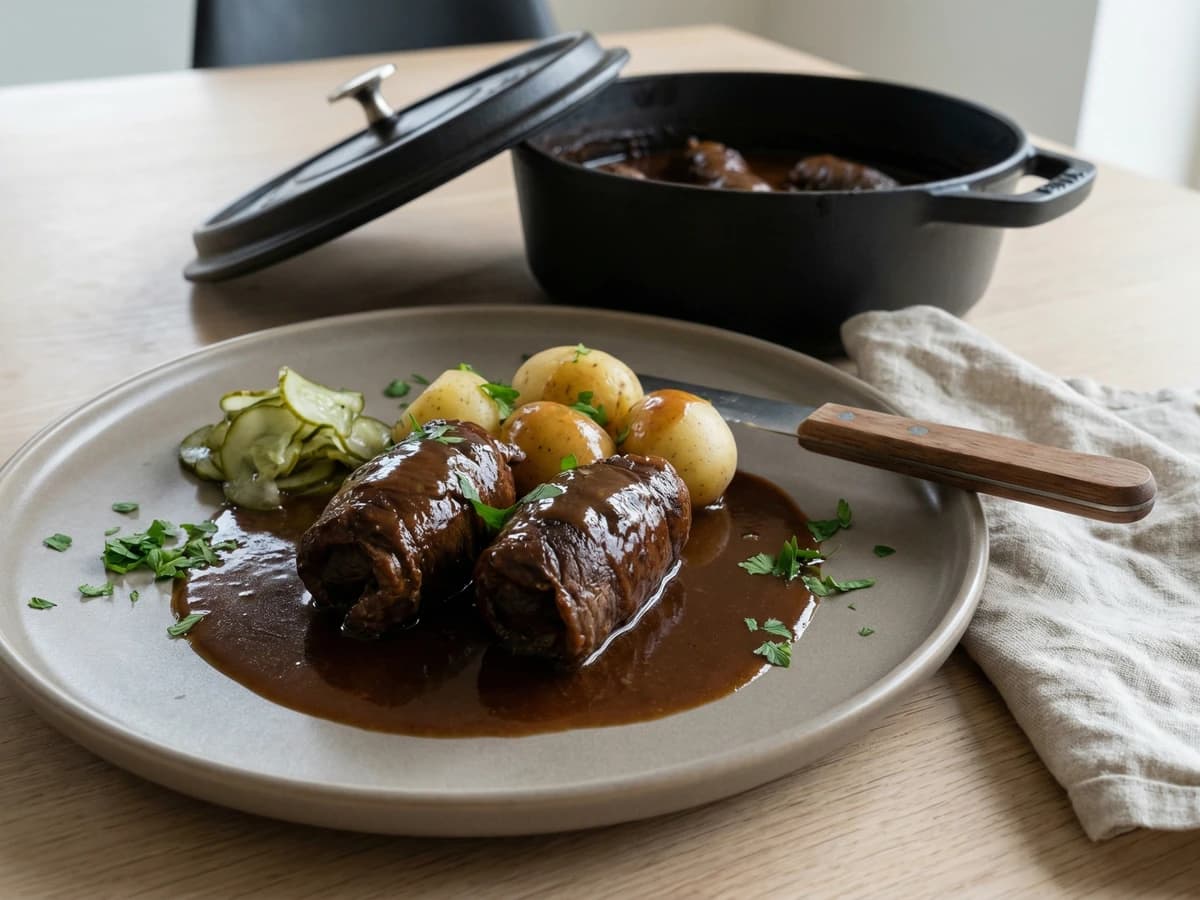
Thin beef slices rolled around bacon and onion, tied with string, and braised slowly in a dark glossy gravy finished with cream and redcurrant jelly. Danish Sunday dinner at its most comforting.