
Chef Thomas
A Proper Chicken Broth
Sunday's roast chicken, simmered slowly on Monday with carrots, celery, leeks, and thyme into a bowl of clear, golden broth that smells like the kitchen is paying attention.
A cooking platform built around craft, culture, and the stories behind what we eat.
Created by Chef Thomas
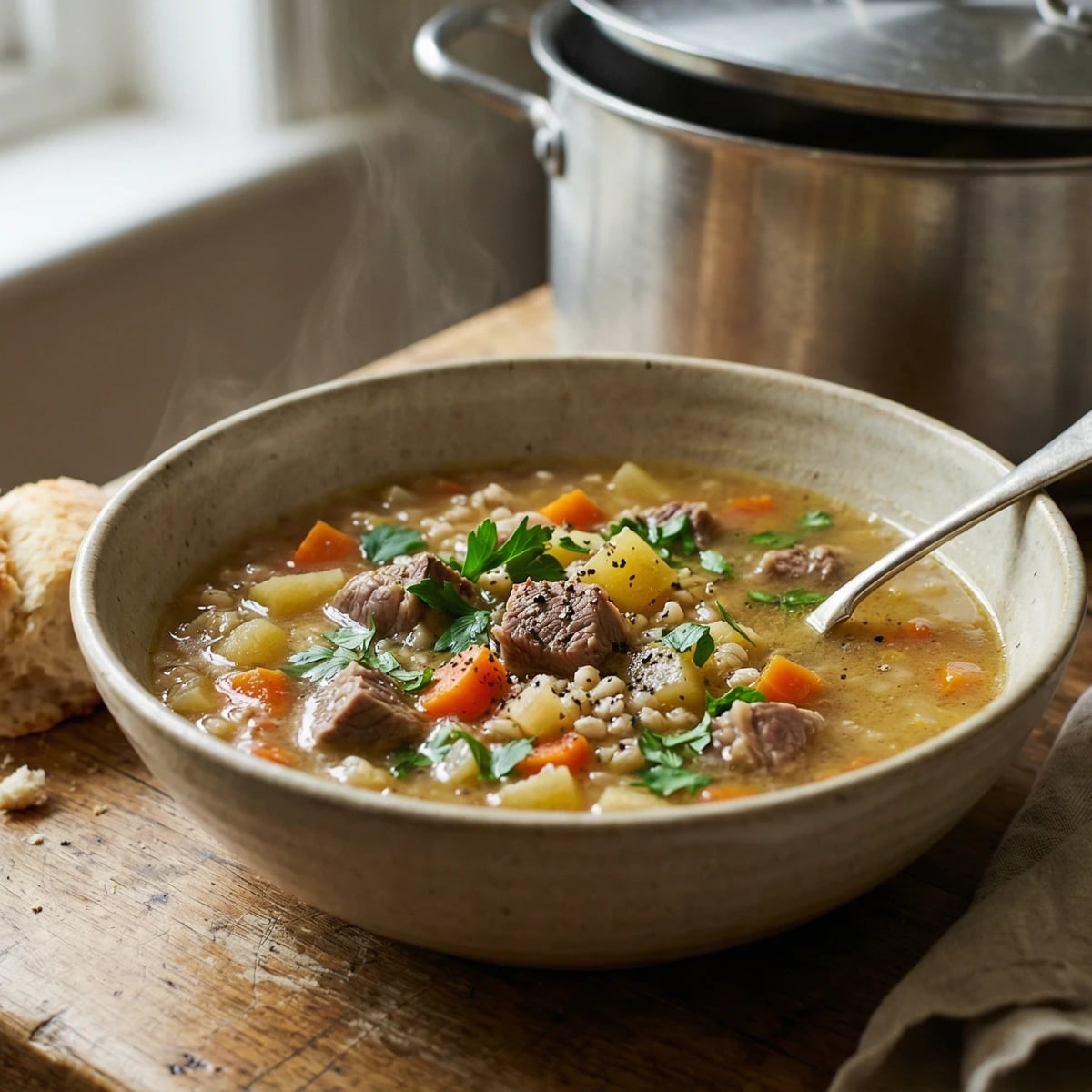
Lamb neck and pearl barley simmered low with root vegetables until the broth thickens and the kitchen smells like the kind of evening when nobody wants to leave the table.
January. Rain on the windows since morning. The kind of day that makes you want to stand near something warm and not think too hard. This is the soup for that.
Scotch broth is not a pretty thing. It sits in the bowl, thick and cloudy, full of swollen barley and soft vegetables and pieces of lamb that have given everything they had to the pot. It looks like it was made by someone who needed feeding, not impressing. That's exactly what it is. A few cheap cuts, a handful of whatever roots are in the vegetable drawer, a fistful of barley, and two hours of patient simmering while you do something else. The broth builds itself.
I make this when the cold settles in properly, when the market stalls are piled with swede and carrots and leeks, and lamb neck is sitting quietly in the butcher's window, undervalued and overlooked. It's a thrifty soup. The barley stretches it, the vegetables fill it out, and the lamb gives it a depth that stock cubes can only dream about. There are few better feelings than putting a warm bowl of this in front of someone on a dark evening and watching them go quiet for a moment.
I wrote it down in the notebook years ago: lamb, barley, swede, rain. Better the next day. That last part is always true. The barley continues to drink the broth overnight, the flavours settle and deepen, and what was good on Monday is something worth remembering on Tuesday.
Quantity
500g
cut into rough chunks
Quantity
100g
rinsed
Quantity
2 medium
peeled and diced
Quantity
3
peeled and diced
Quantity
2 sticks
diced
Quantity
1 small
peeled and diced
Quantity
2
white and pale green parts, sliced
Quantity
1.5 litres
Quantity
2
Quantity
a few sprigs
Quantity
to taste
Quantity
to taste
Quantity
a handful
roughly chopped
| Ingredient | Quantity |
|---|---|
| lamb neck filletcut into rough chunks | 500g |
| pearl barleyrinsed | 100g |
| onionspeeled and diced | 2 medium |
| carrotspeeled and diced | 3 |
| celerydiced | 2 sticks |
| swedepeeled and diced | 1 small |
| leekswhite and pale green parts, sliced | 2 |
| cold water or lamb stock | 1.5 litres |
| bay leaves | 2 |
| thyme | a few sprigs |
| fine sea salt | to taste |
| black pepper | to taste |
| flat-leaf parsleyroughly chopped | a handful |
Put a large, heavy-bottomed pan over a decent heat. Season the lamb pieces with salt and pepper and lay them in the dry pan. Leave them alone. You want a proper brown crust on the underside before you turn them, which takes three or four minutes per side. The kitchen will start to smell of something good. When the meat has colour all over, lift it onto a plate. There will be dark, sticky bits on the bottom of the pan. That's flavour. Don't wash it away.
Turn the heat down to medium. Add the onions and celery to the same pan with a splash of water to loosen the stuck bits from the lamb. Stir and scrape. Let them soften for five minutes or so, until the onions go translucent and the pan has cleaned itself. This is where the broth's depth begins.
Return the lamb to the pan. Add the pearl barley, the bay leaves, and the thyme. Pour in the cold water or stock. It should cover everything comfortably. Bring it up to a simmer, not a boil. A broth that boils goes cloudy and the lamb toughens. You want a gentle, lazy bubble, the kind where a single blip breaks the surface every few seconds. Put the lid on, slightly ajar, and let it go for an hour.
After an hour, skim any scum or fat from the surface. Some people are fastidious about this. I skim what comes easily and don't worry about the rest. Add the carrots, swede, and leeks. Stir once, put the lid back on, and simmer for another forty-five minutes to an hour. The barley will have swollen and gone tender, the vegetables will be soft but not collapsed, and the lamb will pull apart if you press it with a spoon. That's when it's ready.
Fish out the bay leaves and the thyme stalks. Taste the broth. It will need more salt than you expect. Season it properly. Stir in the parsley at the last moment, so it stays bright and fresh against the deep, savoury broth. Ladle it into warm bowls. The broth should be thick with barley and vegetables, closer to a stew than a soup, the spoon standing up in it. Serve with bread. Good bread. The kind with a crust that shatters.
1 serving (about 500g)
Culinary guides, cultural storytelling, and the editorial depth that makes cooking meaningful.
Discover Culinary Explorer
Chef Thomas
Sunday's roast chicken, simmered slowly on Monday with carrots, celery, leeks, and thyme into a bowl of clear, golden broth that smells like the kitchen is paying attention.

Chef Thomas
Beef shin and pearl barley simmered low and slow with root vegetables until the meat gives way and the broth thickens into something between a soup and a stew, the kind of bowl that steadies you on a cold night.

Chef Thomas
Broccoli simmered with potato and good stock, then stirred through with enough Stilton to make the whole bowl rich and savoury and deeply satisfying, without a drop of cream in sight.

Chef Thomas
Squash roasted until its edges catch and caramelise, then blended into a deep-orange soup that tastes the way an autumn evening feels when the clocks have gone back and the lamps are on early.