
Chef Klaus
Badischer Wurstsalat
Baden's sharp, no-mayonnaise Vesper salad lives by the cut and the rest: fine Lyoner strips drinking vinegar and mustard before the oil softens the whole bowl.
A cooking platform built around craft, culture, and the stories behind what we eat.
Created by
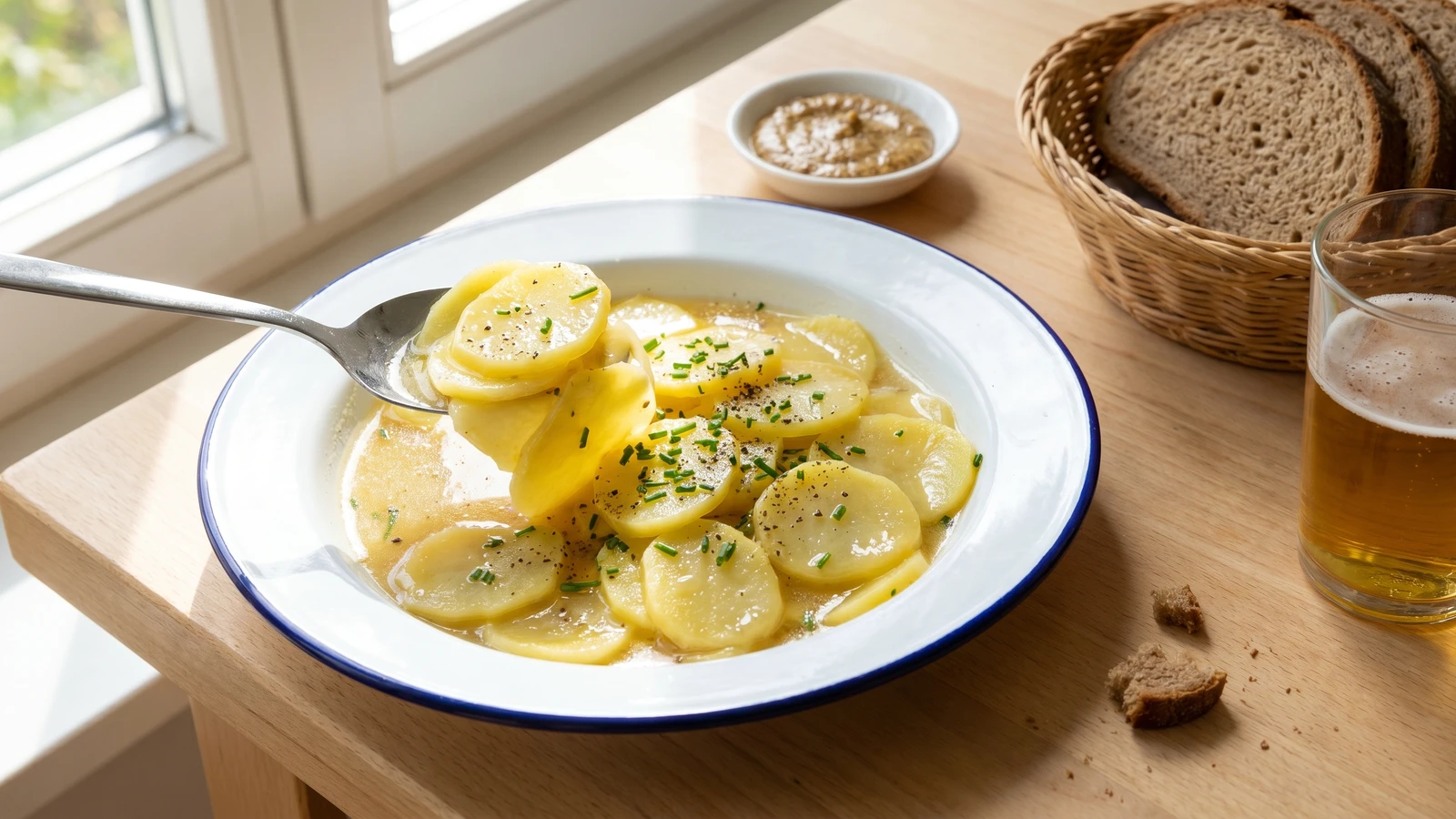
The Swabian potato salad that splits south from north: warm waxy potatoes drinking hot broth, vinegar, mustard and oil until the bowl turns glossy and loose.
Schwäbischer Kartoffelsalat belongs to the south-west table, beside Schnitzel, grilled sausages, roast pork, or a cold supper with bread and pickles. It travels well to a picnic or a Vereinsfest, the club potluck, because it doesn't lean on mayonnaise. Im Norden anders, im Süden anders. The north likes it creamy and white; Swabia wants it warm-dressed, sharp, glossy, and loose enough to move in the bowl.
The technique is simple and unforgiving: slice the potatoes while they're still warm and dress them with hot broth first. Warm potato has open starch at the cut surface, so it drinks the broth and turns schlotzig, the Swabian word for juicy and silky, not wet and not dry. Cold potato sits there like a coin and lets the dressing run off. Then you've made sliced potatoes in vinegar. Sad work.
Use waxy potatoes, not floury ones. A floury potato falls apart and turns the bowl to paste; a waxy one keeps its edges while the surface softens just enough to bind the dressing. The broth matters too. Beef broth if you're keeping the old table, vegetable broth if the meal is meatless, but not a salty cube bullied into water. Nicht aus dem Glas if the jar tastes of nothing.
Let it draw an hour before serving. Das braucht seine Zeit. Taste only after the potatoes have taken the broth, because vinegar and salt shout at first and settle later. Chives at the end, oil after the broth, and no mayonnaise near the bowl. Das ist kein Bierzelt.
Potato salad in Swabia follows the potato's late rise in German kitchens; Frederick II of Prussia issued potato orders in the 1740s and 1750s, but the tuber became ordinary food across the German lands only gradually through the eighteenth century. The Swabian version shows the southern habit of using broth as both seasoning and thrift, turning a simple stored potato into a side dish fit for Sunday meat without cream or eggs. Its sharpest regional line is still the north-south split: northern German potato salads often use mayonnaise or cream, while Swabian and Bavarian bowls are dressed warm with broth, vinegar, mustard, and oil.
Quantity
1kg
similar size, scrubbed
Quantity
250ml
Quantity
1
very finely diced
Quantity
4 tablespoons
Quantity
1 teaspoon
Quantity
1 teaspoon
Quantity
1 1/2 teaspoons, plus more to taste
Quantity
to taste
Quantity
5 tablespoons
Quantity
2 tablespoons
finely snipped
| Ingredient | Quantity |
|---|---|
| waxy potatoessimilar size, scrubbed | 1kg |
| good beef broth or vegetable broth | 250ml |
| small onionvery finely diced | 1 |
| white wine vinegar | 4 tablespoons |
| medium German mustard | 1 teaspoon |
| sugar | 1 teaspoon |
| fine salt | 1 1/2 teaspoons, plus more to taste |
| freshly ground black pepper | to taste |
| neutral oil, such as rapeseed or sunflower oil | 5 tablespoons |
| chivesfinely snipped | 2 tablespoons |
Put the potatoes in a pot, cover with cold salted water, and bring them up gently until a knife slides through the centre, about 20 to 25 minutes depending on size. Start them cold so the centres cook through before the skins split; hard boiling from the start gives you broken skins and waterlogged edges.
While the potatoes cook, bring the broth, onion, vinegar, mustard, sugar, salt, and pepper just to a simmer, then turn off the heat. The hot broth softens the raw onion and opens the mustard into the liquid, so the potatoes take one clean dressing instead of sharp bits and watery broth.
Drain the potatoes and let them stand only until you can handle them, then peel them while warm. Warm skins slip off cleanly, and the potato flesh is still open enough to drink the dressing; wait until they go cold and the surface firms up.
Slice the warm potatoes 3 to 4mm thick straight into a wide bowl, then pour over the hot broth mixture in two additions, folding gently with a spoon after each one. Don't stir like porridge. The slices should stay visible while their edges soften and release enough starch to make the dressing glossy.
Leave the salad at room temperature for 45 to 60 minutes, folding it once or twice, until the potatoes have taken the broth and the bowl looks loose, shiny, and schlotzig. Taste too early and you'll chase the salt and vinegar around the bowl; the flavour settles only after the potato has had its hour.
Fold in the oil and chives just before serving, then taste again for salt, vinegar, and pepper. Oil goes in after the broth because fat coats the potato; add it first and the broth can't get in. Würzen, Fett, Salz zum Schluss.
1 serving (about 240g)
Culinary guides, cultural storytelling, and the editorial depth that makes cooking meaningful.
Discover Culinary ExplorerChef Klaus
Baden's sharp, no-mayonnaise Vesper salad lives by the cut and the rest: fine Lyoner strips drinking vinegar and mustard before the oil softens the whole bowl.

Chef Klaus
The capital's creamy potato salad, built on warm waxy potatoes that drink the dressing before mayonnaise binds the bowl, with pickle, onion, and egg doing the sharpening.

Chef Klaus
A Brandenburg country potato salad, lighter than Berlin's mayonnaise bowl: warm potatoes drinking hot broth and vinegar before the sausage, pickle, and egg go in.

Chef Klaus
The butcher-counter salad for Abendbrot and picnics: fine strips of Lyoner and pickled cucumber, bound lightly with tart mayonnaise, rested until the brine does its work.