
Chef Klaus
Berliner Kartoffelsalat
The capital's creamy potato salad, built on warm waxy potatoes that drink the dressing before mayonnaise binds the bowl, with pickle, onion, and egg doing the sharpening.
A cooking platform built around craft, culture, and the stories behind what we eat.
Created by
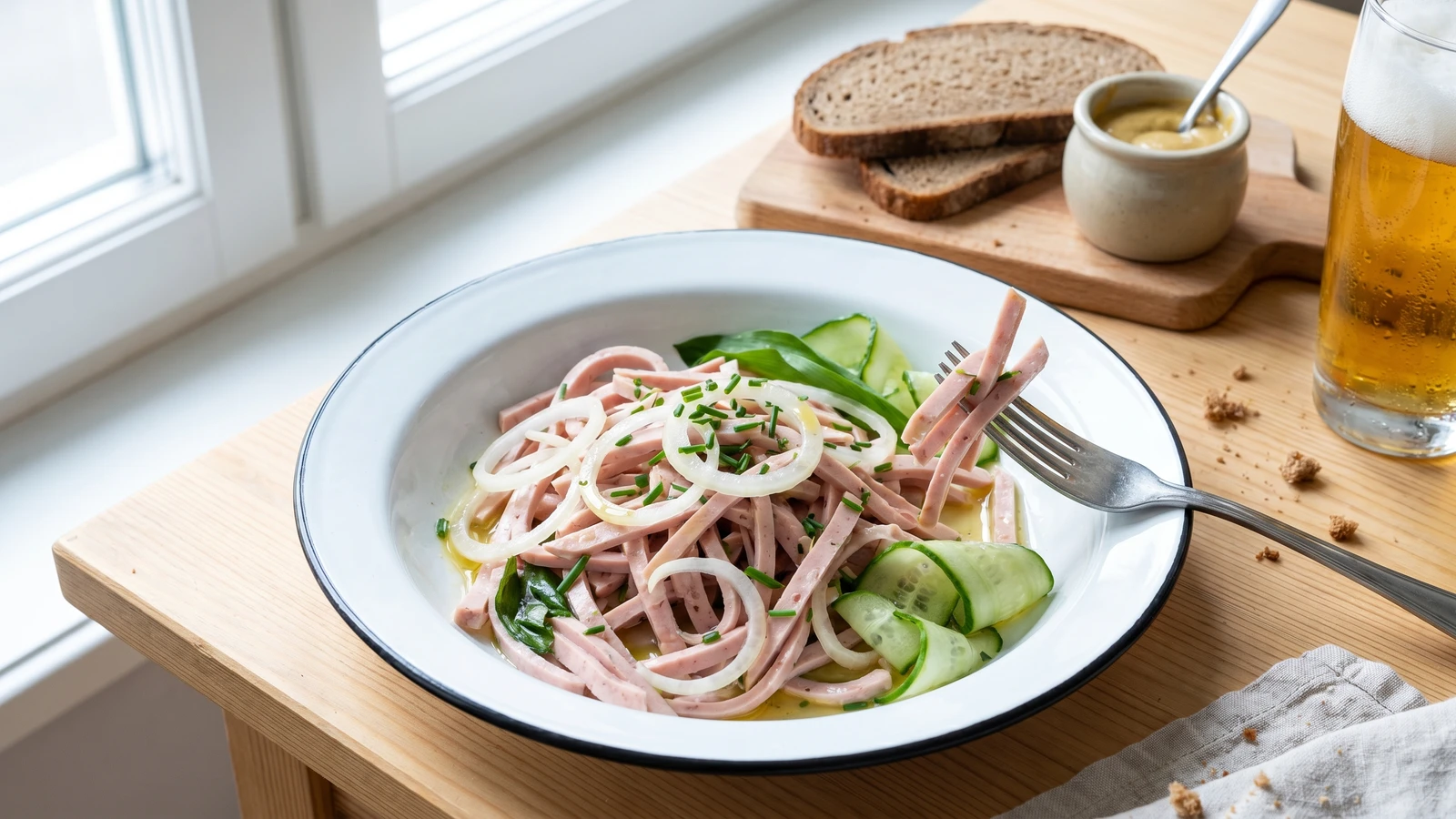
Baden's sharp, no-mayonnaise Vesper salad lives by the cut and the rest: fine Lyoner strips drinking vinegar and mustard before the oil softens the whole bowl.
Badischer Wurstsalat belongs to the Vesper table, the cold meal with bread, mustard, pickles, and something honest from the butcher. It is strongest in Baden and along the upper Rhine, where a plate like this can be supper, picnic food, or the thing you order in a Gasthof when the kitchen is between fires.
Every region argues over the bowl. Baden keeps it clean with Lyoner or Fleischwurst, onion, vinegar, oil, mustard, and pickled cucumber. Across the border in Alsace and Switzerland they add cheese and call it Elsässer or Schweizer Wurstsalat; in Bavaria the sausage changes and the mood changes with it. Im Norden anders, im Süden anders. Das ist kein Bierzelt.
The cut decides whether it works. Slice the sausage into fine strips, not thick chunks, because the vinegar can only season what it can touch. Dress first with vinegar, mustard, onion, pickle brine, salt, and pepper, then let it stand before the oil goes in; oil too early coats the sausage and turns the acid into decoration. Rest it long enough for the onion to lose its raw shout and the Lyoner to taste seasoned all the way through. Das braucht seine Zeit, even when the meal is quick.
In spring I put in Bärlauch, wild garlic, because Baden knows the season when it comes. Out of season, leave it out and let chives do the work. Nicht aus dem Glas, except the pickles, because the larder earned its place there.
Wurstsalat grew out of the southern German, Swiss, and Alsatian Vesper and Brotzeit culture of the 19th and early 20th centuries, when cooked sausages such as Lyoner and Fleischwurst were sliced cold and stretched into a full meal with vinegar, onion, bread, and pickles. Baden's version sits on the upper Rhine line, close to Alsace and Switzerland, which explains the regional dispute over cheese: plain Badischer Wurstsalat keeps it out, while Schweizer and Elsässer versions often add Emmentaler. The dish also shows the preservation larder at work, with cured sausage, vinegar, mustard, and pickled cucumber making a meal without lighting the stove.
Quantity
500g
peeled if needed and cut into fine strips
Quantity
1 medium
sliced very thin
Quantity
4 small
cut into fine strips
Quantity
2 tablespoons
Quantity
3 tablespoons
Quantity
1 teaspoon
Quantity
1 teaspoon
Quantity
4 tablespoons
Quantity
1 small bunch
snipped
Quantity
20g
cut into fine ribbons
Quantity
to taste
Quantity
to serve
| Ingredient | Quantity |
|---|---|
| Lyoner or fine Fleischwurstpeeled if needed and cut into fine strips | 500g |
| white onionsliced very thin | 1 medium |
| pickled cucumberscut into fine strips | 4 small |
| pickle brine | 2 tablespoons |
| white wine vinegar | 3 tablespoons |
| medium-hot German mustard | 1 teaspoon |
| sugar | 1 teaspoon |
| neutral rapeseed oil or sunflower oil | 4 tablespoons |
| chivessnipped | 1 small bunch |
| wild garlic leaves (optional)cut into fine ribbons | 20g |
| salt and black pepper | to taste |
| dark rye bread or farmhouse bread | to serve |
Peel the Lyoner if it has a skin, then cut it into fine matchstick strips about 4 to 5mm wide. Thin strips matter because vinegar seasons through cut surface; thick chunks stay bland in the middle and taste like cold sausage wearing dressing.
Put the sliced onion in a large bowl with the vinegar, pickle brine, mustard, sugar, a good pinch of salt, and plenty of black pepper. Let it stand 10 minutes while you cut the pickles. The acid takes the raw burn off the onion, and the salt pulls out enough juice to become part of the dressing.
Add the sausage and pickled cucumber strips to the onion bowl and toss well before the oil goes in. This order is the whole trick: vinegar and mustard need to touch the sausage first, because oil coats the surface and makes the sharpness slide off. Now add the oil and toss again until the strips look glossy, not wet.
Cover the bowl and let it rest 30 minutes in the refrigerator, then bring it back toward cool room temperature for 10 minutes before serving. Straight from the fridge, the fat in the sausage goes dull and the vinegar tastes thin; a short stand wakes the dressing back up. Das braucht seine Zeit.
Fold in the chives and the Bärlauch, wild garlic, if it is spring and you have it. Taste now, not earlier, because the onion, brine, and sausage have all given salt to the bowl while it rested. Serve with dark rye or farmhouse bread and more mustard at the table. Schön ist, was schmeckt.
1 serving (about 280g)
Culinary guides, cultural storytelling, and the editorial depth that makes cooking meaningful.
Discover Culinary ExplorerChef Klaus
The capital's creamy potato salad, built on warm waxy potatoes that drink the dressing before mayonnaise binds the bowl, with pickle, onion, and egg doing the sharpening.

Chef Klaus
A Brandenburg country potato salad, lighter than Berlin's mayonnaise bowl: warm potatoes drinking hot broth and vinegar before the sausage, pickle, and egg go in.

Chef Klaus
The butcher-counter salad for Abendbrot and picnics: fine strips of Lyoner and pickled cucumber, bound lightly with tart mayonnaise, rested until the brine does its work.

Chef Klaus
The East Frisian crab salad from the cutter harbour, built on sweet Nordseekrabben, a light lemon mayonnaise, and the discipline to stop before the dressing takes over.