
Chef Klaus
Allgäuer Krautkrapfen
The Allgäu pan dish that makes a meal from noodle dough, winter kraut, onion, and fat: brown the cut sides first, then cook gently so the rolls hold.
A cooking platform built around craft, culture, and the stories behind what we eat.
Created by
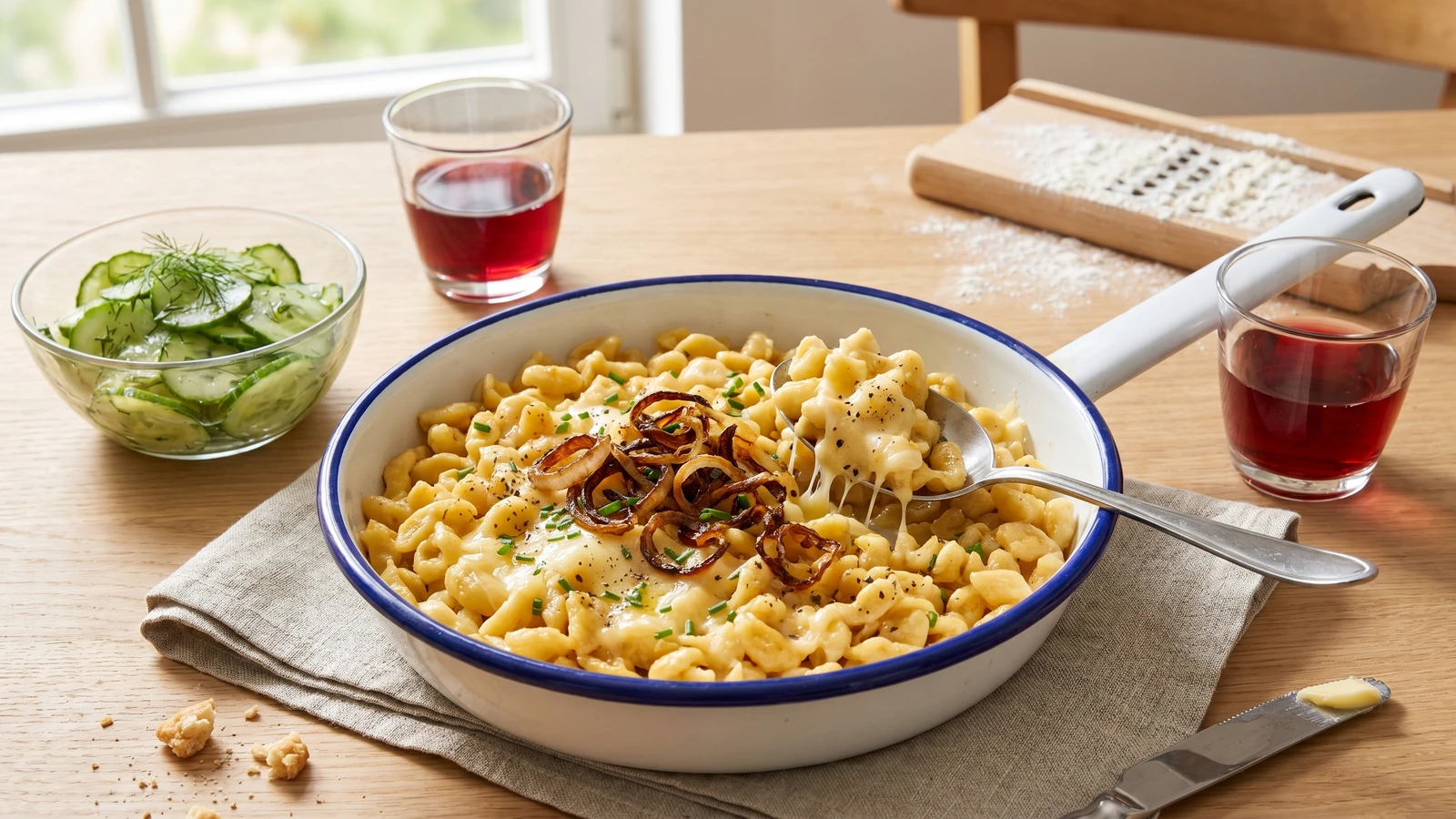
The button-shaped Swabian noodle that proves the batter before the pan: beaten until it blisters, pressed small, then buttered with onions and cheese for supper.
Knöpfle are the short, round cousin of Spätzle, and they belong to the Swabian and Alemannic south-west: flour, eggs, salt, water, a pan of butter. I set them down two ways, as a weeknight main with onions and Bergkäse, mountain cheese, or on Sunday under the sauce from a roast. They are small because the batter is pushed through holes, not scraped long from a board.
There is the regional argument. In Württemberg the proud cook scrapes long Spätzle, egg noodles, from a wet board; in Baden, the Allgäu, the Black Forest, and over the Alemannic line into Switzerland and Austria, many cooks want Knöpfle, little buttons with a dumplier bite. Same family, different shape. Im Norden anders, im Süden anders, and here the south-west argues with itself.
The batter decides everything. You beat it until it stretches and blisters because those eggs and flour need enough structure to hold when the batter drops into salted water. Stop too soon and the buttons fray into cloudy paste; make it too stiff and it sits on the hobel like a sulking lump. The water should tremble, not rage, so the outside sets before the middle swells.
This is Hausmannskost, home cooking with flour on the board and a spoon in the pot. Flour, eggs, stored onions, a hard cheese if it is the main meal, butter if you have it. Weggeworfen wird nichts: any leftover Knöpfle go into tomorrow's pan until their edges brown. Schön ist, was schmeckt.
Württemberg sources from 1725 mention Spätzlein and Knöpflein, showing that small egg-and-flour noodles were already established in Swabian kitchens by the early 18th century. In 2012, the European Union registered Schwäbische Spätzle and Schwäbische Knöpfle as a protected geographical indication, naming the long scraped form and the short button form together. The old split remains practical as much as local: board-scraped Spätzle show the hand of the cook, while Knöpfle belong to the sieve, press, or hobel and are valued because their little hollows catch sauce.
Quantity
400g
Quantity
4
Quantity
120ml, plus up to 60ml more as needed
Quantity
1 1/2 teaspoons, plus more for cooking water
Quantity
1 pinch
Quantity
2
thinly sliced
Quantity
60g
divided
Quantity
1 tablespoon
Quantity
200g
coarsely grated
Quantity
2 tablespoons
snipped
Quantity
to taste
| Ingredient | Quantity |
|---|---|
| plain wheat flour, type 405 or all-purpose, or Spätzlemehl | 400g |
| large eggs | 4 |
| cold water or milk | 120ml, plus up to 60ml more as needed |
| fine salt | 1 1/2 teaspoons, plus more for cooking water |
| freshly grated nutmeg | 1 pinch |
| large onionsthinly sliced | 2 |
| butterdivided | 60g |
| neutral oil | 1 tablespoon |
| Allgäuer Bergkäse or Emmentalercoarsely grated | 200g |
| chives (optional)snipped | 2 tablespoons |
| freshly ground black pepper | to taste |
Put the flour in a wide bowl and make a hollow in the middle. Beat the eggs with 120ml cold water or milk, the salt, and the nutmeg, then pour it into the flour and stir from the middle outward until no dry pockets remain. Hold back the extra liquid at first, because flour drinks differently from sack to sack and Knöpfle batter must be thick enough to drop in buttons, not run like pancake batter.
Beat the batter hard with a wooden spoon for 5 to 7 minutes, until it turns glossy, stretches from the spoon, and shows small blisters. This is the step that decides the dish. The eggs and flour need structure, or the batter frays into cloudy paste when it hits the water. Cover and rest it 15 to 20 minutes so the flour finishes swelling and the batter steadies.
While the batter rests, melt 25g butter with the oil in a wide skillet and add the sliced onions. Cook them over medium-low heat, stirring often, until they are soft, golden, and browned at the edges, 18 to 22 minutes. Salt them near the end so they fry instead of throwing off water and sulking in the pan.
Bring a wide pot of well-salted water to a boil, then lower it until the surface trembles. Hard boiling batters the little buttons apart before the middle sets; water that only trembles gives them time to firm cleanly. Set a bowl and a spider skimmer beside the stove, because batches move quickly once the batter starts dropping.
Work in batches. Spoon batter into a Knöpflehobel, Spätzlepresse with large holes, or a flat colander with 6 to 8mm holes, then press or scrape it into the trembling water. Do not crowd the pot. Too much batter cools the water and the buttons glue together. When the Knöpfle float, give them another 30 to 45 seconds so the centers lose their raw flour taste, then lift them out.
Toss each drained batch with a little of the remaining butter while the next batch cooks. The butter keeps the Knöpfle separate and gives the cheese something to cling to. If you are eating them now, do not rinse them; the light starch on the surface is useful. Weggeworfen wird nichts, not even the bit that makes the sauce hold.
Add the Knöpfle to the onion skillet with the last of the butter and toss over medium heat until some edges pick up pale gold. Lower the heat, scatter in the grated Bergkäse, add one or two spoonfuls of cooking water, and cover for 2 minutes so the cheese melts into the gaps instead of oiling out. Finish with black pepper and chives if you use them. Würzen, Fett, Salz zum Schluss.
1 serving (about 330g)
Culinary guides, cultural storytelling, and the editorial depth that makes cooking meaningful.
Discover Culinary ExplorerChef Klaus
The Allgäu pan dish that makes a meal from noodle dough, winter kraut, onion, and fat: brown the cut sides first, then cook gently so the rolls hold.

Chef Klaus
Swabian egg pasta turned toward the apple cellar: fresh Spätzle tossed with browned butter, tart apples, cinnamon, and enough restraint to stay supper, not cake.

Chef Klaus
Hesse's pork goulash belongs to Apfelwein country: shoulder, onions, and tart cider cooked low until the cheap cut turns soft and the sauce lands sweet-sour, not sour-sweet.

Chef Klaus
The old sweet supper that saves yesterday's loaf: stale bread drinks eggy milk, the pan stays moderate, and butter browns the outside only after the centre has set.