
Chef Klaus
Allgäuer Krautkrapfen
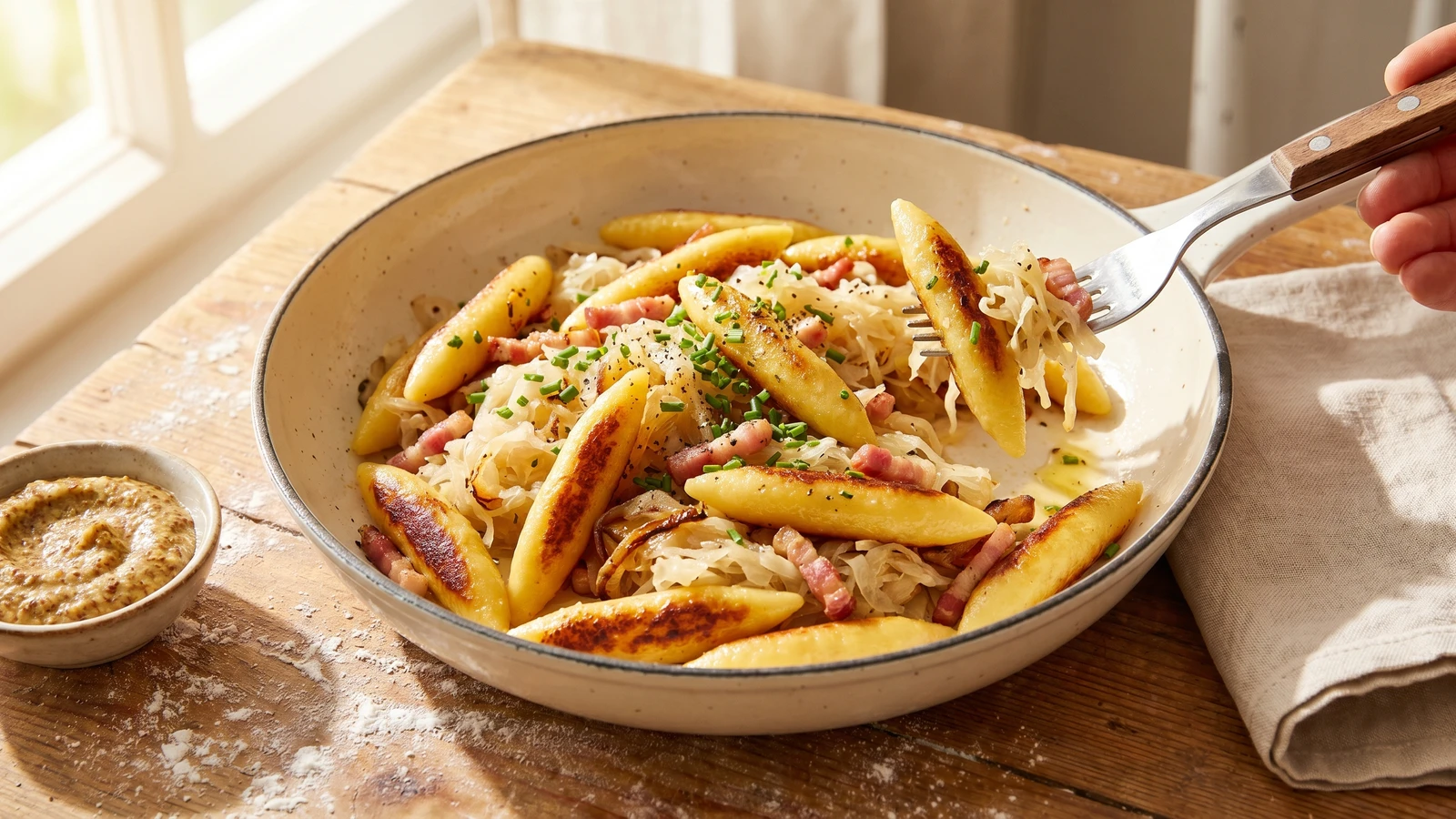
The Allgäu pan dish that makes a meal from noodle dough, winter kraut, onion, and fat: brown the cut sides first, then cook gently so the rolls hold.
A cooking platform built around craft, culture, and the stories behind what we eat.
Created by
Swabian Bubespitzle work when the potato dough is cool and dry before the egg goes in, then the little finger noodles brown cleanly in the pan.
Schupfnudeln belong to Swabia first, though Baden, Bavaria, Franconia, and Austria all put a hand on the dish and argue about the shape. In Swabia you hear Bubespitzle, little boy tips, because the old kitchen had a blunt sense of humour and no committee to stop it. They sit on the weeknight table with sauerkraut, onion, and a little bacon, or on a Sunday beside roast meat when the dumplings have already had their turn.
The split is simple. Swabia and Baden like the potato dough fried with kraut until the edges go gold; further south and east you find sweet versions with poppy seed, butter, and sugar, and in some places a plainer flour noodle survived. Im Norden anders, im Süden anders. German food doesn't have one national noodle, and this is not a beer tent.
The technique that decides the dish is the potato. Use floury potatoes, rice them hot so the moisture escapes, then spread them out and let them cool fully before egg and flour touch them. Warm potato keeps cooking the egg and throws off starch; then the dough turns sticky and asks for too much flour, and too much flour gives you little rubber sticks. Erst verstehen, dann kochen.
Boil them gently, then fry them properly. The water should tremble, not roll, because a hard boil knocks soft dough apart. In the pan, leave them alone long enough to take colour. Stir too early and you tear the crust off. Weggeworfen wird nichts: yesterday's boiled potatoes can become tonight's Schupfnudeln, if they're dry and floury enough.
Schupfnudeln were known in southern German kitchens as hand-rolled flour noodles before the potato became common, and the potato version spread after the tuber took hold in the 18th century; Frederick II of Prussia issued his famous potato orders in the 1750s, but southern farm kitchens adopted the potato by use, not by proclamation. In Swabia and Baden the potato stretched scarce flour into a filling dough, which is why the dish belongs to thrift cooking as much as to noodle craft. The same form crosses regional lines: Swabian Bubespitzle are often fried with sauerkraut, while Austrian and Bavarian kitchens also serve sweet potato noodles with poppy seed and sugar.
Quantity
800g
scrubbed
Quantity
150g
plus more for dusting
Quantity
40g
Quantity
1
Quantity
1 teaspoon
Quantity
a small pinch
Quantity
2 tablespoons
for frying the noodles
Quantity
1 tablespoon
for frying the noodles
Quantity
100g
diced
Quantity
1
finely sliced
Quantity
500g
drained but not rinsed
Quantity
1
Quantity
4
lightly crushed
Quantity
120ml
Quantity
to taste
Quantity
1 tablespoon
chopped
| Ingredient | Quantity |
|---|---|
| floury potatoesscrubbed | 800g |
| plain flourplus more for dusting | 150g |
| potato starch | 40g |
| egg yolk | 1 |
| fine salt | 1 teaspoon |
| freshly grated nutmeg | a small pinch |
| butter or lardfor frying the noodles | 2 tablespoons |
| neutral oilfor frying the noodles | 1 tablespoon |
| smoked bacondiced | 100g |
| onionfinely sliced | 1 |
| sauerkrautdrained but not rinsed | 500g |
| bay leaf | 1 |
| juniper berrieslightly crushed | 4 |
| dry white wine, apple juice, or water | 120ml |
| freshly ground black pepper | to taste |
| chives (optional)chopped | 1 tablespoon |
Boil the potatoes in their skins until a knife slides through cleanly, 25 to 35 minutes depending on size. Keep the skins on because they stop the flesh drinking up the cooking water; wet potato makes wet dough, and wet dough makes you add flour until the noodle loses its potato taste.
Drain the potatoes, let them sit a minute so the surface dries, then peel them while hot and press them through a ricer onto a wide tray. Hot potato rices dry and light; cold potato turns pasty under pressure. Spread the riced potato out and leave it until completely cool, at least 30 minutes, because warm potato cooks the yolk and weeps starch into glue.
Sprinkle over the flour, potato starch, salt, and nutmeg, add the egg yolk, and bring it together with your hands just until it holds. Don't knead it like bread. You want a soft potato dough, not a worked flour dough, so stop as soon as no dry pockets remain.
Dust the board lightly and divide the dough into four pieces. Roll each piece into a rope about 2cm thick, cut it into short lengths, then roll each one under your palm into a tapered finger noodle, thicker in the middle and pointed at both ends. The tapered ends matter because they crisp first in the pan while the middle stays tender.
Bring a wide pot of salted water to a tremble, not a boil. Slide in the Schupfnudeln in batches and cook until they rise, then give them one more minute so the starch sets through the centre. Lift them out with a slotted spoon onto an oiled tray; piling them wet in a bowl makes them stick before they ever see the frying pan.
Set a large frying pan over medium heat and render the bacon until the fat runs and the edges colour. Add the onion and cook until soft, because raw onion stays sharp against the sauerkraut. Stir in the sauerkraut, bay, juniper, and wine, apple juice, or water, then simmer until the liquid is mostly gone and the kraut tastes rounded, 12 to 15 minutes. Nicht aus dem Glas, if the kraut is going in the pan, give it seasoning and time.
Push the kraut to one side or lift it out if your pan is crowded. Add the butter or lard and the oil, then fry the Schupfnudeln in a single layer until golden on both sides, 3 to 4 minutes per side. Leave them alone while they brown; move them too early and the crust stays on the pan instead of on the noodle.
Fold the kraut back through the browned Schupfnudeln and grind over black pepper. Taste before salting because bacon and sauerkraut already brought salt to the pan. Finish with chives if you have them, then serve straight away while the edges are crisp and the middle is still soft. Schön ist, was schmeckt.
1 serving (about 410g)
Culinary guides, cultural storytelling, and the editorial depth that makes cooking meaningful.
Discover Culinary ExplorerChef Klaus
The Allgäu pan dish that makes a meal from noodle dough, winter kraut, onion, and fat: brown the cut sides first, then cook gently so the rolls hold.

Chef Klaus
Swabian egg pasta turned toward the apple cellar: fresh Spätzle tossed with browned butter, tart apples, cinnamon, and enough restraint to stay supper, not cake.

Chef Klaus
Hesse's pork goulash belongs to Apfelwein country: shoulder, onions, and tart cider cooked low until the cheap cut turns soft and the sauce lands sweet-sour, not sour-sweet.

Chef Klaus
The old sweet supper that saves yesterday's loaf: stale bread drinks eggy milk, the pan stays moderate, and butter browns the outside only after the centre has set.