
Chef Elsa
Bosna (Salzburg Spiced Sausage Roll)
Salzburg's legendary spiced sausage roll, two Bratwürstel tucked into a sliced white roll with fried onions, curry mustard, and a spice mix that every Würstelstand in town guards like a state secret.
A cooking platform built around craft, culture, and the stories behind what we eat.
Created by
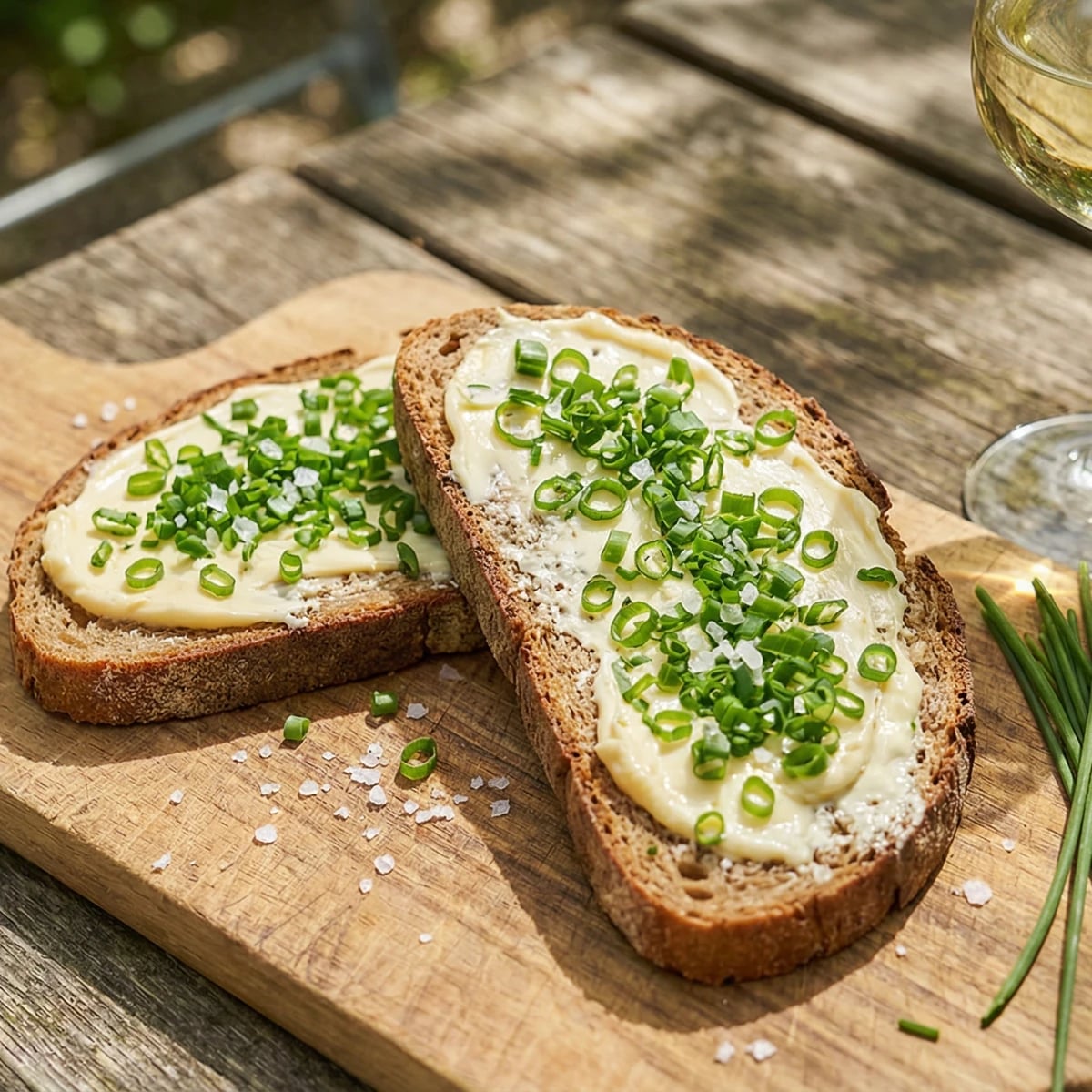
Three ingredients, no cooking, and the whole thing depends on whether you're willing to use enough butter. Austria's favorite open-faced bread, the way they serve it at every Heuriger from Vienna to Graz.
On our childhood trips to Austria, Gretel and my grandmother Eva would take me to Heurigen in the hills above Vienna, those wine taverns where the winemaker opens his doors and sells his new vintage straight from the barrel. You sit in a garden under chestnut trees and order from a cold buffet. There's always Liptauer, Verhackertes, sliced sausages, maybe a Schweinsbraten if the Heuriger is ambitious. But the thing I reached for first, every single time, was the Schnittlauchbrot.
It's bread, butter, and chives. That's the whole recipe. I could write it on a napkin and you'd have everything you need. But simplicity is not the same as easy, and this is the dish that proves it. The bread has to be good, a dense, dark Bauernbrot or rye with enough structure to hold a thick layer of butter without collapsing. The butter has to be excellent, the kind with a clean, sweet cream flavor that you'd happily eat on its own. The chives have to be fresh, bright green and snappy, cut minutes before they hit the butter. Get those three things right and you have one of the most satisfying bites in Austrian cooking. Get any of them wrong and you just have a piece of bread.
This is good Austrian home cooking at its most honest. No technique to hide behind, no sauce to rescue you, no oven to do the work. Just ingredients, a knife, and your own judgment about what 'good enough' means. It's the kind of food that teaches you to taste what you're buying before you start cooking with it.
Schnittlauchbrot is inseparable from the Heuriger tradition, a Viennese institution dating to a 1784 decree by Emperor Josef II that permitted winemakers to sell their own wine and simple cold food directly to the public. The Jause, Austria's between-meals snack culture, elevated cold bread-based dishes like Schnittlauchbrot, Liptauer, and Verhackertes into a culinary category of their own. What looks like the simplest food on the table is actually a statement about Austrian values: good ingredients, honest preparation, and the belief that three things done perfectly need nothing else.
Quantity
4 thick slices
Quantity
120g
at room temperature
Quantity
1 large bunch (about 40g)
Quantity
to taste
Quantity
to taste
| Ingredient | Quantity |
|---|---|
| dark rye bread or Bauernbrot (farmhouse bread) | 4 thick slices |
| unsalted butter, good qualityat room temperature | 120g |
| fresh chives | 1 large bunch (about 40g) |
| flaky sea salt | to taste |
| freshly ground black pepper (optional) | to taste |
Wash and dry the chives thoroughly. Wet chives will slide off the butter and sit in a sad little heap on the plate. Use a sharp knife and cut them into fine rings, about two to three millimeters. Don't hack at them. A dull knife bruises the chives and turns them dark, and you lose that bright, clean onion scent that makes this whole thing work. You should be able to smell them as you cut.
Take your butter out of the fridge at least thirty minutes before you need it. You want it soft enough to spread thickly and evenly without tearing the bread, but not so warm that it goes oily and slack. Press it with your finger. It should give easily but still hold its shape. Cold butter rips bread apart. Melted butter soaks in and disappears. Room temperature butter sits on top, creamy and generous, exactly where you want it.
Spread the butter onto each slice of bread in a thick, even layer. Thick means you can see a visible layer of butter sitting on the bread, not a transparent scraping. This is not the moment to be cautious. The butter is not a vehicle for the chives. The butter is half the dish. If you're using good Bauernbrot with a dark, firm crumb, it can handle the weight. Spread it right to the edges.
Press the cut chives into the butter in a thick, even carpet. Use your fingers or the flat of the knife to push them gently into the surface so they stick. You want the entire slice covered, green from edge to edge. The visual is part of the pleasure: dark bread, pale butter, vivid green chives. Pick up a few strays and press them back in. Every ring should be anchored.
Finish with a pinch of flaky sea salt. Coarse flakes work best because you want to feel them crunch against the soft butter and the bread. A grind of black pepper if you like, but it's not traditional and it's not necessary. Cut each slice in half on the diagonal if you're serving them on a board for a Jause spread, or leave them whole if they're lunch. Serve right away. Mahlzeit!
1 serving (about 100g)
Culinary guides, cultural storytelling, and the editorial depth that makes cooking meaningful.
Discover Culinary Explorer
Chef Elsa
Salzburg's legendary spiced sausage roll, two Bratwürstel tucked into a sliced white roll with fried onions, curry mustard, and a spice mix that every Würstelstand in town guards like a state secret.

Chef Elsa
Cold roast pork drippings spread thick on dark farmhouse bread with raw onion rings and coarse salt. The best thing Austrians eat standing up, and they know it.

Chef Elsa
The Würstelstand's coarse, snappy pork sausage served the proper Viennese way: gently heated (never boiled), with sharp mustard, a fresh Semmel, and a Pfefferoni on the side.

Chef Elsa
The Würstelstand classic: bright red paprika sausage, scored and seared golden, served with sharp mustard, freshly grated Kren, and a warm Semmel the way Austrians have been eating it for generations.