Chef Klaus
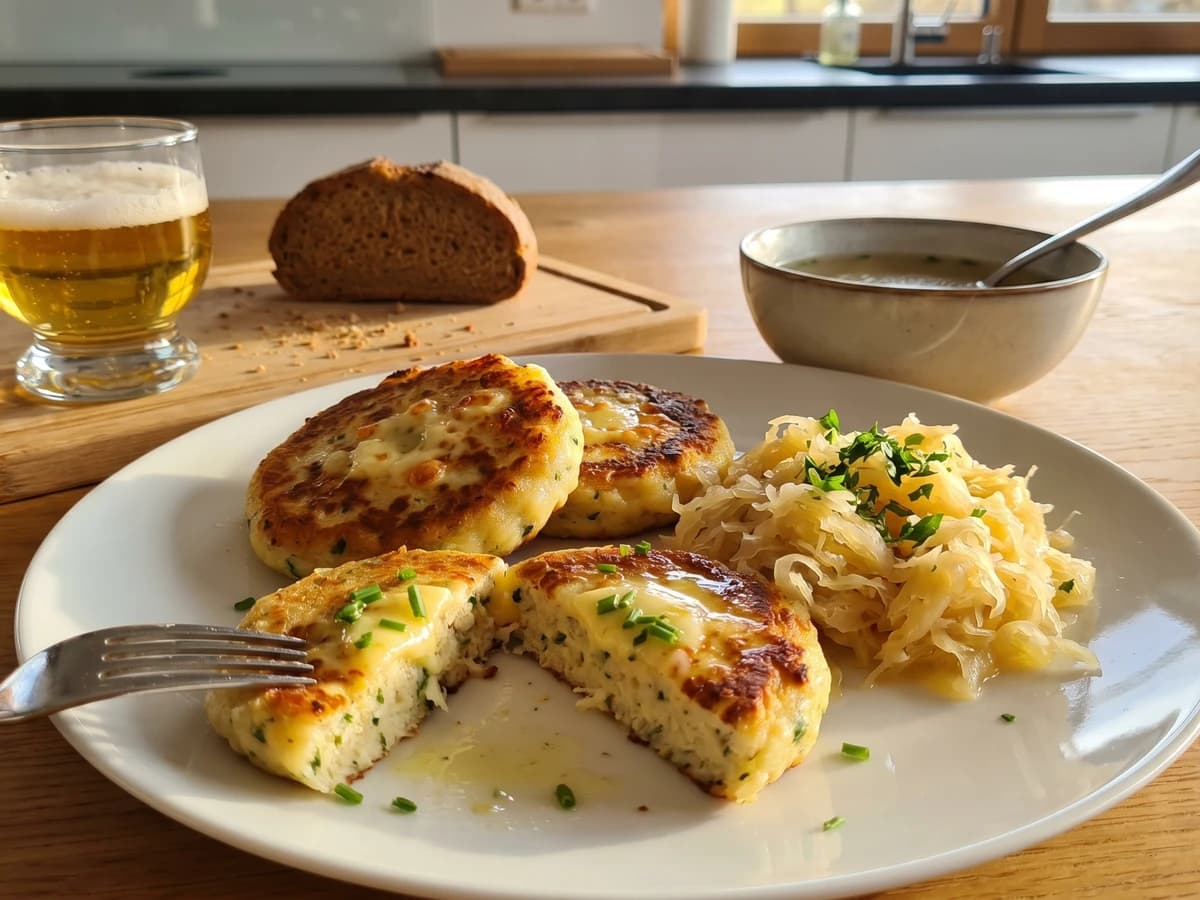
Allgäuer Kaspressknödel
Pressed bread dumplings from the Alpine south, fried until the cheese catches at the edges and the middle stays soft enough for broth, kraut, or a weekday plate.
A cooking platform built around craft, culture, and the stories behind what we eat.

Created by
The Saarland oven cousin of Dibbelabbes, raw potato grated fine, squeezed dry, seasoned with bacon and onion, then baked until the top sets and the middle cuts clean.
Schales belongs to the Saarland table, especially when potatoes are the meal and not the thing beside the meal. It is weeknight food, harvest food, winter food from the stored sack in the cellar, baked in a heavy Reine, a roasting pan, until it cuts like a savoury potato cake.
The argument is local and useful. Dibbelabbes goes into a pot or pan and gets stirred, scraped, and browned into rough pieces. Schales goes into the oven and is left alone so the top sets and the inside cooks firm. Same larder, different discipline. Im Norden anders, im Süden anders, and in the Saarland even the next village has an opinion.
The single rule is this: squeeze the grated raw potato hard, then season it before it goes grey. Too much liquid gives you a wet slab that never sets; too little fat gives you a dry one that tastes punished. Bacon, onion, egg, and a little flour bind what the potato starch has already started. Weggeworfen wird nichts, the bacon fat goes into the pan because that is flavour and insurance against sticking.
Bake it long enough that the edges pull away and the top is golden with small crisp ridges. Let it stand ten minutes before cutting, or the starch is still loose and the slices slump. Das braucht seine Zeit. Schön ist, was schmeckt.
Schales and Dibbelabbes belong to the Saarland and nearby Hunsrück potato belt, where grated raw potatoes, onions, and small amounts of cured pork fed rural and mining households cheaply through the cold months. The potato became a German staple during the 18th century, helped by official campaigns such as Frederick II's Prussian potato orders of the 1750s, though Saarland cooks made the crop their own in dialect dishes like these. The split between Schales and Dibbelabbes is method, not ingredient: Schales is baked firm in the oven, while Dibbelabbes is cooked and torn in the pot.
Quantity
1.5kg
peeled
Quantity
2 medium
finely grated or minced
Quantity
200g
diced
Quantity
2
Quantity
3 tablespoons
Quantity
1 teaspoon, plus more to taste
Quantity
1/2 teaspoon
Quantity
1/4 teaspoon
Quantity
1 tablespoon
chopped
Quantity
1 tablespoon
for the pan
| Ingredient | Quantity |
|---|---|
| floury potatoespeeled | 1.5kg |
| onionsfinely grated or minced | 2 medium |
| smoked streaky bacondiced | 200g |
| eggs | 2 |
| plain flour | 3 tablespoons |
| salt | 1 teaspoon, plus more to taste |
| freshly ground black pepper | 1/2 teaspoon |
| freshly grated nutmeg | 1/4 teaspoon |
| parsley or chives (optional)chopped | 1 tablespoon |
| lard or bacon fatfor the pan | 1 tablespoon |
Set the oven to 190C and put a heavy roasting pan, the Reine, nearby. Schales needs steady heat and a broad pan; a deep dish keeps the centre wet while the edges darken too far.
Cook the diced bacon in a dry pan until the fat runs and the edges colour, then lift out the bacon and keep the fat. The fat goes into the Schales and onto the pan, because smoked pork is doing the seasoning and the sticking insurance at the same time.
Grate the potatoes on the fine side of a box grater or with the fine disc of a food processor, then gather them in a clean cloth and squeeze hard over a bowl. Let the liquid sit for a minute, pour off the brown water, and keep the white starch at the bottom; that starch belongs back in the bowl because it helps the Schales set.
Mix the squeezed potato with the saved starch, onion, bacon, eggs, flour, salt, pepper, nutmeg, and herbs if using. Work quickly once the potato is grated, because raw potato darkens in the air and the salt starts pulling out more water. The mixture should be thick and spoonable, not pourable.
Grease the hot pan with bacon fat or lard, then spread the potato mixture in an even layer about 4cm deep. Level it with the back of a spoon but don't press it flat like concrete; small ridges brown and give the top something crisp to bite.
Bake for 60 to 75 minutes, until the top is golden brown, the edges pull slightly from the pan, and a knife pushed into the centre meets firm resistance instead of wet batter. If the top colours too fast, runter mit der Temperatur, down with the temperature, to 170C and give the centre time to catch up.
Let the Schales stand for 10 minutes before cutting. Resting lets the potato starch settle, so the slices hold instead of slumping. Cut into squares or wedges and serve with apple compote, green salad, or a spoon of sour cream. Nicht aus dem Glas if you can help it, applesauce is ten minutes with apples and a pot.
1 serving (about 300g)
Culinary guides, cultural storytelling, and the editorial depth that makes cooking meaningful.
Discover Culinary ExplorerChef Klaus
Pressed bread dumplings from the Alpine south, fried until the cheese catches at the edges and the middle stays soft enough for broth, kraut, or a weekday plate.

Chef Klaus
The Bavarian potato salad that works because warm waxy slices drink hot broth first, then oil last, until the bowl turns glossy without mayonnaise.

Chef Klaus
White cabbage shaved thin, wilted with hot caraway vinegar, and finished with crisp Speck fat: the Bavarian salad that belongs beside bread, sausages, and roast pork.

Chef Klaus
The south's sweet-sour white cabbage, cooked from fresh Kraut rather than sauerkraut, soft enough for roast pork and sharp enough to wake the plate.