
Chef Klaus
Bibbelsches Bohnesupp
The Saarland bean soup that waits until the beans are tender before the vinegar goes in, with bacon fat and potato doing the work properly.
A cooking platform built around craft, culture, and the stories behind what we eat.
Created by
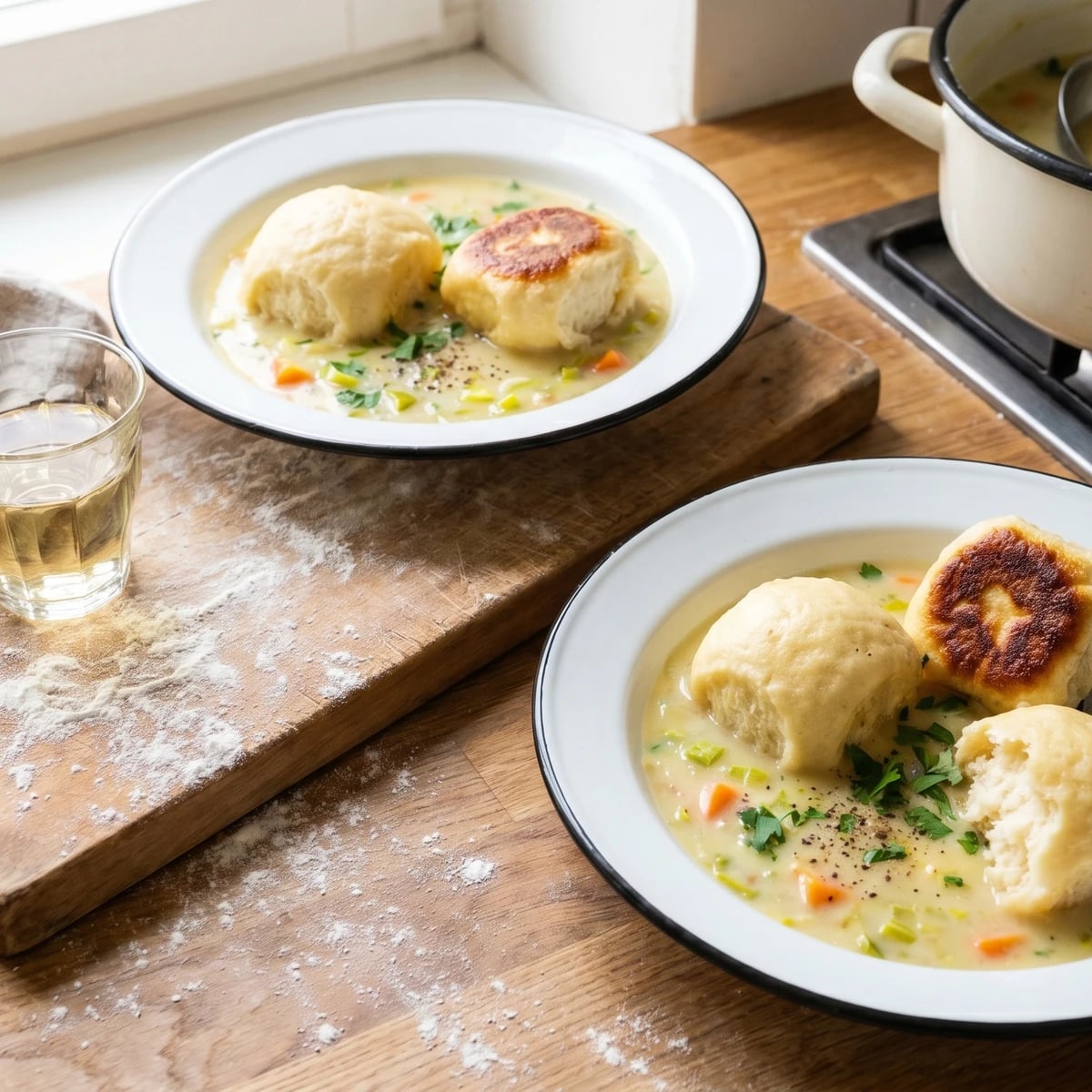
The Pfalz puts the Dampfnudel on potato soup, not only under vanilla sauce: yeast dough, a tight lid, and the salty crust that tells you the pan was left alone.
Dampfnudeln mit Grumbeersupp belong to the Pfalz, where the potato is the Grumbeer and a yeast dumpling can sit in a soup bowl without apology. This is weeknight food if the dough is started in time, and Sunday food if you set the pot down with a glass of Riesling beside it. Swabia and Bavaria argue for sweet sauces and fruit compote; the Pfalz makes the savoury case with potato soup underneath and a salt crust on the dumpling. Im Norden anders, im Süden anders. Here, west of the Rhine, the crust matters.
The whole dish stands on one rule: the lid stays shut. The dough first cooks in the trapped moisture, then the liquid in the pan boils away and the fat left behind fries the underside into a crisp, salty crust. Lift the lid and you lose the pressure, drip water back onto the dough, and turn a proud Dampfnudel into a pale wet bread roll. Listen instead. The pan goes from bubbling to a dry crackle when the crust is forming.
The soup is the larder doing its work: floury potatoes, leek, carrot, celery, a bay leaf, marjoram, and stock if you've got it. Weggeworfen wird nichts, so a ham bone or a piece of rind can flavour the pot, but the dish doesn't need to shout about meat. Finish the soup before the dumplings go in the pan, because once that lid is down you're not fussing with anything else. Erst verstehen, dann kochen.
Dampfnudeln are claimed on both sides of the Rhine, but the Pfalz made the savoury version a regional marker, often serving them with potato soup, wine sauce, or fruit depending on the household and the day. Potatoes entered German field cooking late; Frederick the Great's Prussian potato orders in the 1740s and 1750s helped push the crop north and east, while the southwest folded it into dialect dishes like *Grumbeersupp*. The dish shows a typical Palatine split: the same yeast dumpling can move between sweet and savoury tables, but the salted bottom crust is the point nobody sensible gives up.
Quantity
500g
plus more for shaping
Quantity
7g instant / 21g fresh
Quantity
250ml
lukewarm
Quantity
1 teaspoon
Quantity
1 large
Quantity
50g
softened
Quantity
1 teaspoon
Quantity
2 tablespoons
for the pan
Quantity
175ml
for steaming
Quantity
1 teaspoon
for the crust
Quantity
1kg
peeled and diced
Quantity
1
washed and sliced
Quantity
2
diced
Quantity
150g
diced
Quantity
1
diced
Quantity
30g
Quantity
1.2 litres
Quantity
1
Quantity
1 teaspoon
Quantity
100ml
Quantity
100ml
Quantity
to taste
Quantity
2 tablespoons
chopped
| Ingredient | Quantity |
|---|---|
| plain flourplus more for shaping | 500g |
| instant yeast or fresh yeast | 7g instant / 21g fresh |
| milklukewarm | 250ml |
| sugar | 1 teaspoon |
| egg | 1 large |
| unsalted buttersoftened | 50g |
| fine salt | 1 teaspoon |
| neutral oil or clarified butterfor the pan | 2 tablespoons |
| waterfor steaming | 175ml |
| coarse saltfor the crust | 1 teaspoon |
| floury potatoespeeled and diced | 1kg |
| leekwashed and sliced | 1 |
| carrotsdiced | 2 |
| celeriacdiced | 150g |
| oniondiced | 1 |
| butter or lard | 30g |
| vegetable, chicken, or light ham-bone stock | 1.2 litres |
| bay leaf | 1 |
| dried marjoram | 1 teaspoon |
| dry Riesling | 100ml |
| cream | 100ml |
| salt, black pepper, and nutmeg | to taste |
| flat-leaf parsleychopped | 2 tablespoons |
Warm the milk to blood heat, then mix it with the yeast and sugar; hotter milk kills the yeast before the dough has a chance. Work in the flour, egg, soft butter, and fine salt until you have a smooth, elastic dough. Knead it until it pulls cleanly from the bowl, because a weak dough tears in the pan instead of rising into a proper Dampfnudel.
Cover the dough and leave it somewhere warm until doubled, about 60 to 75 minutes. Das braucht seine Zeit. Yeast dough that hasn't risen enough goes heavy in the middle, and no crust underneath will rescue it.
Melt the butter or lard in a soup pot and sweat the onion, leek, carrot, and celeriac with a pinch of salt until glossy but not browned. This first gentle cooking pulls sweetness out of the roots, so the soup tastes like vegetables rather than boiled water with potatoes in it.
Add the diced floury potatoes, stock, bay leaf, and marjoram. Simmer until the potatoes break when pressed with a spoon, about 20 minutes; floury potatoes are right here because their starch thickens the soup without flour. Remove the bay leaf, crush some of the potatoes against the side of the pot, then stir in the Riesling and cream. Season with salt, pepper, and nutmeg at the end, because the soup reduces as it cooks and early salt can turn heavy. Keep it warm.
Turn the risen dough onto a lightly floured board and divide it into 8 pieces. Cup each piece under your palm and roll it tight so the top is smooth; a sealed skin traps the gas inside, which gives the dumpling height. Set them on the board, cover them, and let them puff for 15 to 20 minutes while you prepare the pan.
Use a wide heavy skillet with a tight lid, large enough to hold the dumplings with space between them. Add the oil or clarified butter, water, and coarse salt, then bring it to a lively simmer. The water will cook the dough first, and the fat and salt left at the end will build the crust. That's the whole trick.
Set the dumplings into the simmering pan, smooth side up, and clamp the lid on at once. Lower the heat to medium-low and do not lift the lid for 25 minutes. The trapped moisture cooks the bread through; when the sound changes from wet bubbling to a dry crackle, the water has gone and the salted bottom is frying. Lift the lid too early and you lose the heat, drop water back onto the dough, and spoil the crust.
Spoon the Grumbeersupp into warm shallow bowls, scatter with parsley, and set two Dampfnudeln on each bowl with the crust facing partly upward so it stays crisp at the edge. Eat them at once, tearing the soft top into the soup and saving the salty base for the last bite. Schön ist, was schmeckt.
1 serving (about 900g)
Culinary guides, cultural storytelling, and the editorial depth that makes cooking meaningful.
Discover Culinary Explorer
Chef Klaus
The Saarland bean soup that waits until the beans are tender before the vinegar goes in, with bacon fat and potato doing the work properly.

Chef Klaus
The Saarland pan potato cake that lives by one rule: squeeze the grated potatoes dry, then fry them slow enough to brown before they burn.

Chef Klaus
The Saarland filled potato dumpling: floury potatoes, a proper savoury middle, sauerkraut underneath, and bacon cream over the top. The filling is the point.

Chef Klaus
Saarland's Geheirade marries tender flour dumplings to floury potatoes in one pot, then sends them out under Speckrahmsoße, a pale bacon-cream sauce built for weeknights and appetite.