
Chef Margarida
Açorda de Camarão
The peasant bread soup of Alentejo dressed for company, sweet pink prawns swimming in a broth of garlic, coentros, and golden azeite. Humble origins, elegant result. This is who we are.
A cooking platform built around craft, culture, and the stories behind what we eat.
Created by
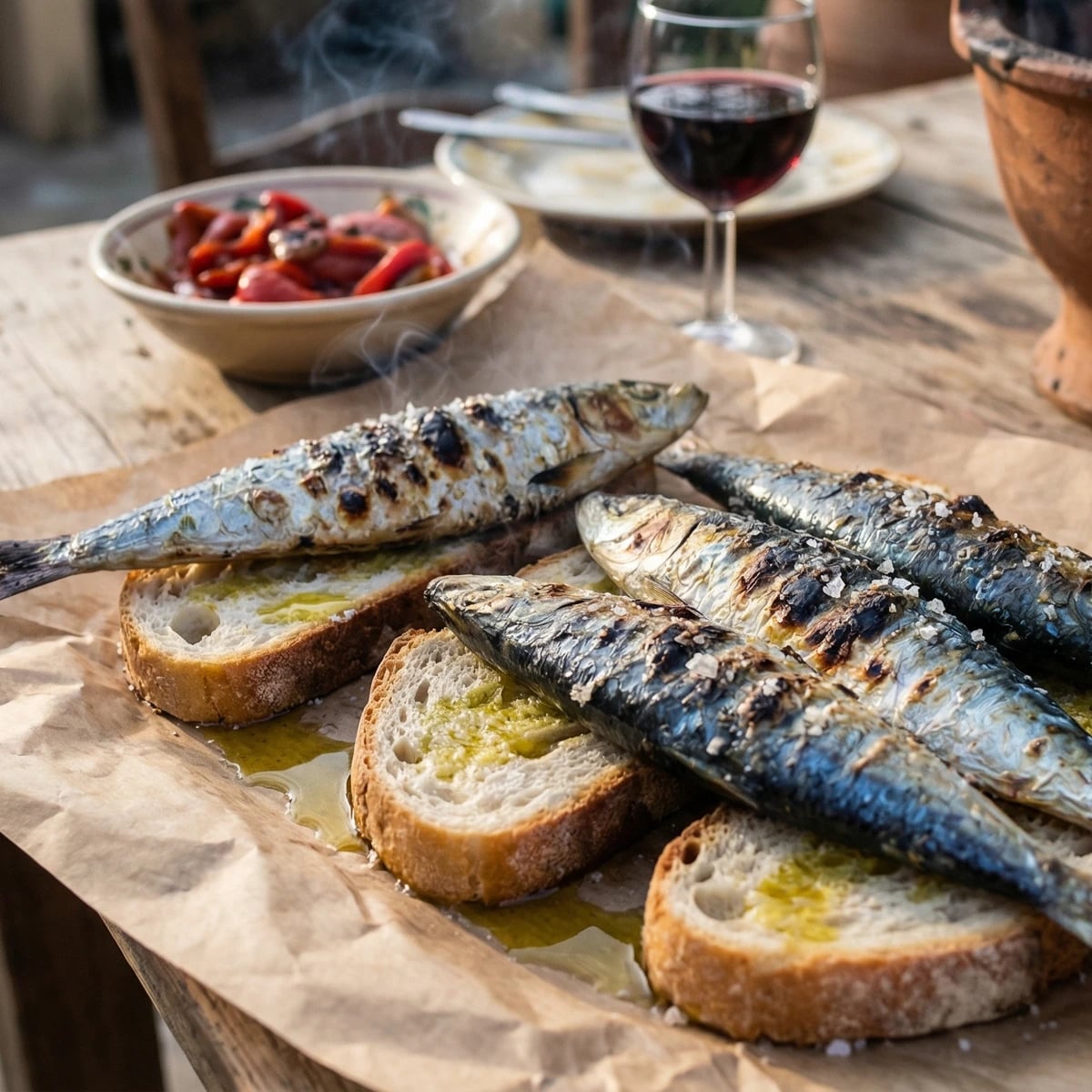
The smoky, salt-crusted sardines of Portugal's June festivals. Street food that needs nothing but fire, salt, and bread to catch the juices. This is what summer tastes like.
Every June, Portugal goes a little crazy. The Santos Populares arrive and suddenly every neighborhood smells of sardines. Charcoal smoke drifts through narrow streets. Old men set up grills on the sidewalk. Children run between the tables. Someone's grandmother is grilling fifty sardines at once, flipping them with the confidence of someone who's done this every summer for sixty years.
This is not restaurant food. This is not careful food. This is the food of celebration, eaten standing up with bread in one hand and a sardine in the other, the juices running down your wrist, a glass of cheap red wine nearby. The recipe is almost embarrassingly simple: fresh sardines, coarse salt, hot coals. That's it. That's the whole thing.
But simple isn't the same as easy. The sardines must be fresh, really fresh, the kind that still smell like the Atlantic. The fire must be hot enough to crisp the skin before the flesh overcooks. The salt must be coarse enough to crust and fall away. Get these three things right and you've made something perfect. Get them wrong and you've got fish.
At Mesa da Avó, I've served sardinhas to people who'd never eaten a whole fish in their lives. I watch them hesitate, unsure where to start. Then they taste it. The smoky skin, the rich flesh, the way the bread soaks up everything. By the end, they're licking their fingers. This is the dish that converts people. This is who we are.
Sardinhas assadas have been the centerpiece of Portugal's Santos Populares festivals since at least the 18th century, though the tradition likely stretches back further. The June timing is no accident: sardines are fattest and most flavorful in early summer, having fed on spring plankton blooms. The festivals honoring Santo António (Lisbon), São João (Porto), and São Pedro (coastal towns) transformed a working-class staple into a national celebration.
Quantity
12 (about 1 kg total)
Quantity
generous amount
Quantity
for drizzling
Quantity
for serving
Quantity
for serving
Quantity
optional
| Ingredient | Quantity |
|---|---|
| fresh whole sardines | 12 (about 1 kg total) |
| coarse sea salt (sal grosso) | generous amount |
| extra virgin olive oil (azeite) | for drizzling |
| crusty bread | for serving |
| roasted red peppers | for serving |
| lemon wedges (optional) | optional |
The sardines must be fresh. This is not negotiable. Look for bright, clear eyes and shiny silver skin. They should smell like the sea, not like fish. In Portugal, the best sardines come from late May through September when they're fat and full of flavor. If you press the flesh gently, it should spring back. Limp sardines have no place on your grill.
Do not gut the sardines. Do not scale them. Do not do anything clever. Rinse them briefly under cold water and pat completely dry with paper towels. The scales protect the flesh from the fierce heat. The innards add richness. This is how it's been done for centuries. Trust the method.
Lay the sardines on a tray and cover them liberally with coarse sea salt on both sides. The salt should be visible, like a crust. Don't be timid. Most of it falls off during grilling, and what remains creates that characteristic salty, crispy skin. Let them sit for 10 minutes while your fire gets ready.
You need high, direct heat from charcoal. Gas grills work but lack soul. The coals should be white-hot and glowing, no flames. Hold your hand 10 centimeters above the grate. If you can only hold it there for 2 seconds, you're ready. Oil the grate well or the sardines will stick and tear. This is the moment of truth.
Place the sardines directly on the hot grate, leaving space between them. Do not touch them for 3 to 4 minutes. The skin will crisp, the fat will render, and smoke will rise. When the skin releases easily from the grate and has char marks, flip once. Cook another 3 to 4 minutes. The flesh near the bone should be just opaque, not dry. Remove immediately.
Transfer the sardines to a platter or, better yet, directly onto thick slices of crusty bread. The bread catches the juices and becomes the best part. Drizzle with good azeite. Serve with roasted red peppers on the side. Eat with your hands, pulling the flesh from the bones, the bread soaking up everything. This is standing-up food, outdoor food, food eaten while the accordion plays and the night is young.
1 serving (about 165g)
Culinary guides, cultural storytelling, and the editorial depth that makes cooking meaningful.
Discover Culinary Explorer
Chef Margarida
The peasant bread soup of Alentejo dressed for company, sweet pink prawns swimming in a broth of garlic, coentros, and golden azeite. Humble origins, elegant result. This is who we are.

Chef Margarida
The slow-braised beef of Terceira island, where wine and warm spices transform humble cuts into something sacred. This is festival food, gathering food, the dish that brings the Azorean diaspora home.

Chef Margarida
The sausage that saved lives during the Inquisition, grilled until the casing splits and served with a runny fried egg and golden potatoes. History you eat with your hands.

Chef Margarida
The clam dish that made a poet immortal, nothing but garlic, wine, and coentros meeting the brine of the sea. Ten minutes from pan to table. Bread mandatory.