Culinary Explorer

A cooking platform built around craft, culture, and the stories behind what we eat.
Discover Culinary Explorer
Alcatra

Alcatra

Created by

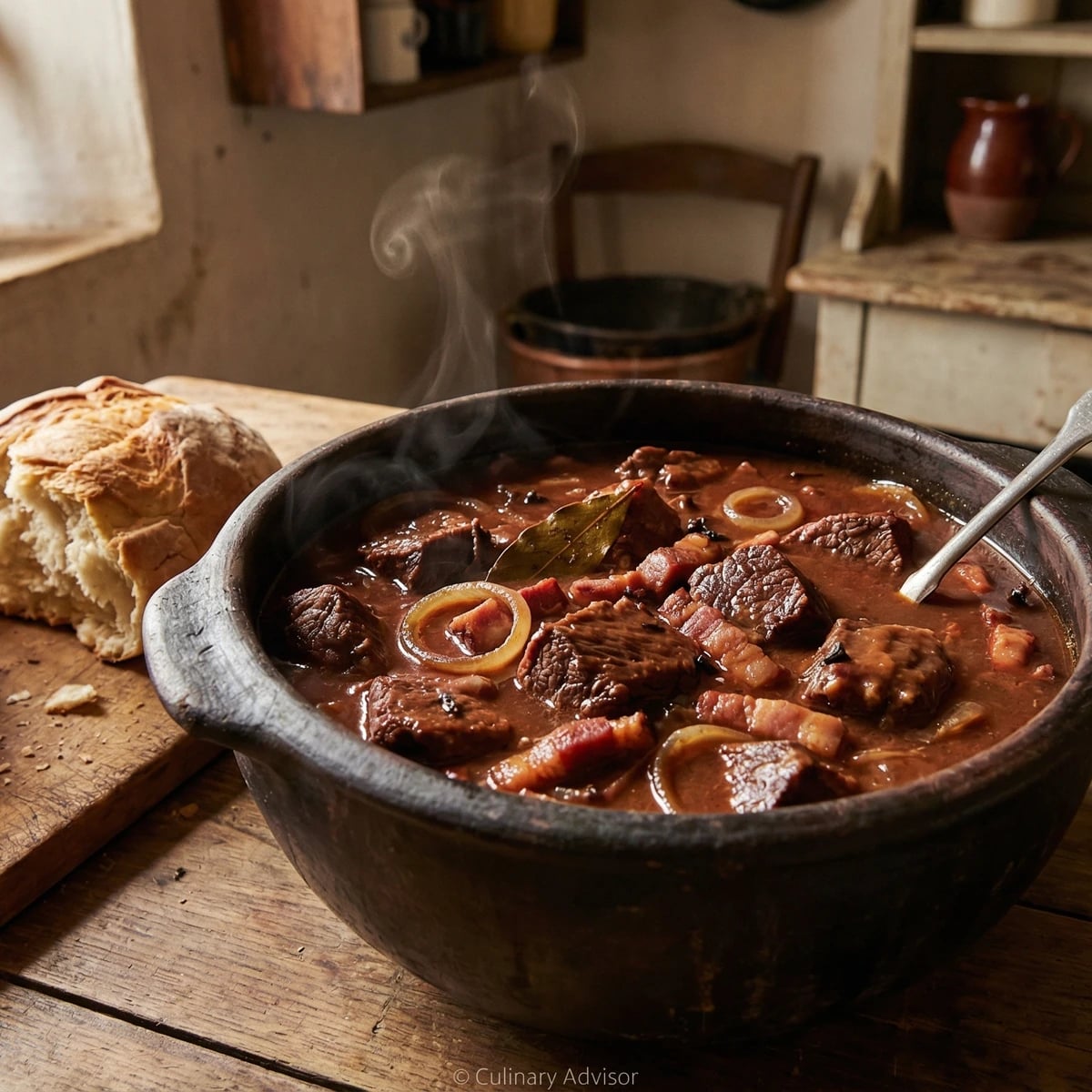
The slow-braised beef of Terceira island, where wine and warm spices transform humble cuts into something sacred. This is festival food, gathering food, the dish that brings the Azorean diaspora home.

Main Dishes
Portuguese, Azores
Special Occasion
Slow Cooker
Make Ahead
30 min
Active Time
4 hr cook4 hr 30 min total
Yield8 servings

Ididn't grow up with alcatra. Avó Leonor was Alentejana through and through, and her braised meats tasted of the mainland. But the first time I traveled to Terceira to document recipes for my cookbook, a grandmother named Dona Emília taught me something that changed how I understand Portuguese cooking.

She made alcatra in a clay pot that had been in her family for three generations. Cracked in one corner, stained the color of old wine. She layered the beef and onions without measuring anything. She told me that alcatra was born from the Festas do Espírito Santo, the Holy Spirit festivals that have defined Azorean identity for five hundred years. During the festas, enormous clay pots of alcatra feed entire villages. No one goes hungry. Everyone eats together. A cozinha é memória, and this dish holds the memory of community.

The spices are what make alcatra unmistakably Azorean: allspice, cloves, cinnamon. These are the flavors of the islands, a legacy of Portugal's spice trade routes. Combined with local wine and slow time in the oven, they transform tough cuts of beef into something that falls apart at the whisper of a fork.

Dona Emília told me the secret is patience. Four hours minimum. No peeking. The pot does the work while you live your life. When you finally lift the lid, the smell will knock you back. Wine reduced to silk. Onions melted to nothing. Beef that surrenders completely. This is festival food made for your kitchen, whenever you need to gather people around the table.

Alcatra originated on Terceira island in the Azores, where it has been central to the Festas do Espírito Santo since the 14th century. These festivals, brought by early Portuguese settlers, celebrate charity through communal meals where alcatra is served to all regardless of wealth. The dish's distinctive warm spices reflect the Azores' position on historic spice trade routes between Europe, Africa, and the Americas.

The technique, the tradition, and the story behind every dish.

Discover Culinary Explorer

Ingredients

beef chuck or rump roast

Quantity

1.5 kg

cut into large chunks

slab bacon (toucinho)

Quantity

250g

cut into thick lardons

onions

Quantity

4 medium

sliced into thick rings

garlic

Quantity

1 whole head

cloves separated and smashed

dry red wine

Quantity

2 cups

beef stock

Quantity

1 cup

whole allspice berries (pimenta da Jamaica)

Quantity

6

whole cloves

Quantity

4

bay leaves

Quantity

2

cinnamon stick

Quantity

1

black peppercorns

Quantity

1 teaspoon

coarse sea salt

Quantity

1 teaspoon

extra virgin olive oil (azeite)

Quantity

3 tablespoons

massa sovada or crusty bread

Quantity

for serving

Equipment Needed

  • Large clay pot (alguidar) or 6-liter Dutch oven with tight-fitting lid
  • Aluminum foil (if using clay pot without tight seal)

Instructions

  1. 1

    Layer the pot

    In a heavy clay pot or Dutch oven, drizzle half the azeite across the bottom. Layer half the onion rings across the base, then scatter half the garlic cloves and half the bacon over the onions. This is the bed your beef will sleep on for the next four hours. The layering matters. It's how the flavors build.

  2. 2

    Season and arrange the beef

    Season the beef chunks generously with salt and pepper. Arrange them in a single layer over the onions and bacon, tucking the pieces close but not stacking them. Nestle the allspice, cloves, bay leaves, cinnamon stick, and peppercorns around and between the meat. These whole spices will perfume everything slowly, the way the Azorean grandmothers intended.

    Don't grind the spices. Whole spices release their oils gradually during the long braise. Ground spices turn bitter.
  3. 3

    Add the final layer

    Cover the beef with the remaining onions, garlic, and bacon. Drizzle the rest of the azeite over everything. Pour the wine and beef stock down the sides of the pot, not over the top. The liquid should come about halfway up the meat. You're not making soup. You're braising.

  4. 4

    Begin the slow braise

    Cover the pot tightly. If using a clay pot without a perfect seal, cover first with foil, then the lid. Place in a cold oven, then set the temperature to 150°C (300°F). Let it cook undisturbed for 3.5 to 4 hours. Do not lift the lid. Do not check on it. Do not peek. Trust the process. The Azorean grandmothers didn't hover and neither should you.

    Starting in a cold oven is traditional. The gradual rise in temperature is gentler on the meat and mimics the old wood-fired ovens of Terceira.
  5. 5

    Check for doneness

    After 3.5 hours, finally lift the lid. The beef should be falling apart at the touch of a fork. The onions should have melted into the wine sauce. The kitchen should smell of warm spices, wine, and something deeply savory. If the meat resists, cover and cook another 30 minutes. This dish tells you when it's ready.

  6. 6

    Rest and serve

    Remove from the oven and let rest, covered, for 15 minutes. The sauce will thicken slightly as it cools. Serve directly from the pot, spooning the wine sauce and melted onions over each portion. Bring bread to the table. Good bread, torn not sliced. The sauce is the treasure here. You'll want to mop up every drop.

Chef Tips

  • Use a clay pot if you have one. The porous material absorbs and radiates heat differently than metal, and generations of alcatra leave their flavor in the clay. A Dutch oven works, but the clay pot is the soul of the dish.
  • The wine should be something you'd drink. Nothing expensive, but nothing you wouldn't put in a glass. Azorean wines are ideal if you can find them. A rustic Portuguese tinto works perfectly.
  • Alcatra tastes even better the next day. Make it Saturday, reheat it Sunday. The flavors deepen overnight in ways that fresh alcatra can't match.
  • In Terceira, they serve this with massa sovada, the sweet eggy bread of the Azores. The sweetness against the savory wine sauce is extraordinary. If you can't find massa sovada, a brioche or challah comes close. Or use crusty bread. Just bring something to soak up that sauce.

Advance Preparation

  • The meat can be layered in the pot and refrigerated overnight. Bring to room temperature for 1 hour before cooking.
  • Alcatra improves dramatically when made a day ahead. Refrigerate overnight and reheat, covered, at 150°C (300°F) for 45 minutes.
  • Leftovers keep 4 days refrigerated. The cold braised beef makes excellent sandwiches with the jellied sauce spread on bread.

Frequently Asked Questions

Nutrition Information

1 serving (about 300g)

Calories
650 calories
Total Fat
40 g
Saturated Fat
14 g
Trans Fat
0 g
Unsaturated Fat
26 g
Cholesterol
170 mg
Sodium
1065 mg
Total Carbohydrates
11 g
Dietary Fiber
1 g
Sugars
3 g
Protein
49 g

Note: Chef personas and recipes are created with AI assistance. Cook with care: follow safe food-handling practices, check doneness with a thermometer when needed, and adapt for allergies and your kitchen.

Where cooking meets culture.

Culinary guides, cultural storytelling, and the editorial depth that makes cooking meaningful.

Discover Culinary Explorer

More from Chef Margarida's Main Dishes

Browse the full collection