
Chef Jeong-sun
Agwi-jjim (Braised Monkfish with Bean Sprouts)
Firm monkfish buried under crisp soybean sprouts, minari, and a red gochugaru sauce thickened at the end; Masan's market dish asks for heat, timing, and a steady hand.
A cooking platform built around craft, culture, and the stories behind what we eat.
Created by
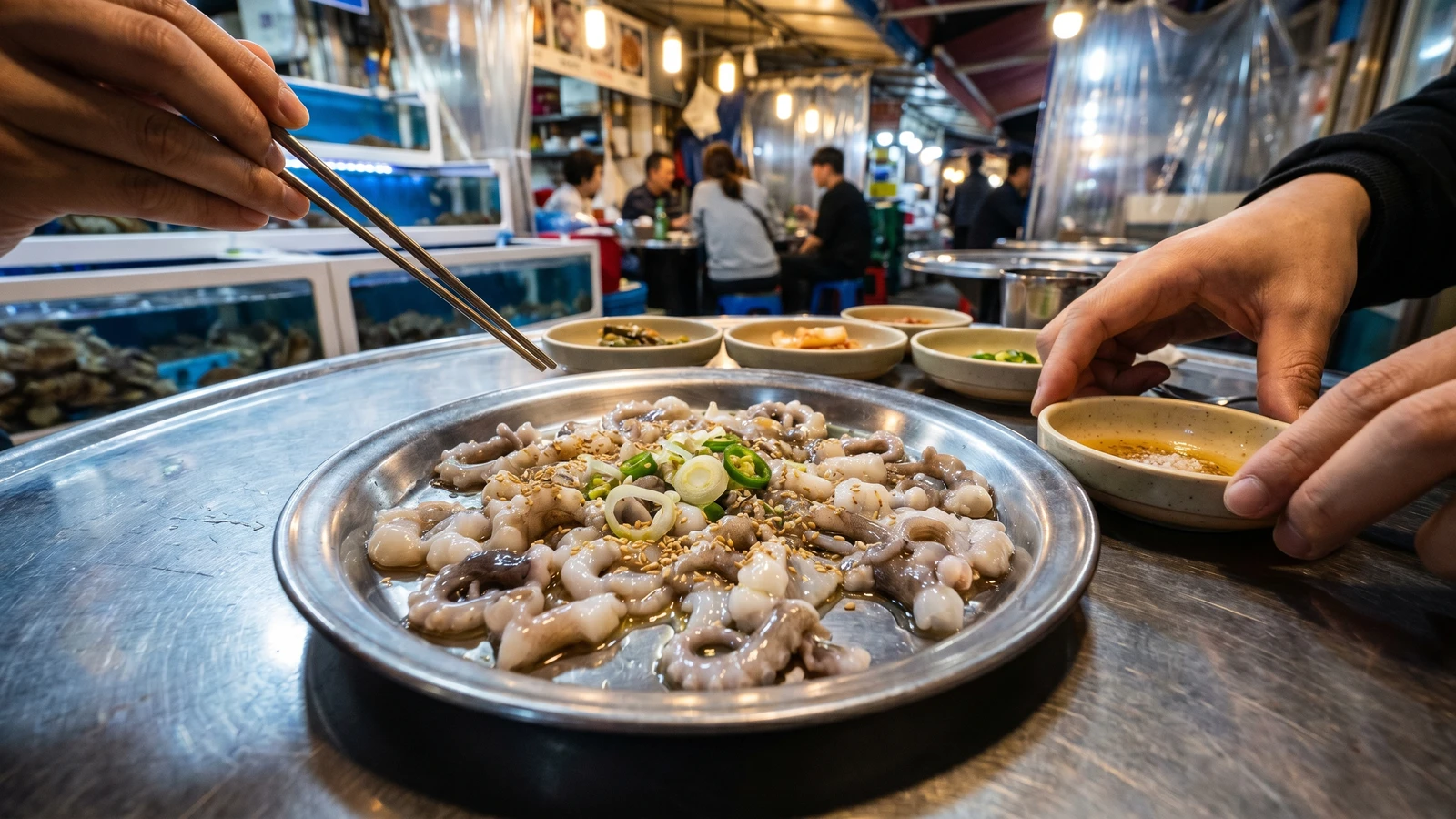
Fresh octopus cut into small moving pieces, dressed with sesame oil and salt, a West-coast seafood dish where freshness, knife work, and careful eating are the whole recipe.
Sannakji is misunderstood before it reaches the plate. People talk about bravery, but the dish is not a dare. It is a freshness dish from the coast, a thing of markets, tidal flats, and a table that knows to chew slowly. The movement you see is nerve, not romance. Respect it, and cut it small.
My teacher would not let a student touch this dish until the board was steady, the knife was sharp, and the sesame oil was measured. Too much oil slicks the octopus and makes it harder to eat. Too little salt leaves the sweetness flat. The pieces should be short enough to chew safely, each one lightly coated, not swimming. Let it taste like itself.
I won't tell you this is easy, because the hard part is judgment. Buy from a fishmonger who handles live octopus properly, clean it without panic, cut it immediately before serving, and make everyone at the table chew until the suction gives up. 손맛 is real; I measure it anyway. That is how a dish with almost no cooking still gets handed on correctly.
Sannakji belongs most naturally to Korea's coastal seafood culture, especially the West and South coast markets where small octopus from tidal flats and shallow waters are eaten at peak freshness. The name uses nakji (small octopus), and in practice the dish is usually freshly killed and cut so the pieces still move from nerve activity, rather than served as a whole live animal. It became widely known through fish markets and pojangmacha tables, not royal records, and it remains a dish defined by freshness, texture, and careful eating.
Quantity
1, about 400 to 500g
Quantity
1 tablespoon
for scrubbing
Quantity
2 tablespoons
Quantity
1/2 teaspoon
Quantity
1 small clove
very finely minced
Quantity
1 teaspoon
Quantity
1
thinly sliced
Quantity
1 small
thinly sliced
| Ingredient | Quantity |
|---|---|
| live small octopus (nakji) | 1, about 400 to 500g |
| coarse saltfor scrubbing | 1 tablespoon |
| toasted sesame oil | 2 tablespoons |
| fine sea salt | 1/2 teaspoon |
| garlic (optional)very finely minced | 1 small clove |
| toasted sesame seeds | 1 teaspoon |
| scallion (optional)thinly sliced | 1 |
| green chili (optional)thinly sliced | 1 small |
Buy the octopus the same day from a fishmonger who keeps live seafood clean and cold. It should smell like the sea, not ammonia, and the skin should look glossy, not dull. If you are unsure of the source, do not make sannakji. Cook another octopus dish instead. Freshness is the dish.
Set out the serving plate, chopsticks, sesame oil, salt, sesame seeds, and any scallion or chili before you begin cleaning. Sannakji waits for no one. Once cut, it should be dressed and eaten at once, while the texture is lively and clean.
Place the octopus in a large bowl. Add the coarse salt and scrub firmly for 1 to 2 minutes to remove slime from the skin and suckers. Rinse under cold running water until the surface no longer feels slippery. This is not for prettiness; clean suckers taste cleaner and are easier to handle.
Turn the head mantle inside out and remove the innards. Cut away the eyes and push out the hard beak at the center where the arms meet. Rinse once more and pat the octopus dry. Water left on the surface weakens the sesame oil dressing and makes the pieces slide around.
On a steady board, separate the arms and cut them into 1 to 1.5 cm pieces. Cut the head into small strips if using it. Do not leave long pieces for drama. Short pieces are safer, easier to chew, and better seasoned. This is the step the dish lives or dies by.
Toss the cut octopus immediately with 2 tablespoons toasted sesame oil and 1/2 teaspoon fine sea salt. Add the minced garlic only if your table likes it, and keep it fine so it does not bite harder than the octopus. The oil should gloss each piece, not pool underneath.
Spread the octopus on a chilled shallow plate, not in a mound. Scatter with toasted sesame seeds, scallion, and green chili if using. Serve at once with chopsticks. Tell everyone plainly: chew each bite thoroughly before swallowing. That instruction belongs in the recipe, not after an accident.
1 serving (about 230g)
Culinary guides, cultural storytelling, and the editorial depth that makes cooking meaningful.
Discover Culinary ExplorerChef Jeong-sun
Firm monkfish buried under crisp soybean sprouts, minari, and a red gochugaru sauce thickened at the end; Masan's market dish asks for heat, timing, and a steady hand.

Chef Jeong-sun
A quick Korean rice bowl built on contrast: warm rice, cold popping flying-fish roe, chopped vegetables, gim, sesame oil, and the crisp rice bottom a hot stone bowl gives you.
Chef Jeong-sun
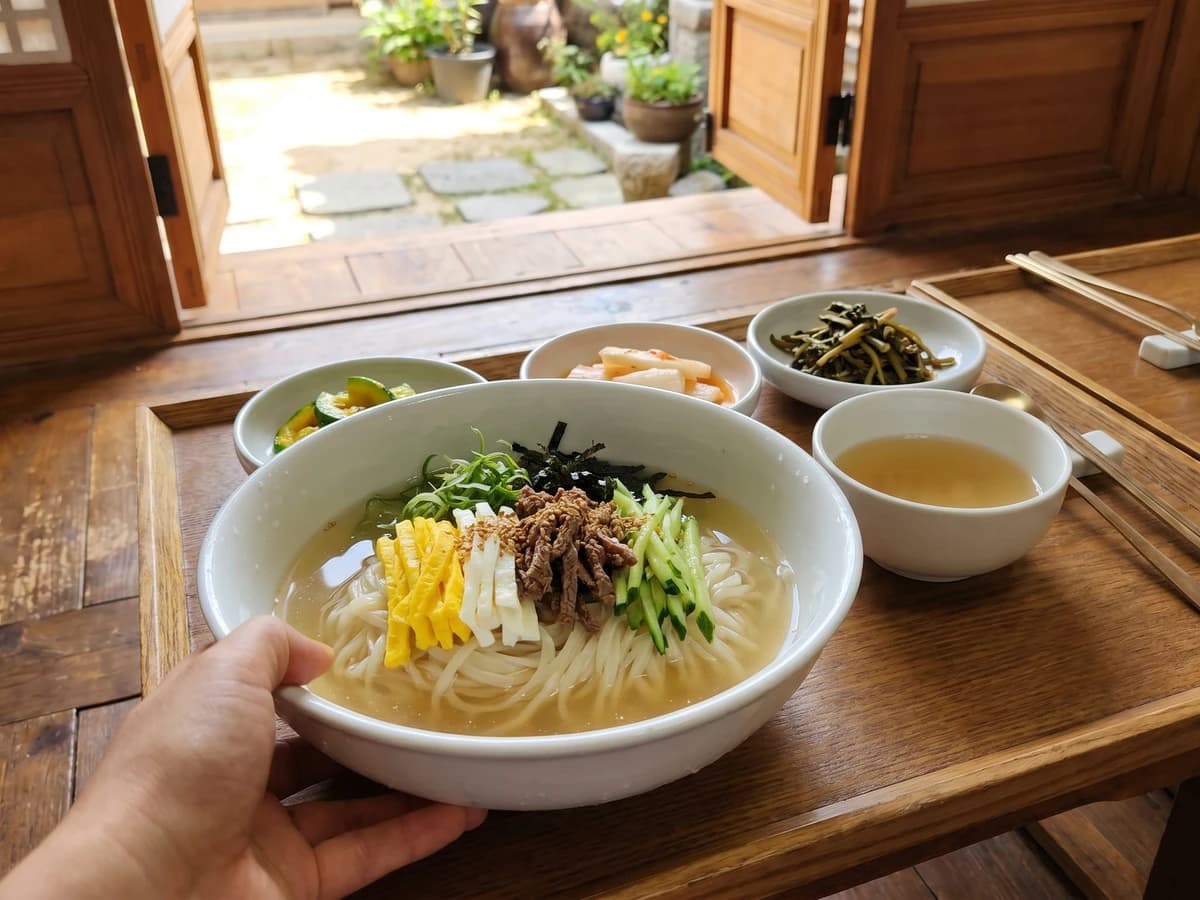
Andong's guest noodles, wheat and roasted soybean flour rolled thin, boiled and rinsed cold, then set in a clear chilled anchovy broth with careful strips of beef, egg, and cucumber.

Chef Jeong-sun
Andong's ritual-table rice served on an ordinary day: separate soy-sesame namul, warm rice, and clear radish soup, mixed without gochujang so every vegetable keeps its own voice.