Chef Margarida
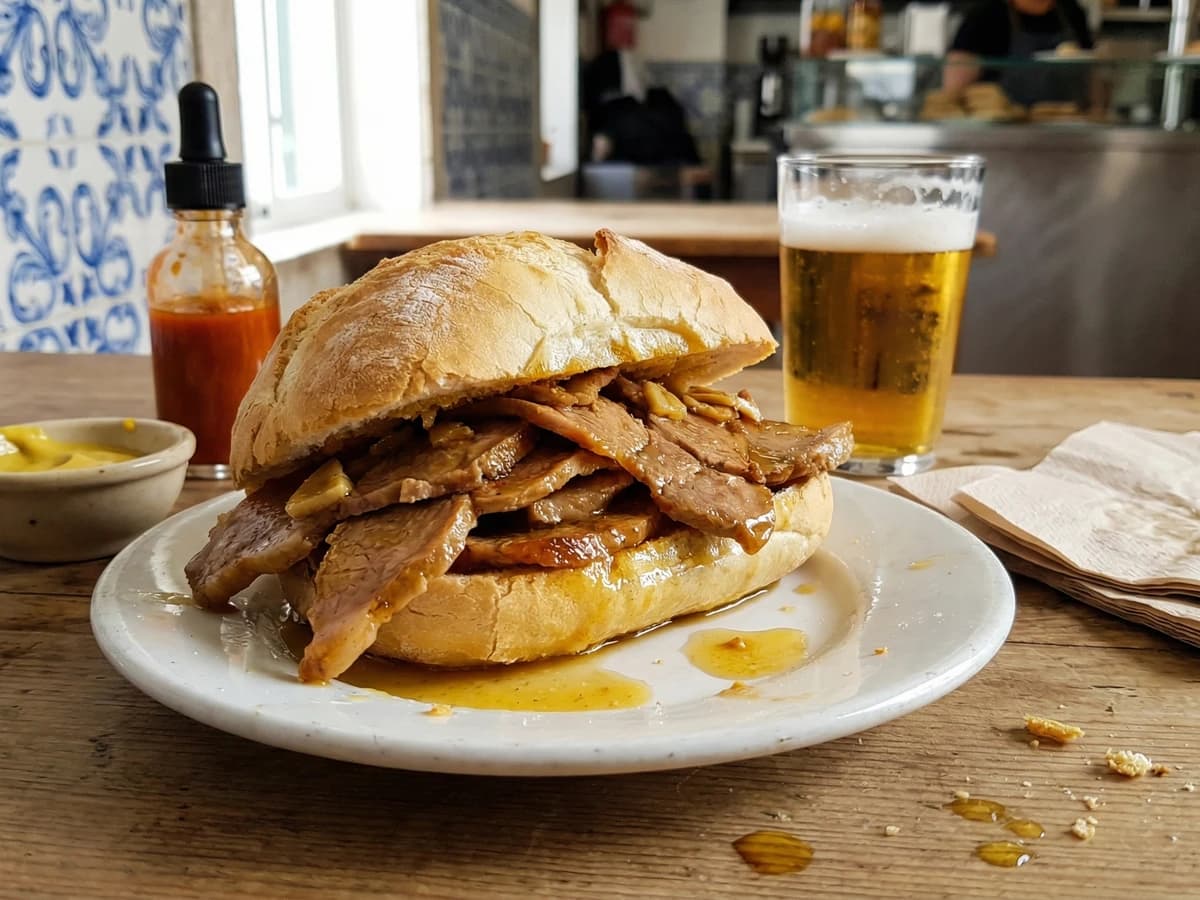
Bifana
Alentejo's gift to late nights and hungry workers: thin pork bathed in garlic and white wine, stuffed into a crusty roll. Mustard or piri-piri, that's the only question.
A cooking platform built around craft, culture, and the stories behind what we eat.
Created by
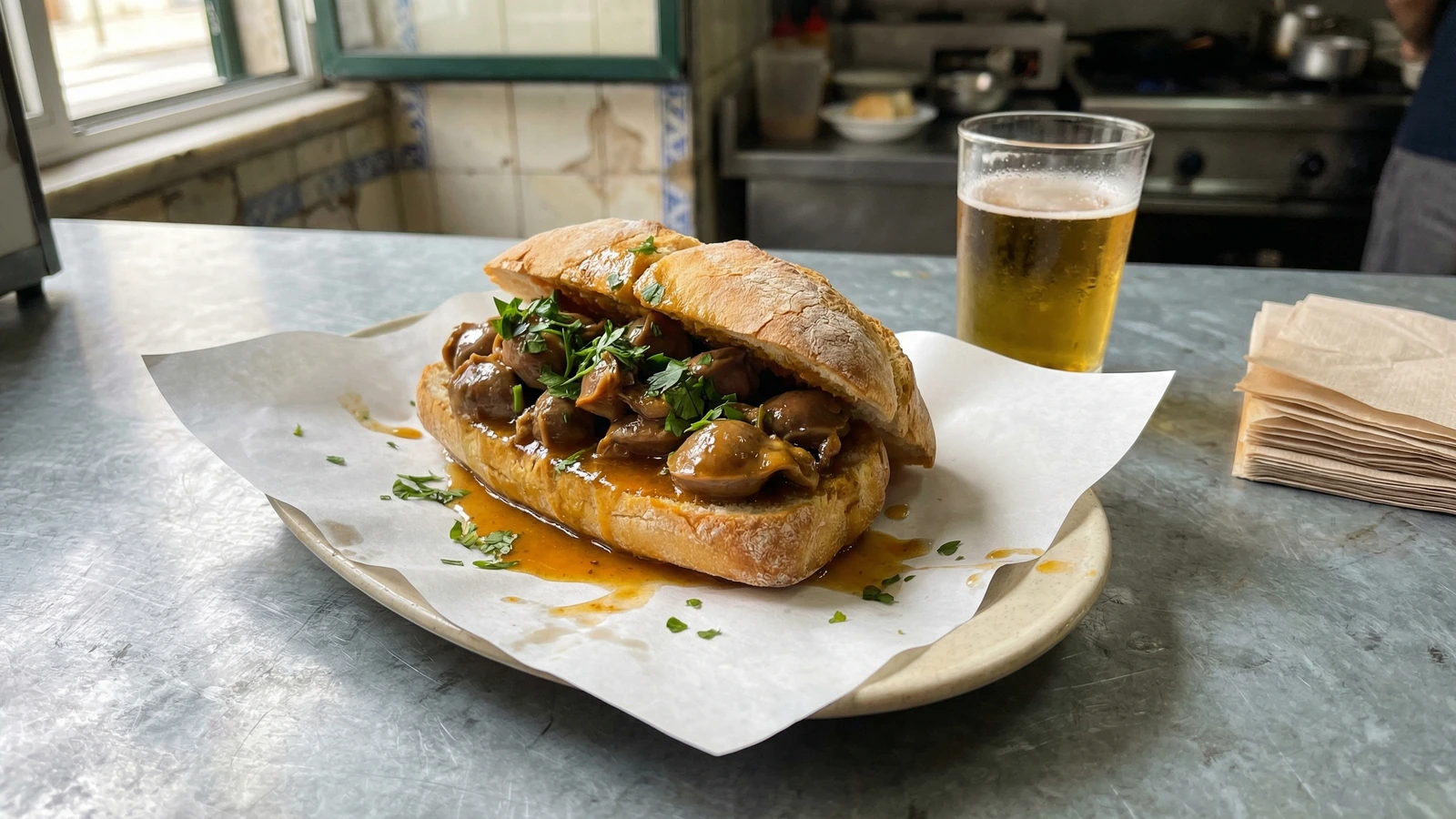
The gizzard sandwich of Portugal's tascas and late nights, where humble offal becomes something people queue for. Braised slow, served fast, eaten standing up.
There's a moment at every Santos Populares festival when the smell hits you. Sardines on the grill, sure. But underneath that, something richer. Darker. The smell of moelas braising in wine and garlic, drifting from the tasca on the corner where the old men have been eating the same sandwich for forty years.
Moelas are chicken gizzards. I know. Some people stop right there. But those people are missing one of Portugal's great street foods, a sandwich so satisfying it has kept workers, students, and night owls fed for generations. The gizzards braise slowly in white wine and garlic until they turn tender, still with that pleasant chew that makes them interesting. The sauce reduces into something you want to drink with a spoon. Then it all goes on bread.
Avó Leonor didn't make this dish. She was Alentejo through and through, all porco preto and migas. But when I started documenting recipes from tascas in Lisbon and Porto, I found moelas everywhere. At Casa das Moelas in Cais do Sodré where the line goes down the block at 2am. At unnamed tascas in Matosinhos where fishermen eat before dawn. Always the same: slow-cooked gizzards, crusty bread, cold beer.
This is not fancy food. This is the opposite of fancy food. This is a cozinha é memória at its most honest: offal that would otherwise be thrown away, transformed into something people crave. A sandes de moelas costs almost nothing to make, but when it's done right, you'd pay anything for another.
Offal cookery in Portugal reflects centuries of nose-to-tail eating born from necessity. Gizzards became street food in Lisbon's tascas by the mid-20th century, a cheap protein for workers who couldn't afford the prized cuts. The dish remains associated with late-night eating and festival culture, particularly in the Lisbon and Porto regions where tascas specializing in moelas still draw devoted crowds.
Quantity
500g
cleaned and trimmed
Quantity
3 tablespoons
Quantity
1 large
halved and sliced thin
Quantity
4 cloves
sliced
Quantity
1 cup
Quantity
1 tablespoon
Quantity
2
Quantity
1 teaspoon
Quantity
1/2 teaspoon
Quantity
1 cup
Quantity
to taste
Quantity
to taste
freshly ground
Quantity
4
Quantity
for serving
chopped
| Ingredient | Quantity |
|---|---|
| chicken gizzardscleaned and trimmed | 500g |
| extra virgin olive oil (azeite) | 3 tablespoons |
| onionhalved and sliced thin | 1 large |
| garlicsliced | 4 cloves |
| Portuguese white wine | 1 cup |
| tomato paste | 1 tablespoon |
| bay leaves | 2 |
| sweet paprika (colorau) | 1 teaspoon |
| piri-piri or crushed red pepper | 1/2 teaspoon |
| chicken broth or water | 1 cup |
| salt | to taste |
| black pepperfreshly ground | to taste |
| papo seco rolls | 4 |
| flat-leaf parsley (optional)chopped | for serving |
If your gizzards still have the tough inner membrane or any greenish residue, this is where you earn the sandwich. Trim away any fat or sinew. Rinse them well under cold water. Slice each gizzard in half or into thirds so they're bite-sized. This isn't optional. Whole gizzards are too much for a sandwich, and they won't cook evenly.
Heat the azeite in a heavy pot or deep skillet over medium heat. Add the sliced onion and cook slowly, stirring occasionally, until soft and starting to turn golden, about 10 minutes. Add the sliced garlic and cook another minute until fragrant. This is your foundation. Não tenhas pressa.
Push the onions aside and add the gizzards to the pot. Let them sear without moving for 2 to 3 minutes until they take on some color. Stir them into the onions. Add the paprika and piri-piri, stirring quickly so the spices bloom in the hot fat but don't burn. You'll smell it change from raw spice to something warm and toasty. That's when you move fast.
Pour in the white wine and let it bubble hard for a minute, scraping up any browned bits from the bottom. Add the tomato paste, bay leaves, and broth. Stir to combine. Bring to a simmer, then reduce heat to low. Cover and cook for 1 hour to 1 hour 15 minutes, checking occasionally and adding a splash of water if the pot runs dry. The gizzards are ready when a knife slides through without resistance. They should be tender but still have a pleasant chew.
Remove the lid and increase heat to medium. Let the sauce reduce until it coats the gizzards thickly, about 5 to 8 minutes. It should be saucy but not soupy. You want it to cling to the bread without making everything a soggy mess. Taste and adjust salt. Remove the bay leaves.
Split the papo seco rolls and toast them lightly if you like, or leave them soft. Spoon the gizzards and their sauce generously into each roll. The bread should soak up some of that liquid. That's the point. Scatter parsley on top if you're feeling festive. Serve immediately with plenty of napkins. This is not elegant eating. This is tasca eating. Embrace the mess.
1 serving (about 210g)
Culinary guides, cultural storytelling, and the editorial depth that makes cooking meaningful.
Discover Culinary ExplorerChef Margarida
Alentejo's gift to late nights and hungry workers: thin pork bathed in garlic and white wine, stuffed into a crusty roll. Mustard or piri-piri, that's the only question.

Chef Margarida
The northern answer to Portugal's beloved pork sandwich, where beer replaces wine and the sauce runs down your arms. This is late-night Porto food, tasca food, the kind you eat standing at zinc counters with an imperial in the other hand.
Chef Margarida
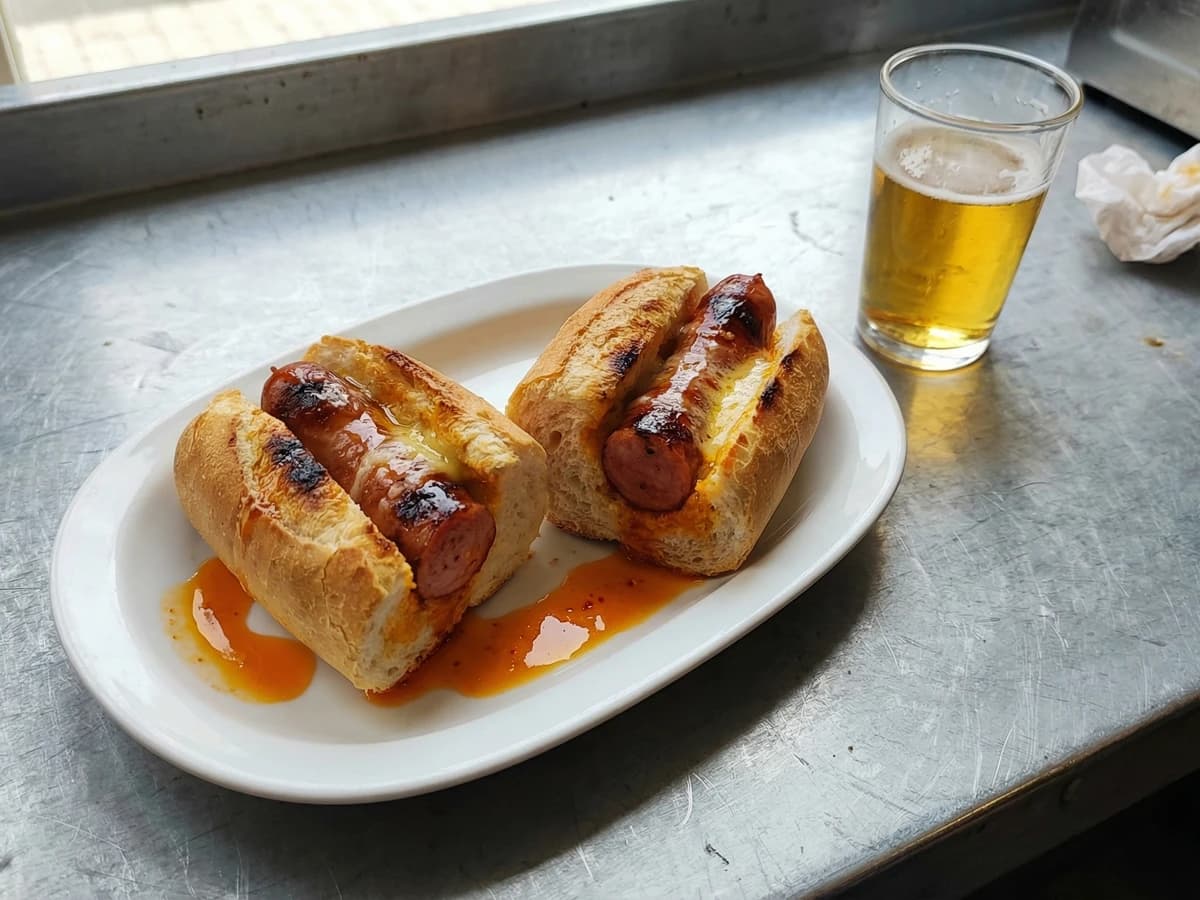
The late-night sandwich of Porto, where fresh sausage meets crusty bread and a generous slap of piri piri butter. This is what you eat standing at the counter with a cold imperial, surrounded by strangers who feel like friends.

Chef Margarida
Porto's answer to the hot dog: grilled chouriço in a crusty roll, smothered in melted cheese with a runny fried egg on top. This is what you eat at 2am and remember forever.