Culinary Explorer
A cooking platform built around craft, culture, and the stories behind what we eat.
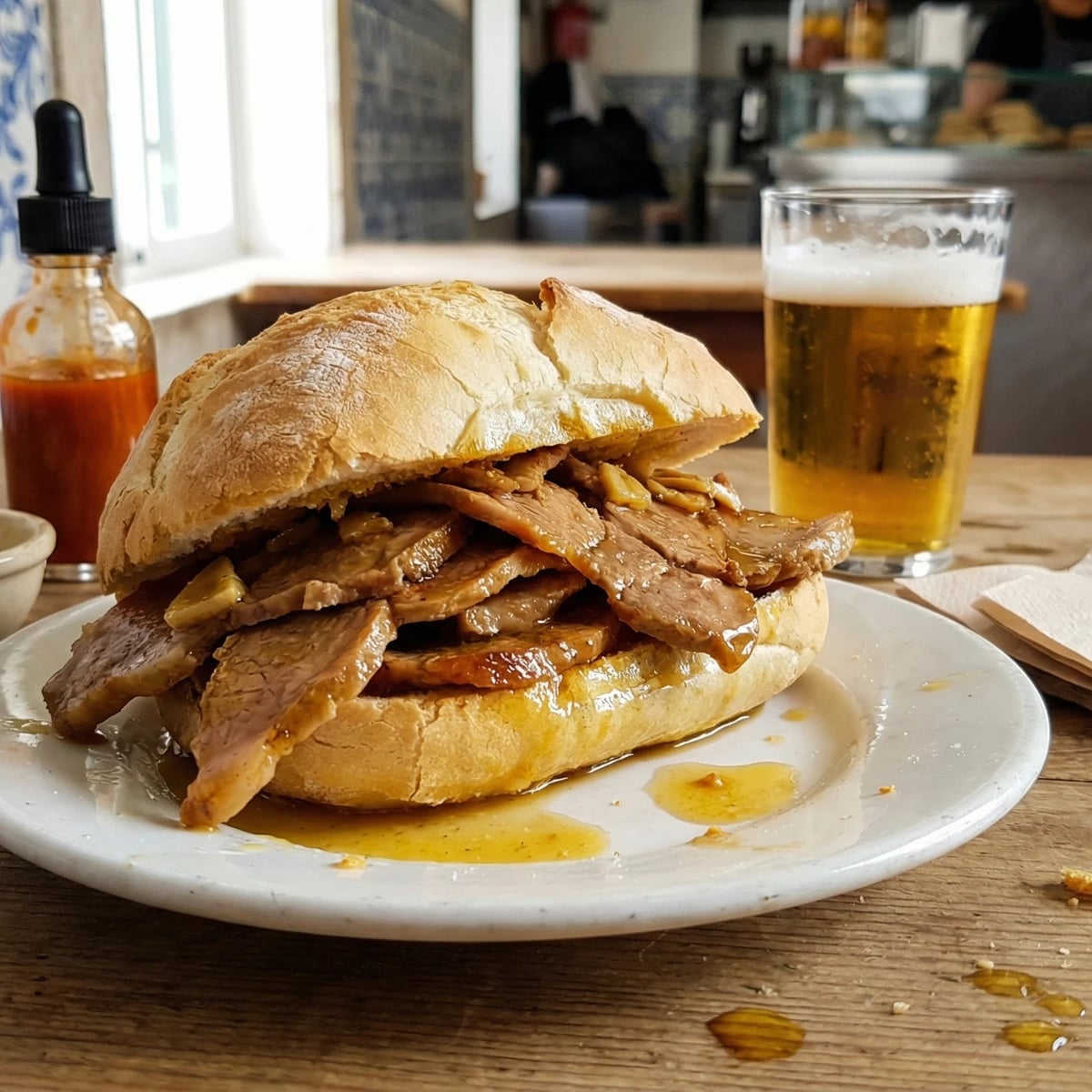
Bifana
Created by Chef Margarida
Alentejo's gift to late nights and hungry workers: thin pork bathed in garlic and white wine, stuffed into a crusty roll. Mustard or piri-piri, that's the only question.
If you want to understand Portugal, eat a bifana standing at a zinc counter at midnight.
This is the sandwich that feeds everyone. Workers grabbing lunch. Students after exams. Families after Santos Populares. Strangers at highway rest stops who become friends over bread and pork. The bifana doesn't discriminate. It just feeds.
Avó Leonor didn't make bifanas at home. This was tasca food, she'd say, food you eat standing up, food made by men in aprons who've been flipping pork in the same pan for forty years. But when I started Mesa da Avó, I wanted to understand how they did it. So I spent weeks in tascas across Alentejo and Lisbon, watching, asking, tasting. The secret isn't complicated. It's just time. The pork braises gently in wine and garlic until it practically falls apart when you look at it. Then it goes into a papo seco that's been warmed on the grill, maybe dragged through the cooking juices.
Mustard or piri-piri? That's the eternal debate. In Lisbon, mustard. In the Algarve, piri-piri. In my kitchen, both bottles sit on the table. A cozinha é memória, and your memory gets to choose.
Ingredients
pork loin or leg
Quantity
600g
sliced very thin (about 3mm)
garlic cloves
Quantity
4
smashed
dry white wine
Quantity
1 cup
| Ingredient | Quantity |
|---|---|
| pork loin or legsliced very thin (about 3mm) | 600g |
| garlic clovessmashed | 4 |
| dry white wine | 1 cup |
Where cooking meets culture.
Culinary guides, cultural storytelling, and the editorial depth that makes cooking meaningful.
Discover Culinary Explorer