Chef Margarida
Bifana
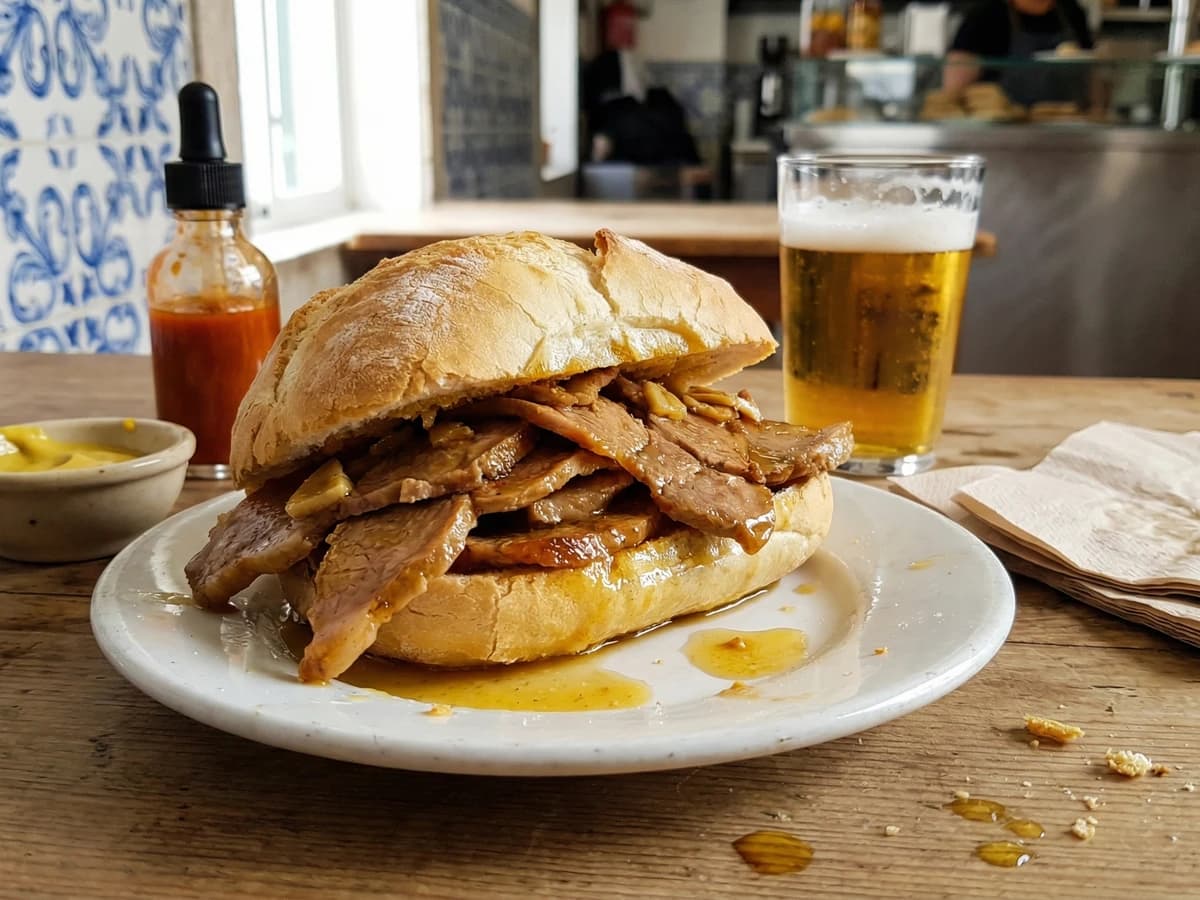
Alentejo's gift to late nights and hungry workers: thin pork bathed in garlic and white wine, stuffed into a crusty roll. Mustard or piri-piri, that's the only question.
A cooking platform built around craft, culture, and the stories behind what we eat.
Created by
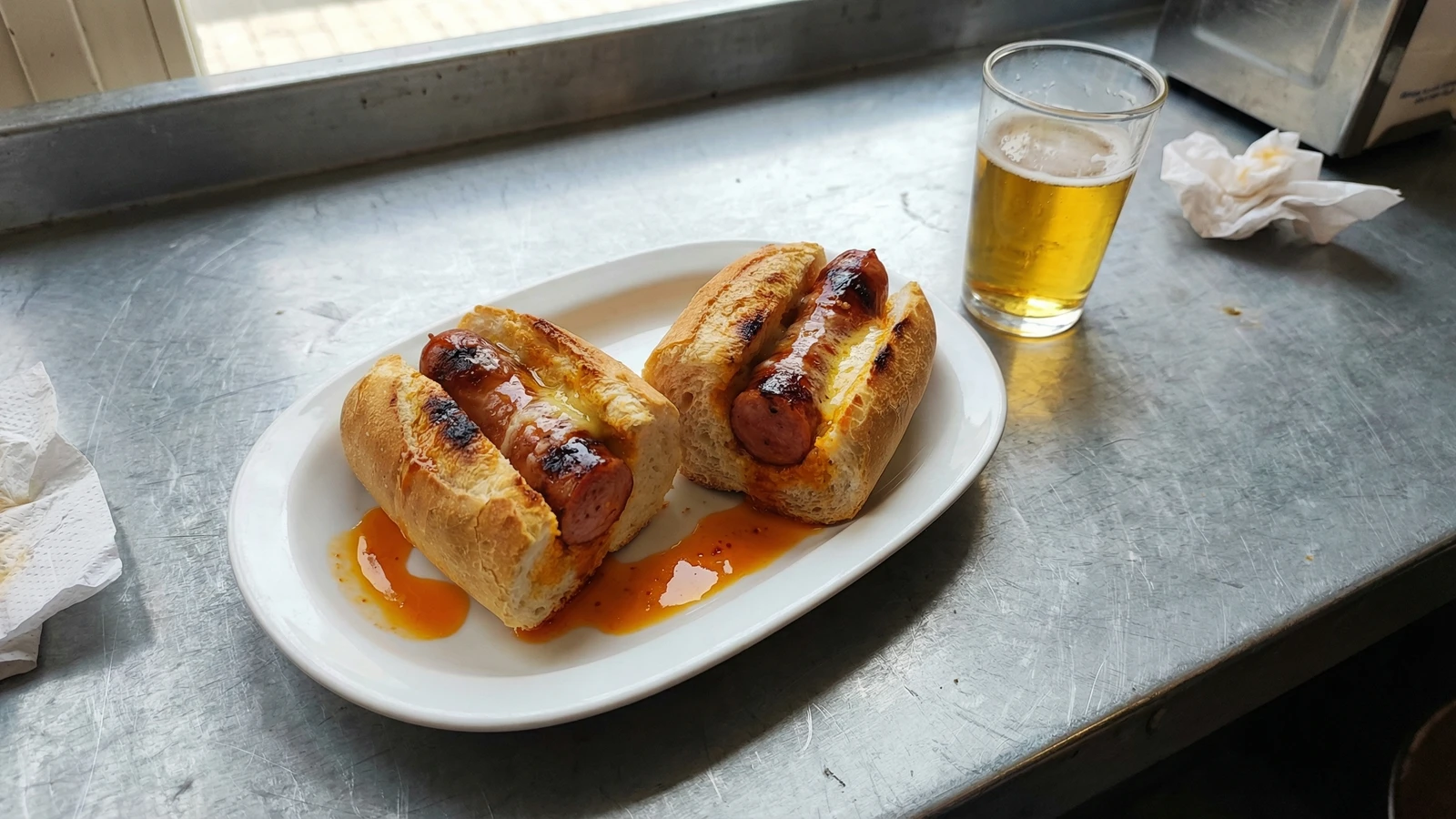
The late-night sandwich of Porto, where fresh sausage meets crusty bread and a generous slap of piri piri butter. This is what you eat standing at the counter with a cold imperial, surrounded by strangers who feel like friends.
Every city has its late-night sandwich. In Porto, it's the cachorrinho.
I first ate one at three in the morning, squeezed into Cervejaria Gazela with a crowd of students, taxi drivers, and couples who'd just left the bars. The counter was chaos. The grill was screaming. Someone shoved a plate toward me: two small sandwiches, sliced diagonally, glistening with spicy butter, the sausage still sizzling. I understood Porto in that moment.
Cachorrinho means "little dog," a diminutive that tells you everything about Portuguese affection. This isn't the American hot dog you're imagining. The sausage is fresh pork, coarsely ground, snappy when you bite through. The bread is papo seco, that crusty roll with the soft interior that Portugal does better than anywhere. And the piri piri butter: that's the soul of it. Spicy, garlicky, running down your fingers.
Gazela has been making these since the 1960s. The recipe hasn't changed because it doesn't need to. Some things are perfect. At Mesa da Avó, I serve cachorrinhos at the end of the night, when everyone's guard is down and they're ready to eat with their hands. No one refuses. No one eats just one.
Cachorrinhos emerged in Porto in the 1960s, with Cervejaria Gazela establishing the template that still defines the dish. The name "little dog" distinguishes it from the larger cachorro served elsewhere, reflecting Porto's tradition of generous portions in modest packages. The piri piri butter likely developed from Portuguese African colonial influences, where piri piri peppers became central to cooking.
Quantity
8 small (about 500g)
linguiça fresca or similar
Quantity
8
or small crusty white rolls
Quantity
100g
softened
Quantity
2 tablespoons
Quantity
3 cloves
minced fine
Quantity
1 tablespoon
minced
Quantity
1/2 teaspoon
Quantity
splash
for grilling
| Ingredient | Quantity |
|---|---|
| fresh pork sausageslinguiça fresca or similar | 8 small (about 500g) |
| papo seco rollsor small crusty white rolls | 8 |
| buttersoftened | 100g |
| piri piri sauce | 2 tablespoons |
| garlicminced fine | 3 cloves |
| fresh parsleyminced | 1 tablespoon |
| sea salt | 1/2 teaspoon |
| light beer (optional)for grilling | splash |
Mash together the softened butter, piri piri sauce, minced garlic, parsley, and salt until completely combined. The butter should be uniformly orange-red and smell like trouble. Taste it. It should make your lips tingle. If it doesn't, add more piri piri. Set aside at room temperature so it stays spreadable.
Heat a heavy skillet or griddle over medium-high heat. Add the sausages and cook, turning occasionally, until deeply browned on all sides and cooked through, about 10 to 12 minutes. The casings should be taut and snappy, the exterior caramelized. If using beer, splash a little into the pan in the last minute. It adds a subtle sweetness and helps with the char.
While the sausages cook, slice the papo seco rolls lengthwise, leaving a hinge on one side. Open them like a book and press them cut-side down onto a hot dry pan or griddle for 30 seconds until lightly toasted. The inside should be golden, the outside still soft enough to compress when you bite.
Work quickly now. Spread a generous amount of piri piri butter on both cut sides of each roll. Don't be shy. The butter should pool slightly, ready to soak into the bread. Nestle a hot sausage into each roll. The heat from the sausage will melt the butter into the bread. This is the moment everything comes together.
Cut each sandwich diagonally in half. Arrange on a plate or board, cut sides up so you can see the sausage and melting butter. Serve immediately with napkins. Many napkins. Eat standing up if you can. That's how it's done in Porto.
1 serving (about 300g)
Culinary guides, cultural storytelling, and the editorial depth that makes cooking meaningful.
Discover Culinary ExplorerChef Margarida
Alentejo's gift to late nights and hungry workers: thin pork bathed in garlic and white wine, stuffed into a crusty roll. Mustard or piri-piri, that's the only question.

Chef Margarida
The northern answer to Portugal's beloved pork sandwich, where beer replaces wine and the sauce runs down your arms. This is late-night Porto food, tasca food, the kind you eat standing at zinc counters with an imperial in the other hand.

Chef Margarida
Porto's answer to the hot dog: grilled chouriço in a crusty roll, smothered in melted cheese with a runny fried egg on top. This is what you eat at 2am and remember forever.

Chef Margarida
Porto's magnificent beast of a sandwich, layers of meat under molten cheese and a secret spicy sauce that every restaurant guards like family treasure. This is not diet food. This is glory.