
Chef Lupita
Aceite de Chiltepin Bajacaliforniano
Baja California's wild chiltepin steeped in olive oil with garlic, orejon, and lime peel, until the oil turns ruby-amber and carries the slow, sneaky burn of the desert coast.
A cooking platform built around craft, culture, and the stories behind what we eat.
Created by
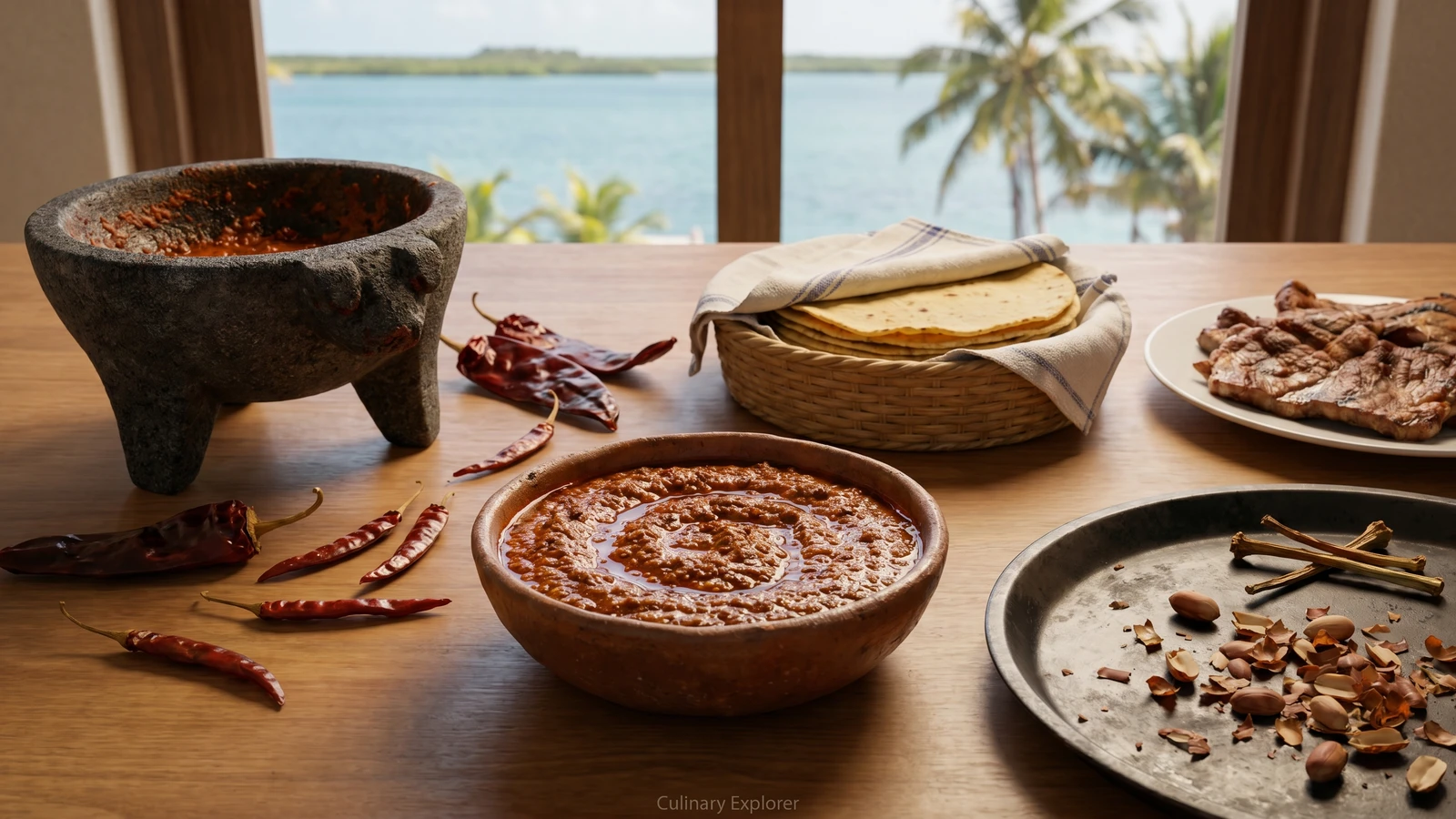
Guerrero's Costa Chica peanut salsa, rough-ground with chile de arbol, chile costeno, garlic, sesame, and oil, made for grilled meat, tacos, and a table that expects heat with memory.
Guerrero's Costa Chica, the stretch running toward Oaxaca with lagoons, palms, cattle, and Afro-Mexican towns, is where this salsa makes sense. Not as a decoration. As a table tool. A spoonful over grilled beef, roast chicken, tacos al pastor, or a folded corn tortilla changes the whole plate.
The cacahuate is the body. The chile de arbol brings the clean bite, and the chile costeno rojo brings the coastal flavor people miss when they reach lazily for guajillo. Do not call them the same. Preguntale a las senoras del mercado. They will tell you which chile belongs to Guerrero and which one belongs somewhere else.
I learned a version like this near Cuajinicuilapa from a cook who toasted the peanuts until the skins blistered and then ground everything in a molcajete with enough oil to make it shine. She did not make it silky. That would miss the point. The roughness is part of the sauce, the way the peanut catches under your teeth and the chile oil follows. Cada estado, su propia cocina.
This is a 32-state cuisine, and Guerrero does not need to borrow anyone's identity. The coast has its own grammar: peanut, sesame, dried chile, garlic, oil, fire. African lineage, Indigenous ingredients, Mexican market hands. Saber cocinar es saber vivir.
Peanut sauces along Mexico's Pacific and Gulf coasts carry a visible Afro-diasporic lineage, related in technique and logic to West African peanut stews such as mafe, while adapting to Mexican chiles, sesame, corn, and the comal. In Guerrero's Costa Chica, afromestizo communities around Cuajinicuilapa and Ometepec preserved peanut and sesame preparations in table salsas, pipianes, and encacahuatados. The chile costeno, grown and traded through Guerrero and Oaxaca coastal markets, gives these sauces a regional identity that cannot be replaced by guajillo without changing the dish.
Quantity
1 cup
or Mexican cacahuate tostado without sugar
Quantity
10
stemmed
Quantity
3
stemmed and seeded
Quantity
4
unpeeled
Quantity
1/2 cup
preferably peanut oil or good Mexican vegetable oil
Quantity
2 tablespoons
Quantity
1/2 teaspoon
Quantity
1 teaspoon, plus more to taste
Quantity
1 tablespoon
Quantity
1/4 cup
as needed for texture
| Ingredient | Quantity |
|---|---|
| raw unsalted peanuts with skinsor Mexican cacahuate tostado without sugar | 1 cup |
| dried chile de arbolstemmed | 10 |
| dried chile costeno rojostemmed and seeded | 3 |
| garlic clovesunpeeled | 4 |
| neutral oilpreferably peanut oil or good Mexican vegetable oil | 1/2 cup |
| hulled sesame seeds | 2 tablespoons |
| dried Mexican oregano | 1/2 teaspoon |
| kosher salt | 1 teaspoon, plus more to taste |
| apple cider vinegar or mild cane vinegar | 1 tablespoon |
| warm wateras needed for texture | 1/4 cup |
Set a dry comal or heavy skillet over medium heat. Add the peanuts and toast them for 6 to 8 minutes, moving them constantly, until the skins darken in spots and the peanuts smell deep and roasted. Do not walk away. Peanut goes from golden to bitter faster than people admit. Tip them onto a plate so they stop cooking.
On the same comal, toast the chile de arbol and chile costeno rojo separately. The chile de arbol needs only 10 to 15 seconds per side. The chile costeno can take a little longer, about 20 seconds per side, until it softens and smells fruity. They should darken, not blacken. Burned chile makes a bitter salsa, and no blender will save you.
Place the unpeeled garlic cloves on the comal and roast them for 5 to 7 minutes, turning often, until the skins are blackened in patches and the cloves feel soft when pressed. Peel them once they are cool enough to handle. Roasted garlic gives sweetness to the salsa without making it polite.
Warm the oil in a small clay cazuela or skillet over medium-low heat. Add the sesame seeds and cook for 30 to 45 seconds, just until pale gold. Add the toasted chiles and stir for 20 seconds to wake them in the oil. Pull the pan off the heat before the chiles darken too much. This is where the sauce gets its body and shine.
For a rough table salsa, pound the peanuts, chiles, sesame, roasted garlic, oregano, and salt in a molcajete, adding the warm oil little by little until the paste turns thick and glossy. For the blender, pulse everything with the oil and vinegar until coarse, not smooth. Add warm water one tablespoon at a time only if the blades refuse to move. This salsa should have grit from the peanut. No me vengas con atajos that turn it into peanut butter.
Let the salsa rest for at least 20 minutes before serving. Taste for salt after the rest, because peanuts swallow salt as they sit. Spoon it into a small barro bowl and set it on the table with grilled beef, roast chicken, tacos al pastor, quesadillas, or warm corn tortillas. The oil should settle around the edges and the peanut should stay rough. Así se hace y punto.
1 serving (about 24g)
Culinary guides, cultural storytelling, and the editorial depth that makes cooking meaningful.
Discover Culinary ExplorerChef Lupita
Baja California's wild chiltepin steeped in olive oil with garlic, orejon, and lime peel, until the oil turns ruby-amber and carries the slow, sneaky burn of the desert coast.

Chef Lupita
Puebla's Lenten convent adobo, a brick-red vinegar chile paste of ancho, guajillo, garlic, oregano, and comino made to dress fish for the meatless calendar.
Chef Lupita
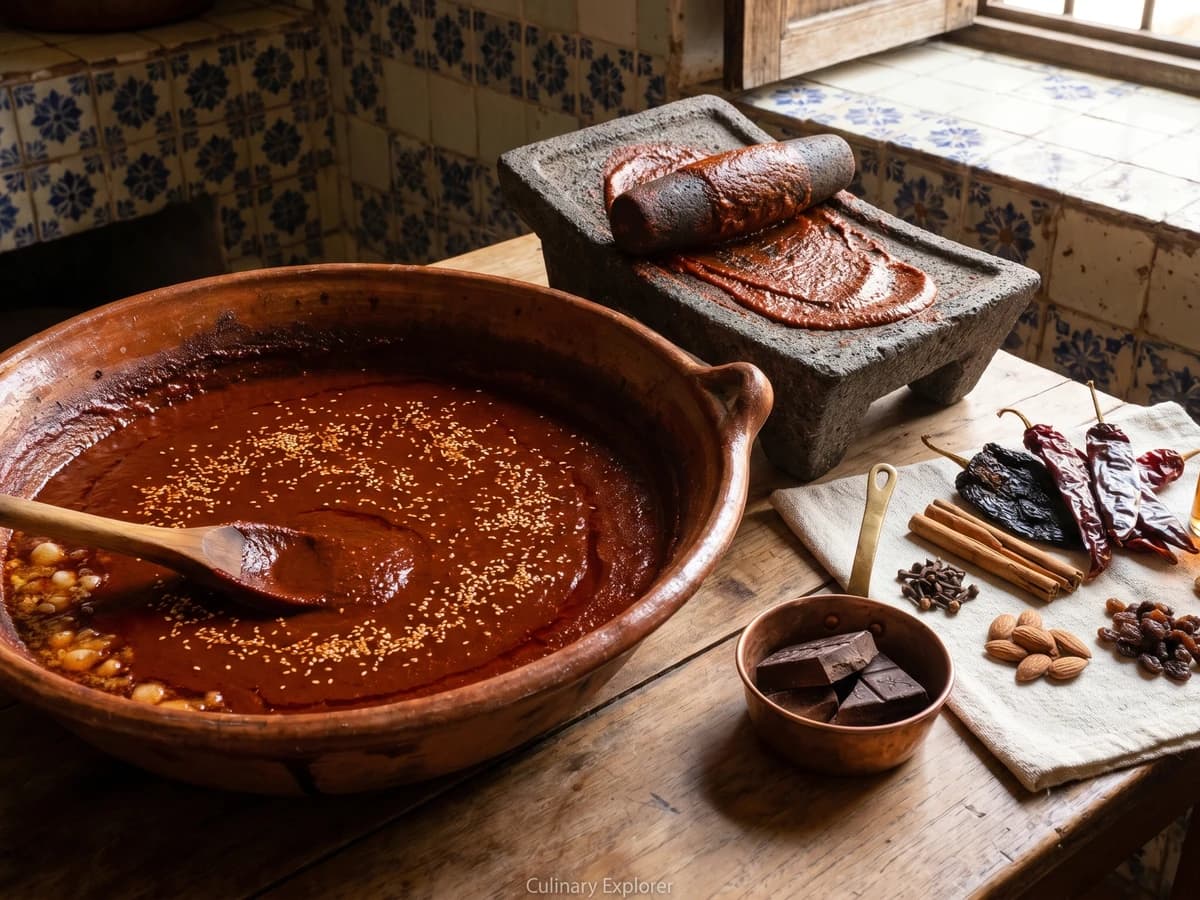
Zacatecas' wedding-table adobo, built from toasted guajillo and ancho, piloncillo, sour orange, chocolate, canela, clavo, almonds, sesame, and lard.

Chef Lupita
Puebla's convent kitchens built this adobo with ancho, guajillo, jerez, almonds, raisins, clove, and lard, a baroque marinade that stains pork loin and finishes as the sauce.