
Chef Lupita
Aceite de Chiltepin Bajacaliforniano
Baja California's wild chiltepin steeped in olive oil with garlic, orejon, and lime peel, until the oil turns ruby-amber and carries the slow, sneaky burn of the desert coast.
A cooking platform built around craft, culture, and the stories behind what we eat.
Created by
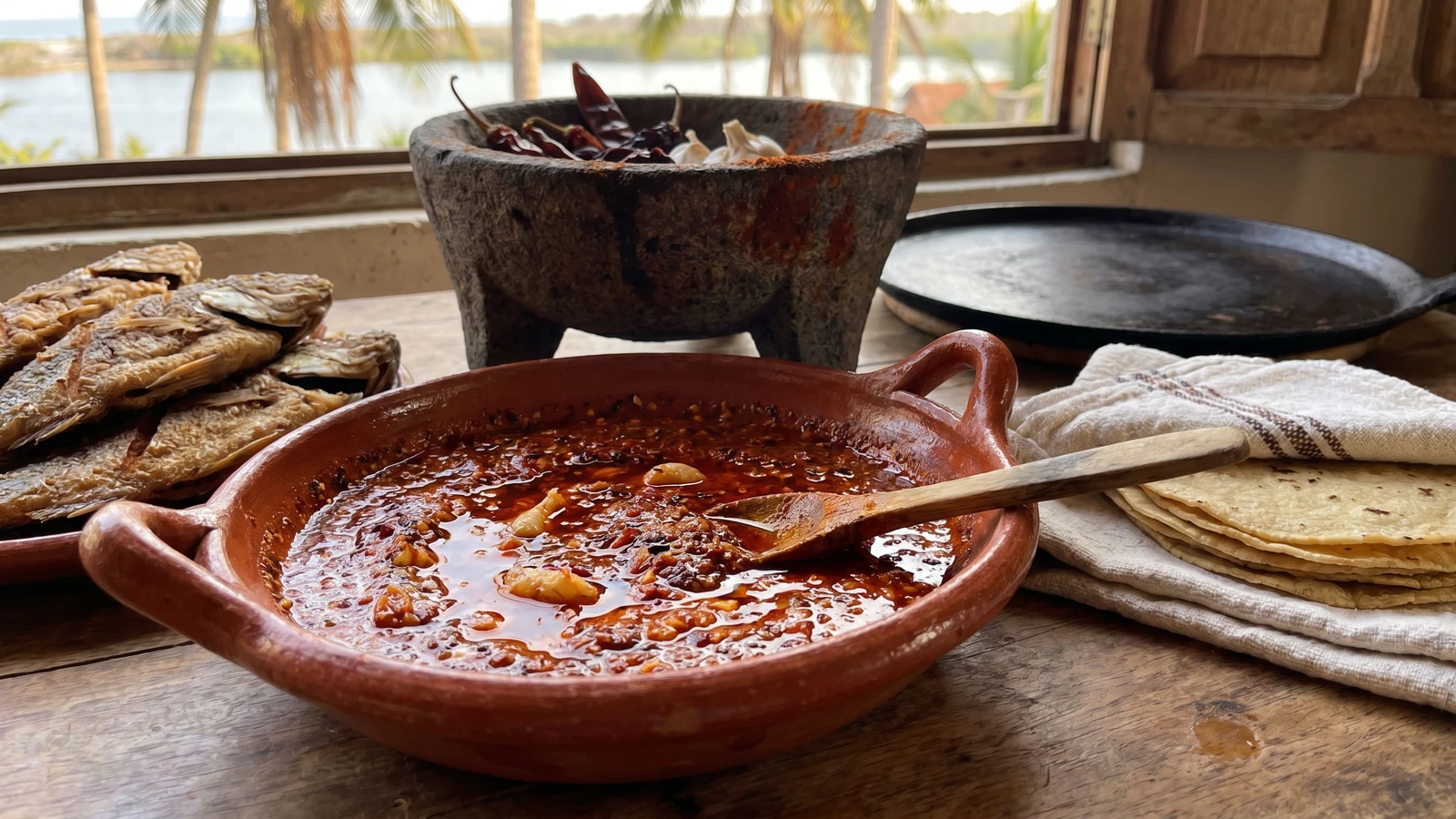
Guerrero's Costa Chica chileajo is a rough garlic-chile relish, guajillo for body, chile costeño for coastal heat, vinegar for bite, made to wake up fried fish and pulled pork.
Guerrero, Costa Chica: this is where chileajo costeño lives, from Ometepec toward Cuajinicuilapa and Marquelia, where the table is costeño and afromestizo before it is anything else. Fried fish comes from the lagoon, pork comes from the patio, and a clay cazuelita of chileajo sits in the middle so everyone can dress the food themselves.
The chile that defines it is chile costeño rojo. Not guajillo pretending to be costeño. Guajillo gives body and red flesh. Chile costeño gives the sharp coastal heat and that dry, sun-warmed flavor you recognize if you've bought chiles from a woman who knows her sacks by smell. Roasted garlic gives weight. Vinagre de piña cuts through fish oil and pork fat.
My mother had no chileajo in her Jalisco notebook. I wrote this one later, after a señora in Ometepec watched me reach for the blender and said, very calmly, that I was about to ruin her sauce. She was right. The molcajete leaves the chile rough, the garlic heavy, the oil shining in small rings. A blender can help, but only if you pulse like a disciplined person.
Do not add tomato. Do not make it sweet. Do not smooth it into a red cream. This is a Costa Chica relish, made to be sharp, practical, and ready for the week. Cada estado, su propia cocina. Saber cocinar es saber vivir.
The Costa Chica, spanning southeastern Guerrero and western Oaxaca, became one of Mexico's major Afro-Mexican regions through 16th- and 17th-century cattle ranches, coastal ports, and cimarrón communities tied to the Acapulco trade. Chileajo is a Spanish-named sauce, chile plus ajo, built from Mesoamerican chile grinding and colonial garlic and vinegar, ingredients that made sense in a hot coastal climate where fish and pork needed sharp, salty companions. Guerrerense versions around Ometepec and Cuajinicuilapa tend to keep the paste rough and use chile costeño rojo, while interior Oaxacan chileajos often move toward smoother pastes for vegetables and pork.
Quantity
8
wiped clean, stemmed, and seeded
Quantity
6
wiped clean, stemmed, and mostly seeded
Quantity
14
unpeeled
Quantity
1 teaspoon
Quantity
4
Quantity
1
Quantity
1 teaspoon
crushed
Quantity
1 1/2 teaspoons, plus more to taste
Quantity
1/2 cup
divided
Quantity
1/4 cup
Quantity
1 tablespoon
for dressing pulled pork
Quantity
for serving
| Ingredient | Quantity |
|---|---|
| dried chile guajillowiped clean, stemmed, and seeded | 8 |
| dried chile costeño rojowiped clean, stemmed, and mostly seeded | 6 |
| garlic clovesunpeeled | 14 |
| whole cumin seeds | 1 teaspoon |
| whole black peppercorns | 4 |
| whole clove (clavo de olor) | 1 |
| dried Mexican oreganocrushed | 1 teaspoon |
| sea salt | 1 1/2 teaspoons, plus more to taste |
| vinagre de piña (pineapple vinegar)divided | 1/2 cup |
| corn oil (aceite de maíz) | 1/4 cup |
| manteca de cerdo (optional)for dressing pulled pork | 1 tablespoon |
| fried whole fish, pulled pork, warm black beans, or corn tortillas (optional) | for serving |
Wipe the chile guajillo and chile costeño rojo with a barely damp cloth. Pull off the stems and shake out most of the seeds. Leave a few seeds from the costeño if your table expects heat. Do not rinse dried chiles under water. You wash away the surface oils before the comal has a chance to wake them up.
Heat a dry comal over medium. Toast the guajillos first, 15 to 20 seconds per side, just until the skin darkens slightly and the chile softens. Toast the chile costeño rojo separately, 5 to 8 seconds per side. It is smaller and it burns faster. The chiles should smell deep and fruity, never scorched.
Put the unpeeled garlic cloves on the same comal. Turn them until the skins are blackened in spots and the cloves feel soft when pressed, 8 to 10 minutes. Toast the cumin seeds, black peppercorns, and clavo de olor for about 30 seconds, just until fragrant. Peel the garlic once it is cool enough to handle.
Place the toasted chiles in a bowl and cover with hot water, not boiling water. Weigh them down with a small plate and let them soften for 15 minutes. Drain them and save 2 tablespoons of the soaking water only if the molcajete needs help. Too much soaking water makes the chileajo dull.
In a molcajete, grind the salt, cumin, peppercorns, clove, and oregano first. Add the roasted garlic and work it into a thick paste. Add the softened guajillo in torn pieces, then the chile costeño rojo. Grind until rough and glossy, with small pieces of chile skin still visible. Add 1/4 cup of the vinagre de piña little by little. This is a relish, not a smooth restaurant puree.
Heat the corn oil in a small clay cazuela or heavy skillet over medium. Add the chile-garlic paste carefully. It will sputter. Stir for 4 to 5 minutes, until the paste turns brick red, thickens, and the oil begins to ring the edges. Frying the paste removes the raw taste from the chile and garlic. Skip it and the sauce tastes unfinished.
Take the cazuela off the heat and stir in the remaining 1/4 cup vinagre de piña. Taste for salt. The chileajo should hit first with garlic, then chile, then clean acid. If all you taste is burn, the chiles were scorched or the balance is wrong. Let it rest 30 minutes before serving so the vinegar settles into the paste.
Spoon the chileajo over fried fish while the crust is still crisp, or warm 1 tablespoon manteca de cerdo in a skillet and toss 1/4 cup chileajo with pulled pork. For the table, set it in a red clay cazuelita with warm corn tortillas nearby. Store in a clean glass jar in the refrigerator. This is not shelf-stable canning. Recetas probadas y garantizadas.
1 serving (about 28g)
Culinary guides, cultural storytelling, and the editorial depth that makes cooking meaningful.
Discover Culinary ExplorerChef Lupita
Baja California's wild chiltepin steeped in olive oil with garlic, orejon, and lime peel, until the oil turns ruby-amber and carries the slow, sneaky burn of the desert coast.

Chef Lupita
Puebla's Lenten convent adobo, a brick-red vinegar chile paste of ancho, guajillo, garlic, oregano, and comino made to dress fish for the meatless calendar.
Chef Lupita
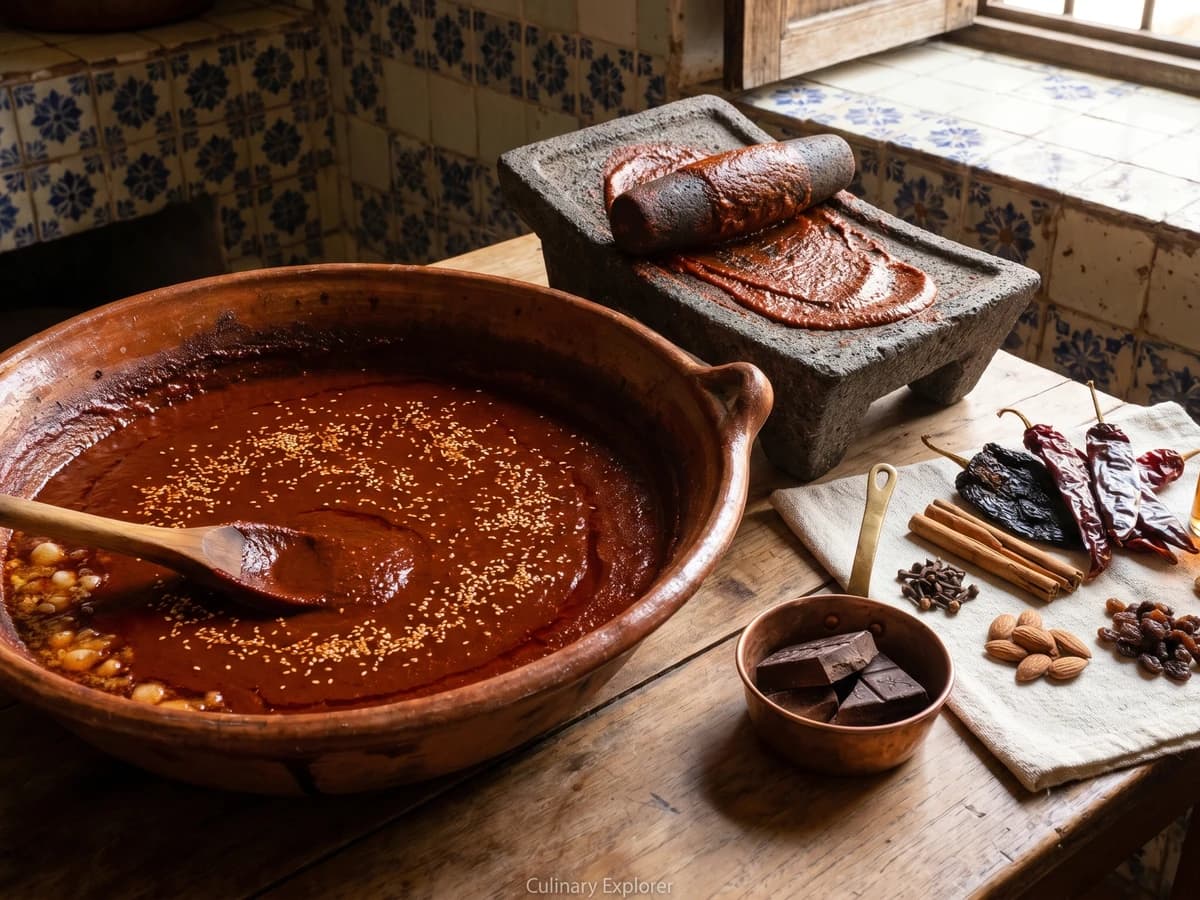
Zacatecas' wedding-table adobo, built from toasted guajillo and ancho, piloncillo, sour orange, chocolate, canela, clavo, almonds, sesame, and lard.

Chef Lupita
Puebla's convent kitchens built this adobo with ancho, guajillo, jerez, almonds, raisins, clove, and lard, a baroque marinade that stains pork loin and finishes as the sauce.