
Chef Lupita
Aceite de Chiltepin Bajacaliforniano
Baja California's wild chiltepin steeped in olive oil with garlic, orejon, and lime peel, until the oil turns ruby-amber and carries the slow, sneaky burn of the desert coast.
A cooking platform built around craft, culture, and the stories behind what we eat.
Created by
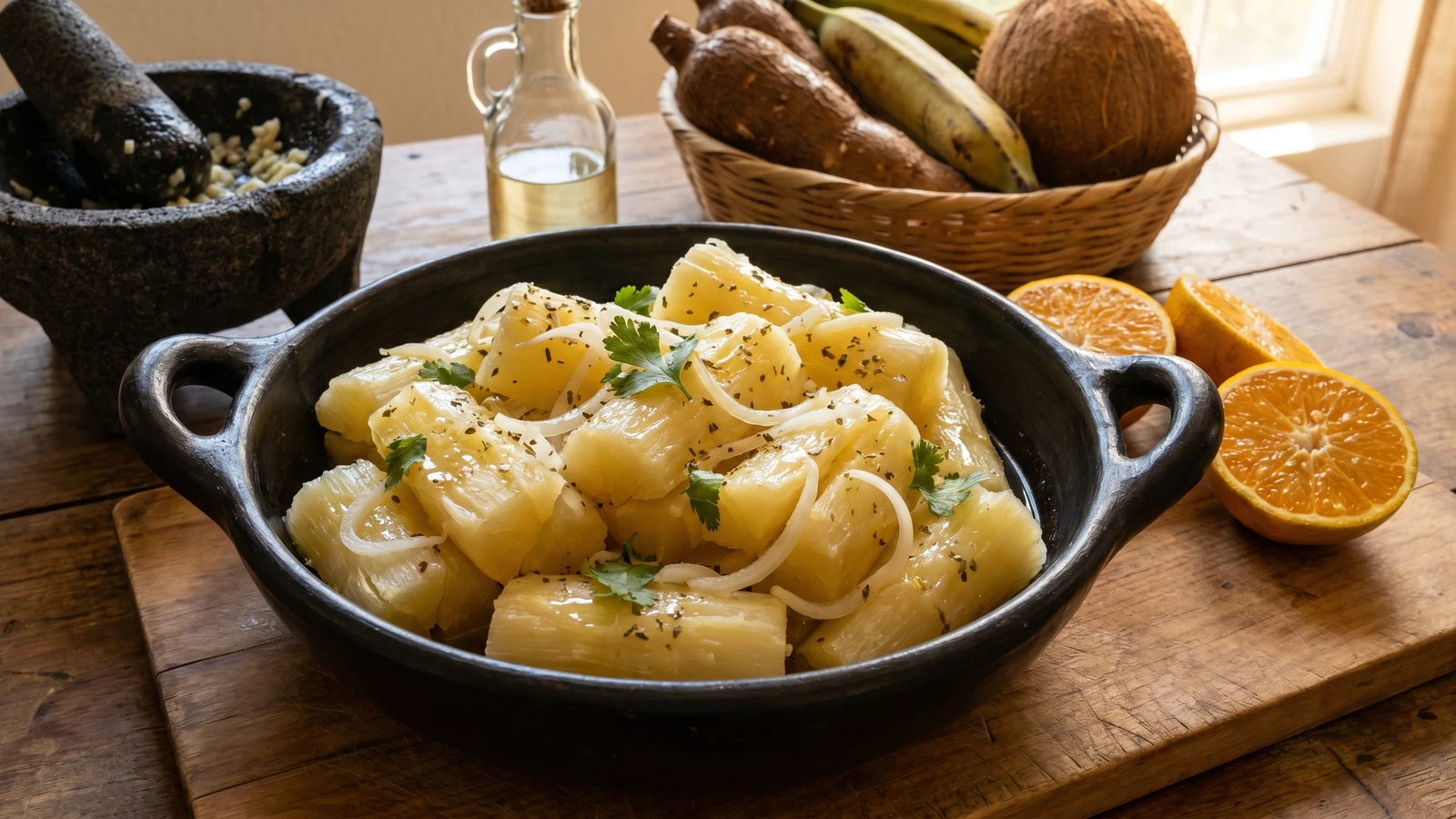
Veracruz's Sotavento-style yuca mojo, built with sour orange, garlic, dried Mexican oregano, and oil poured warm over cassava until every piece drinks the dressing.
Veracruz, especially the Sotavento, cooks with one foot in the Gulf and one foot in the Caribbean. This mojo de yuca belongs to that jarocho table: boiled cassava, garlic, sour orange, dried oregano, and oil. No tomato. No cheese. No decoration pretending to be cooking.
Yuca came through Atlantic routes and stayed because it feeds people well. In Tlacotalpan, Alvarado, and the market kitchens around the port, you see the same logic again and again: a plain starch becomes serious when the dressing is sharp enough and the garlic is handled correctly. The oil carries the garlic. The sour orange cuts the weight. The oregano gives it that dry, resinous edge that makes the dish taste coastal, not generic.
I make this the way a señora in Veracruz taught me: boil the yuca until it opens slightly at the edges, pull out the woody vein, then pour the warm mojo over it while the pieces are still receptive. If you wait until the yuca is cold, it sits there like a stone. If you dress it warm, it absorbs. Cooking is timing, not poetry. Cada estado, su propia cocina.
Yuca, also called cassava or manioc, is native to tropical South America and was cultivated across the Caribbean long before European colonization; its movement through Afro-Caribbean kitchens shaped dishes from Cuba to Veracruz. Veracruz's port, active as New Spain's principal Atlantic gateway from the 16th century onward, absorbed African, Caribbean, Spanish, and Indigenous food practices into what became jarocho cooking. Mojo sauces built from garlic, citrus, and fat show that exchange clearly: the technique is diasporic, but the Veracruz register comes through in sour orange, Mexican oregano, and the way the dressing is folded into boiled yuca.
Quantity
2 pounds
peeled and cut into 3-inch pieces
Quantity
2 teaspoons, plus more to taste
Quantity
1
Quantity
8
finely minced or crushed in a molcajete
Quantity
1/2 cup
Quantity
1/4 cup
use only if sour orange is too sweet or unavailable
Quantity
1 teaspoon
preferably Veracruz or coastal oregano, crumbled
Quantity
1/2 teaspoon
Quantity
1/2 cup
Quantity
1
sliced very thin
Quantity
1
sliced thin
Quantity
2 tablespoons
chopped
| Ingredient | Quantity |
|---|---|
| fresh yucapeeled and cut into 3-inch pieces | 2 pounds |
| kosher salt | 2 teaspoons, plus more to taste |
| bay leaf | 1 |
| garlic clovesfinely minced or crushed in a molcajete | 8 |
| fresh sour orange juice | 1/2 cup |
| fresh lime juice (optional)use only if sour orange is too sweet or unavailable | 1/4 cup |
| dried Mexican oreganopreferably Veracruz or coastal oregano, crumbled | 1 teaspoon |
| freshly ground black pepper | 1/2 teaspoon |
| neutral oil or mild olive oil | 1/2 cup |
| small white onionsliced very thin | 1 |
| fresh chile jalapeño (optional)sliced thin | 1 |
| fresh cilantro (optional)chopped | 2 tablespoons |
Peel the yuca deeply enough to remove the waxy skin and the pinkish layer beneath it. Cut it into 3-inch pieces. If you see a thick woody center now, leave it until after boiling, when it pulls out more cleanly. Rinse the pieces under cold water. Yuca should smell clean and faintly sweet, not sour.
Put the yuca in a large pot and cover with cold water by two inches. Add the salt and bay leaf. Bring to a steady simmer and cook 25 to 30 minutes, until the pieces split slightly at the edges and a knife slides through without resistance. Do not undercook yuca. Hard yuca is not firm, it is unfinished.
Drain the yuca, reserving 1/4 cup of the cooking water. While the pieces are still warm, split them open and pull out the fibrous center vein. Discard the bay leaf. Put the warm yuca in a wide clay cazuela or serving bowl. This is when it can still drink the mojo.
Crush the garlic with a pinch of salt in a molcajete until it becomes a rough paste. If you mince it with a knife, mince it fine and then smear it against the board with the side of the blade. Big raw chunks of garlic are laziness, not character.
Heat the oil in a small skillet over medium-low. Add the garlic paste and cook 45 to 60 seconds, just until fragrant and pale gold at the edges. Do not brown it. Brown garlic turns bitter fast, and bitter garlic takes over the whole bowl.
Take the skillet off the heat. Stir in the sour orange juice carefully, then add the oregano, black pepper, and 2 tablespoons of the reserved yuca cooking water. The sauce should taste sharp, salty, garlicky, and round with oil. If your sour orange is weak, add the lime juice. A substitution is a compromise, not an upgrade, but it keeps the balance honest.
Pour the warm mojo over the warm yuca. Add the sliced white onion and jalapeño if using. Fold gently with a spoon, not so hard that you break the yuca into paste. Let it sit 10 minutes before serving so the citrus and garlic settle into the cassava. Taste for salt at the end. Así se hace y punto.
1 serving (about 280g)
Culinary guides, cultural storytelling, and the editorial depth that makes cooking meaningful.
Discover Culinary ExplorerChef Lupita
Baja California's wild chiltepin steeped in olive oil with garlic, orejon, and lime peel, until the oil turns ruby-amber and carries the slow, sneaky burn of the desert coast.

Chef Lupita
Puebla's Lenten convent adobo, a brick-red vinegar chile paste of ancho, guajillo, garlic, oregano, and comino made to dress fish for the meatless calendar.
Chef Lupita
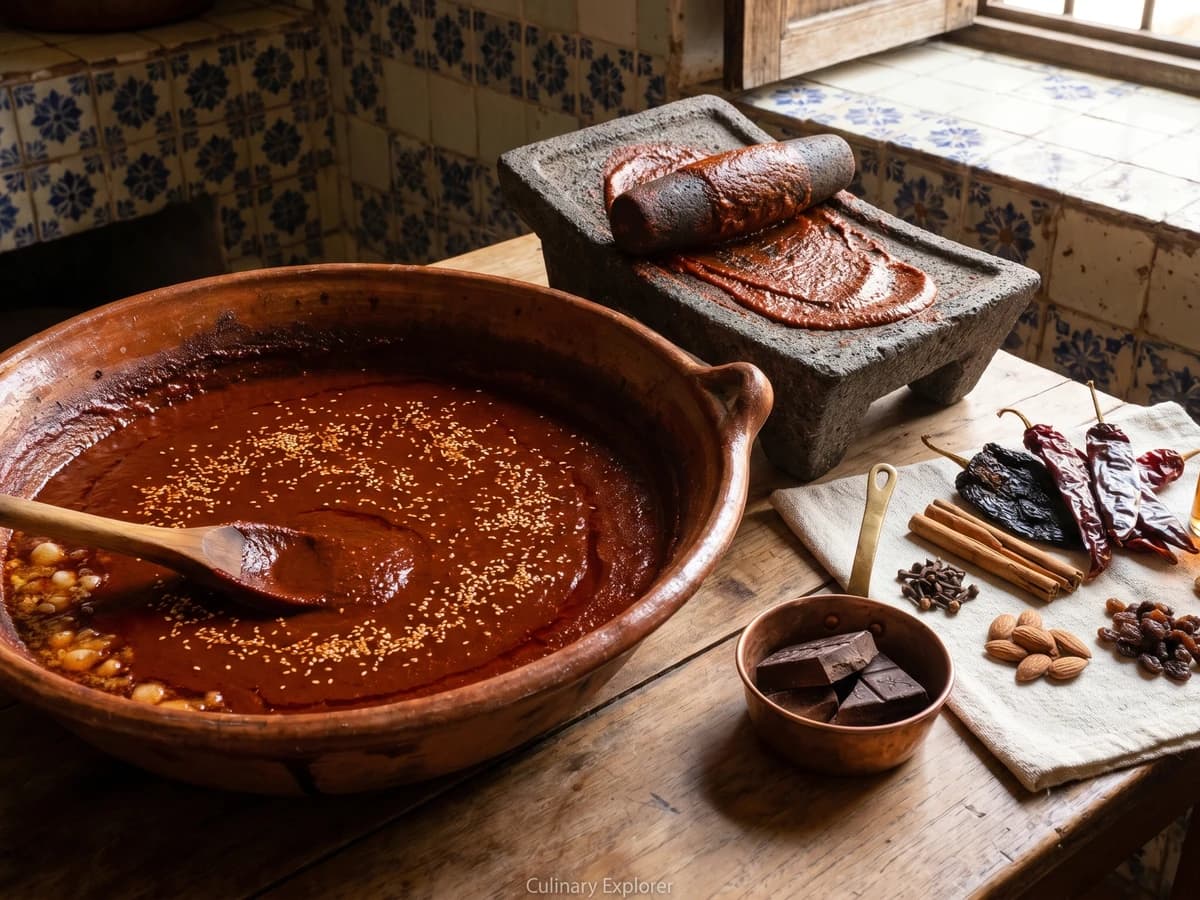
Zacatecas' wedding-table adobo, built from toasted guajillo and ancho, piloncillo, sour orange, chocolate, canela, clavo, almonds, sesame, and lard.

Chef Lupita
Puebla's convent kitchens built this adobo with ancho, guajillo, jerez, almonds, raisins, clove, and lard, a baroque marinade that stains pork loin and finishes as the sauce.